mongabay.com
September 26, 2012

Pablo Garcia Borboroglu will be speaking at the Wildlife Conservation Network Expo in San Francisco on October 13th, 2012.
Penguins have spent years fooling us. With their image seemingly every
where we turn—entertaining us in animated films, awing us in
documentaries, and winking at us in commercials—they have made most of
us believe they are doing just fine; the penguin's charming demeanor has
lulled us into complacency about their fate. But penguin populations
are facing historic declines even as their popularity in human society
rises. Overfishing is decimating some of their prey species, climate
change is shifting their resources and imperiling their habitat,
meanwhile pollution, such as oil spills, are putting even healthy
colonies at risk. Now, a young organization, the Global Penguin Society (GPS), is working to save all of the world's 18 penguin species by working with scientists, governments, and local communities.
"Penguins are telling us a story that we need to hear: 11 of the 18 species of penguins are listed as Vulnerable or Endangered by IUCN," Pablo Garcia Borboroglu, the President of the Global Penguin Society, told mongabay.com in a recent interview. "Penguins have particular life history traits that make them vulnerable to environmental changes. They are flightless Southern Hemisphere birds. They are long-lived, lay one or two eggs, and take several months to raise their offspring. They breed in colonies, and depend on marine food sources that are spatially and temporarily unpredictable."
These factors make penguins not only extremely sensitive to large-scale environmental changes, but also key species for monitoring the overall health of oceans. Declines among many of the penguin species over recent decades have followed wider problems in the oceans.
"Large-scale industrial fisheries starting in the mid 20th Century
removed enormous numbers of fish from the Southern Oceans. Some prey
species for Sub-Antarctic penguins, such as mackerel icefish are 10
percent of their population size prior to fishing. Commercial fishing
has also reduced the carrying capacity of the Benguela ecosystem for
penguins to only 10 to 20 percent of what it was in the 1920s, and hence
it is not a surprise that African penguins declined by 90 percent,"
Borboroglu notes.
On top of overfishing, oil spills have pummeled a number of penguin species year-after-year, including African penguins (Spheniscus demersus) and Magellanic penguins (Spheniscus magellanicus). Other species have also been hurt by less common spill incidents, such as the spill that oiled thousands of northern rockhopper penguins (Eudyptes moseleyi) last year in the remote Tristan da Cunha archipelago. Oil spills have resulted in dramatic, in some cases, unprecedented rescue efforts, but even surviving birds suffer from reproduction problems due to the pollution.
Finally, climate change is, according to Borboroglu, "creating penguin winners and losers." Increasing and worsening El Niño conditions due to climate change could push the Galápagos penguin (Spheniscus mendiculus) to extinction within a century. Meanwhile, Chinstrap (Pygoscelis antarcticus) and Adelie penguins (Pygoscelis adeliae) may end up losing out if a warmer world means less krill in their feeding grounds as predicted. Emperor penguins could face problems due to a lack of shore ice needed for breeding. While two penguins, the King penguin (Aptenodytes patagonicus) and Gentoo penguin (Pygoscelis papua), appear to be currently benefitting from climate change due to habitat expansion.
But despite these two "winners" the general picture of the world's penguins is one of rapid and alarming decline. Sixty-one percent of penguins are considered threatened with extinction, and if the IUCN's Near Threatened category is included, the percentage jumps to 83 percent. Borboroglu sees this as evidence of the wider crisis facing the world's oceans.
"Ocean conservation is crucial to life in the sea, the land, and to the quality of human life," he says, adding that, "we are living in an unprecedented age of modifications to marine systems."
But according to Borboroglu, penguins not only show us problems in our marine ecosystems, but can also help lead to positive action—if only people wake up the penguin's plight.
"As charismatic, keystone, and seascape species, penguins can foster public and political support for integrated ocean conservation," he notes. This is where GPS comes in, aiding efforts to conserve penguins through working directly with governments on creating protected areas and improving management; helping craft conservation plans and conducting research with other experts; and providing local education through field trips, lectures, and a new, comprehensive book coming out this winter: Penguins: Natural History and Conservation.
In a September 2012 interview, Pablo Garcia Borboroglu discusses the threats facing penguins worldwide, the many solution necessary to make sure penguins don't vanish, and how the Global Penguin Society is contributing to this mission.
Borboroglu will be presenting at the up-coming Wildlife Conservation Network Expo in San Francisco on October 13th, 2012, an event which will be headed by Charles Knowles and Dr. Jean-Gael Collomb.
INTERVIEW WITH PABLO GARCIA BORBOROGLU

Gentoo penguin on a beach. Photo by: J. Weller.
Mongabay: What drew you to penguins?
Pablo Garcia Borboroglu: When I was 2-3 years old I lived in a city in Argentina where there were no penguins. But my grandmother used to tell me about the penguins of Patagonia and for me it was something really magical. I think her passionate description of the penguin colonies left a special message in my memory.
Later, as a teenager, I decided to become an ambassador. To do so in Argentina, you have to become a lawyer first. So I studied languages (English and French) and laws for 2 years, but I did not like it that much. Therefore I moved to Patagonia for the summer and I started working in a travel agency. In those years (80s) there were a very large numbers of oiled penguins found along the beach and 40,000 died annually from pollution. I felt really shocked by this problem and started picking up oiled live penguins and set up and emergency station in a farm where I used to rehabilitate them. Working as a tour guide for foreign tourists, I learned a lot about wildlife, particularly penguins, and I realized that I could transmit a conservation message to a lot of people. So I decided to study biology at the University and after that I completed my Ph.D. working on ecology, management and the conservation of seabirds. Throughout these periods I kept working on penguin science and conservation.
PENGUINS: THE FORGOTTEN ENDANGERED SPECIES

King penguins. Photo by: J. Weller.
Mongabay: One rarely hears about how endangered penguins are as compared to other species like big cats or rhinos. Why do you think that is?
Pablo Garcia Borboroglu: That is absolutely true, people love penguins but they are unaware of their decline. So it is not a matter of charisma.
I guess one reason is that big cats and rhinos face threats that are more tangible and direct for humans, like hunting for instance. Besides, most of their conservation problems are on land and people can see them. In the case of penguins, most threats are not necessarily visible and concrete. For example, lack of food availability in the ocean, change in oceanographic conditions caused by climate change, and pollution in remote areas.
I think it also has something to do with the image of penguins broadcast in mainstream media. Typically images show colonies of particular species in Antarctica, with hundreds of animals, like the Emperor penguin. Since there is no vegetation and they nest in dense aggregations people perceive there are a lot of penguins. Besides, many documentary films or movies always show the funny and amusing part of penguins but not necessarily their conservation status. This issue related with communication is also reflected in the fact that most people think that penguins only live on the ice in the South Pole, and they ignore that most species live in temperate regions and even above the Equator line.
Mongabay: More than half of all penguin species are currently threatened with extinction. What happened to the world's penguins? What are the biggest threats to penguins today?
Pablo Garcia Borboroglu: Ocean conservation is fundamental to assure that ecosystems function while humanity and other living forms thrive. Unfortunately, we have initiated an unprecedented age of alterations to marine and coastal environments. Penguins are particularly affected by these phenomena. As top predators, penguins are key constituents of marine ecosystems, and as such are indicators of the oceanic and coastal ecosystem health. Penguins are telling us a story that we need to hear: 11 of the 18 species of penguins are listed as Vulnerable or Endangered by IUCN.
Penguins have particular life history traits that make them vulnerable
to environmental changes. They are flightless Southern Hemisphere birds.
They are long-lived, lay one or two eggs, and take several months to
raise their offspring. They breed in colonies, and depend on marine food
sources that are spatially and temporarily unpredictable. Penguins also
make use of very wide geographical areas in the ocean while foraging
and during wintering migrations. As a consequence, they are particularly
vulnerable to variations in ecosystem structure and processes, caused
mainly by climate change, marine pollution, and extensive overfishing.
In addition, penguins are among the most conspicuous victims of marine pollution. They are particularly sensitive to petroleum spills because they swim low in the water, surface regularly to breathe, do not fly and are less able to avoid petroleum than other seabirds. Mortality of penguins from accidental and chronic petroleum discharge is a both long-term and large-scale problem, having killed thousands of penguins in Africa, South America, Australia and New Zealand, and even Antarctica. The African penguin populations, in particular, have been devastated by this threat, in combination with guano harvest, egging, and fishing, showing a decline from 1.5 million a hundred years ago to 25,000 pairs today. Approximately 40,000 Magellanic penguins were killed each year by oil pollution within their breeding range in Argentina in the 1980s and there are at least 25 organizations in Brazil, Uruguay and Argentina dedicated to washing oiled penguins. Current trends in the economy of the countries where penguins breed or migrate indicate an exponential increase in petroleum development suggesting that the risk of petroleum spills will only increase.
Fisheries are also a threat to penguins. Large-scale industrial fisheries starting in the mid 20th Century removed enormous numbers of fish from the Southern Oceans. Some prey species for Sub-Antarctic penguins, such as mackerel icefish are 10 percent of their population size prior to fishing. Commercial fishing has also reduced the carrying capacity of the Benguela ecosystem for penguins to only 10 to 20 percent of what it was in the 1920s, and hence it is not a surprise that African penguins declined by 90 percent. Fishing for anchovy in the Pacific Ocean contributed to the tremendous decrease of Humboldt penguin from a million in the 1930s to less than 30,000 now. Expanding fisheries in the Southwest Atlantic will increasingly compete with Magellanic penguins. As prey continues to be reduced by commercial fishing, and climate perturbation becomes more common, penguin colonies will be harmed.
Currently, some species of penguins face hazards within their colonies related to inadequate management of human activities, such as egging, irresponsible tourism, coastal development, and introduced predators.
To what extent is the condition of the marine environment mirrored by penguin populations’ conservation status? Penguins use a wide range of marine habitats covering hundreds and even thousands of kilometers in their foraging and wintering migrations. Therefore, they cover a relatively large portion of the vast Southern Oceans. As ocean samplers, they can serve as cost-effective indicators of the health of the oceans they inhabit, allowing us to have a better scientific insight into the nature, magnitude and location of priority marine conservation issues to address.
Mongabay: What changes are needed for global fisheries to ensure penguins have enough food? How do we ensure protection at penguin foraging areas?

Penguin drowned by fishing net. Photo by: D. Boersma.
Pablo Garcia Borboroglu: The negative effects of fisheries on penguin populations vary depending on the species and the area.
For example, with the African penguin the large, more recent decline seems to be related to decreased prey availability in part due to competition with industrial fisheries for food and the eastward shift in prey abundance. This shift could be the consequence of climate change and also overfishing. In South Africa the existing marine reserves may be too small or may need to be re-designed to produce a positive impact on the recovery of the population. In the case of the Humboldt penguin, the decrease in abundance has been linked to overfishing, direct take of birds and eggs for human consumption as well as for bait, and habitat degradation due to guano harvesting. Prey availability has been suggested as the main impact limiting the growth of the population. To benefit penguins and many other organisms, it is necessary to implement an ecosystem-based management of the anchovy fishery.
There are other cases, like the yellow-eyed penguin, where entanglement in fishing gear seems to be an important cause of mortality, but there is a need to conduct more studies to assess the real magnitude and nature of the problem.
In general, it is necessary to create or expand no-fishing zones around major rookeries. To be able to stabilize or recover some penguin populations it would be important to implement additional measures in already existing protected areas. In some regions it is also imperative to implement serious recommendations made to achieve a real ecosystem-based fishery management where the demands of the penguins (and other top and meso-predators) are considered in calculating the fish total allowable catches.
We have participated in a statement coordinated by the Pew Environmental Group to submit recommendations to the Marine Stewardship Council regarding the certification of krill fishery in Antarctica to improve fishing management and practices.
Mongabay: The drive for fossil fuels is also imperiling penguin populations. Will you tell us about how oil pollution is imperiling Magellanic penguins?

Oiled Magellanic penguins. Photo by: D. Boersma.
Pablo Garcia Borboroglu: Oiling of penguins is likely a common problem wherever tankers and penguins mix. One of the best documentations of how vulnerable penguins are to petroleum discharge is the chronic pollution problems along the coast of Argentina. For decades chronic oil pollution killed Magellanic penguins in Argentina and more recently has been documented as a problem in Brazil. It was estimated that over 40,000 Magellanic penguins were killed each year by chronic oil pollution along the coast of Chubut Province, Argentina, from 1982 to 1991. In 1994 tanker lanes were moved 100 km farther offshore, and few penguins are now found dead with petroleum along the Chubut coast.
Magellanic penguins migrate between Argentina and Brazil in the Atlantic Ocean on routes that overlap with heavy maritime traffic and petroleum development. Twenty-five groups from Salvador, Brazil to San Antonio Oeste, Argentina survey or rehabilitate sick or oiled seabirds. An average of 63.7 percent of the seabirds found were Magellanic penguins, with 3,869 reported since 1987. Mainly adult penguins were found in Argentina (1,605 of 2102 penguins of known age class) and Uruguay (158 of 197). Juveniles were most common in Brazil (234 of 325). Oil fouling was the most frequent cause of injury or sickness.
In long-lived seabirds such as penguins, that mature late and lay small clutches, even small decreases in adult survival can cause populations to decline. In addition, even small amounts of petroleum reduce reproductive success in penguins. The large number of adult penguins affected by chronic oil pollution in their wintering range suggests that this problem will have to be ameliorated before populations of Magellanic penguins rebound at their breeding colonies.
The number of oiled penguins reported in their wintering range has greatly increased since the early 1990s and is strongly correlated with petroleum exports from Argentina.
Regulations and enforcement are failing to protect living resources. We conclude that governments are failing to adequately protect penguins from petroleum pollution in the Southwest Atlantic. We need to enforce the national and international regulations that prohibit oil discharge and create more incentives to reduce both accidental and intentional oil spills.
Mongabay: If climate change isn't dealt with what will that mean for the world's penguin species?

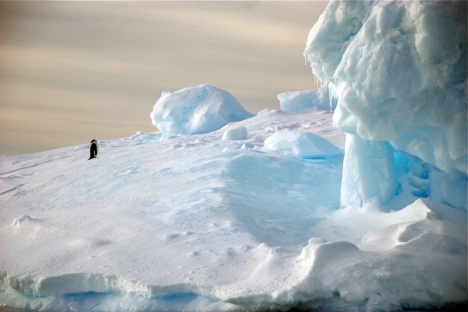
Spot the penguin! A single Adelie penguin on pack ice. Photo by: J. Weller.
Pablo Garcia Borboroglu: Climate change is suggested as one of the main causes of decline of many penguin species. It results in changes in sea ice cover and timing as well as key oceanographic characteristics such as surface temperature, upwelling, circulation, and seawater acidity. All of these factors can change prey availability affecting the abundance, nutritional quality and species composition of food for penguins.
Climate change is creating penguin winners and losers. Climate change is apparently already a major factor in the decline of four species. Two species, the King and Gentoo, have benefited by expanding their range south. Others like the Galapagos, African, and Humboldt penguins are losers because of the increased frequency or intensity of environmental events such as El Niño. Chinstrap and Adelie penguin in the Antarctic Peninsula depend on krill. Krill winter under ice where they can feed on algae. The melting of ice decreases krill survival and their abundance plummets. Climate warming is predicted to be highest at high latitudes where it has already caused Chinstrap and Adelie penguins in the Antarctic Peninsula to decline. Warming will also likely remove breeding habitat for Emperor penguins. Early break-up of shore ice, where Emperor penguins breed, can cause complete reproductive failure for the colony. Lack of ice may also result in problems finding a site to molt for ice-associated penguins.
Increased rainfall coupled with a cold wind can kill chicks that historically grew up in a dry desert climate on the coast of Peru, Argentina, South Africa or a sub-Antarctic island. The losers in climate change are not only temperate species. From the Galapagos to the Antarctic, climate change will likely have a negative impact on the breeding success of penguins. Rainfall increases in deserts and rain instead of snow in the Antarctic, depending on when it occurs, lowers penguin reproductive success.
Some of the best-documented signals of regional warming come from the western Antarctic Peninsula (WAP). In the WAP, the mean winter air temperature has risen more rapidly (6 degrees Celsius since 1950) than anywhere else in the world. Reduction in winter sea-ice cover caused shifts in penguin abundance and distribution.
One of the predicted results of climate warming is an increase in the frequency and severity of normal environmental events such as El Niño. The first seabird reported to show the biological effects of El Niño farther west than the South American coast was the Galápagos penguin. El Niño, with its warm, unproductive waters, caused adult Galápagos penguins to desert their eggs and chicks to search for food to save themselves while their chicks starved to death. Galápagos penguin populations are now about 25% of what they were in the 1970s. After the 1982–1983 and 1997–1998 events, Galápagos penguins declined by more than 65%. Using population viability analyses, researchers estimate that the chance of Galápagos penguins’ becoming extinct in the next 100 years is 30% without assuming more frequent and more severe El Niños.
Climate change is a large temporal scale problem. Improving the resiliency of penguins is the main goal to secure penguin populations.
Mongabay: Do you support efforts to safeguard much of Antarctica and the Southern Ocean from commercial fisheries? Are current fisheries imperiling penguin populations there?

Adelie penguin jumping out of the water. Photo by: J. Weller.
Pablo Garcia Borboroglu: The main problem for penguins caused by commercial fisheries in Antarctica is related to forage fish, which are mainly exploited for use in fishmeal, fish oil, and for direct consumption.
Forage species often serve an important and unique role in marine ecosystems. As small, plankton-feeding pelagic fishes and crustaceans, forage species are prey for other fishes, marine mammals and seabirds, transferring energy from plankton to these higher trophic levels. Forage species thus maintain energy flow through ecosystems and can regulate overall trophic dynamics. Reduction in forage species availability therefore can negatively impact predators and ecosystems. In most systems, only a few forage species occur, so ecosystems may not be resilient to forage species removal. Forage fisheries must therefore be managed under a regime that accounts for the dynamics of the target stock, its predators and prey, and climate-forcing. Management must be precautionary and adaptive, and requires an ecosystem approach.
In the Southern Ocean ecosystem, Antarctic krill is one of the main forage fish species. It serves as the prey base for fishes, birds and marine mammals. Sea ice density, climate, and oceanography affect krill population dynamics. Climate change will impact the dynamics of krill and their predators as will fishing and the combination of the two factors.
Fishing and foraging ranges overlap in some areas. Predators can be geographically constrained (e.g,. land-based breeding colonies of marine mammals and seabirds) and depend upon localized sources of krill. A recent study indicates that spatially concentrated harvest already occurs. Spatial management should limit fishing in some areas where predators feed.
THE GLOBAL PENGUIN SOCIETY AND SOLUTIONS

Adelie swimming. Photo by: J. Weller.
Mongabay: You're President of the Global Penguin Society. What makes this organization unique?
Pablo Garcia Borboroglu: Ocean conservation is crucial to life in the sea, the land, and to the quality of human life. We are living in an unprecedented age of modifications to marine systems. Penguins are particularly impacted by these phenomena: the International Union for the Conservation of Nature (IUCN) listes 60% of penguin species as Vulnerable or Endangered. Variations in ecosystem structure, processes, and productivity, caused mainly by climate change, pollution, and overfishing have impoverished living marine systems. Penguins are sensitive to these changes, and can reflect the status of oceans, providing information about the nature, magnitude, and location of priority conservation issues.
Penguins can also increase awareness of ocean health, making us reconsider our policies and behaviors. As charismatic, keystone, and seascape species, penguins can foster public and political support for integrated ocean conservation. However, there is no international organization directed toward penguin conservation.
The goal of the Global Penguin Society (GPS) is to promote the protection of penguin populations, through science, management and education, developing and advocating solutions for sustainable marine activities and management. Penguin research and conservation group efforts are being integrated synergistically into this coalition to speed up ocean conservation efforts. This coalition promotes science-based conservation, educates and advises governments and communities, influences policies, and campaigns through the media to educate people on how to improve both penguins’ and peoples’ quality of life.
The Society fosters the production and use of the good science needed
for the conservation and adequate management of penguins and marine
environments at local, regional, and global scales. To improve
management, GPS uses science to educate communities, decision makers and
provide recommendations for policy makers. The Society extends this
impact by forming partnerships to meet common goals, integrating many
isolated conservation and research groups into a team, working
synergistically. GPS will be an international forum for conservation
NGOs, academic and research institutions, individual projects, local
communities and other partners to work together strategically for the
conservation of penguins and oceans.
The coalition makes penguin conservation a global issue, but focuses at a local level. It develops an international cooperative team for better stewardship of the ocean, aligning the expertise of marine conservation leaders and penguin researchers and fostering the accumulation and use of knowledge and experience. Working as a learning network, we can share lessons extracted from similar local problems among different countries. For instance, the estimation and implementation methods of visitors carrying capacity has been solved for colonies in Australia, but continues to be a problem for South American penguin species. Lessons learned from other key management actions in colonies opened for tourism or the design of effective contingency plans for oil spills or fires can also be shared.
The existence of this international coalition provides a solid position when communicating concerns, submitting demands or negotiating solutions. One aim is to increase the effectiveness of local groups and individuals by linking them to similar efforts in other parts of the world. Isolated groups are also supported by the Global Penguin Society.
Science is extremely necessary, but in some cases it is not sufficient by itself to fix conservation problems. Most environmental problems have social roots, and the answers will only be found in the social arena. We need to increase awareness of what is happening to the ocean to catalyse changes in people´s behavior.
Unmistakably, penguins are a perfect tool to inspire major changes in actions and choices of individuals, of businesses, of governments, and of the international community. Penguins can create public and political interest and generate support; they can be a vehicle for integrated ocean conservation, and allow the protection of many other marine species and their habitats through ecosystem-based marine conservation planning. However, strategy, synergy and integration are lacking. GPS seeks to provide direction and action in this endeavour, because people care about penguins and the problems are often well documented, but the absence of integration and unified vision limits the scope of conservation achievements.
Mongabay: What are the group's biggest accomplishments so far?

Borboroglu with Magellanic penguins. Photo courtesy of GPS.
Pablo Garcia Borboroglu:
• New Book called Penguins: Natural History and Conservation: The book will be a remarkable product and a longtime contribution for the science, conservation and awareness of penguions in the international community. The effort made is reflected in the quality of the content. This book is a symbol of the integration we wanted to achieve within the penguin conservation world. The book will be a source of highly credible information about penguins. It will provide academics, conservation groups, NGOs and decision-makers will have a trust worthy source of information and recommendations.
• Discovery and protection of a new penguin colony (El Pedral, Patagonia): mo more penguin are killed there and habitat is protected from damage. We discovered El Pedral, conducted research, designed its management plan, implemented a protection proposal, and generated a sustainable tourism operation.
• The South African government invited us to contribute to the Management Plan of the Endangered African penguin. They also asked us for permission to use our book chapter on that species for their plan’s base document.
• Design and launching of our website: we have visitors from 71 countries and penguin conservation groups from all over send us material very frequently for publishing.
• Penguins meet the neighbor kids: taking the kids that live close to penguin colonies in Argentina and South Africa to visit penguins for the first time and learn about penguins and ocean conservation needs. Only 15% of the kids had visited the penguins before.
• Fourteen newspaper articles including The Washington Post and The Boston Globe (U.S.A.), Frankfurter Allgemeine Zeitung (Germany) , Folhas de Sao Paulo (Brazil), Clarin, Jornada, Diario de Madryn and Chubut (Argentina). Six Interviews on national and regional TV stations and several radio program participation.
• Five scientific papers were published in international journals: Research Priorities for Seabirds: improving seabird conservation and management in the 21st Century / Endangered Species Research; Magellanic Penguin Mortality in 2008 in Brazil / Marine Pollution Bulletin; Feather Loss disorder in African and Magellanic penguins / Waterbirds; Magellanic penguins in Patagonia: Conservation and management challenges / New Zealand Journal of Zoology.
Progress on specific goals:
1) The Global Penguin Society (GPS) was founded in 2009. Since then we
have met and engaged key people and organizations related to penguin
conservation and research in different countries (Australia, New
Zealand, South Africa, United States, Switzerland, United Kingdom,
Argentina, Uruguay and Chile). We held meetings and workshops and
organized or participated in events to strengthen GPS. For example in
2009 we were the plenary speaker at the Oamaru Penguin conservation
symposium on New Zealand penguins; in 2010 we attended the workshop to
design the Management Plan for the endangered African penguin; in 2010
we held a World Penguin Conservation Symposium at the International
Penguin Conference in Boston; and in 2011, together with Pew
Environmental Group, we organized a Penguin conservation status
Symposium at the International Marine Conservation Congress in Victoria,
Canada.
We also involved 56 researchers in of the book: PENGUINS: Natural History and Conservation. Some of the institutions included in our activities are: the British Antarctic Survey, the University of Cape Town, University of Otago, Univ of Maryland, University of Washington, Centre National de Recherche Scientifique (France), Australian Antarctic Division, Antarctic Research Trust (Germany), Ministry of Fisheries and Marine Resources of Namibia, Phillip Island Nature Parks (Australia), The Peregrine Fund, Charles Darwin Foundation and Galapagos National Park (Ecuador), Universidad Cayetano Heredia (Peru), etc.
2) Creation of the IUCN Penguin Specialist Group. IUCN specialist groups represent the highest level of scientific rigor and credibility with regards to conservation. We made very good progress to reach the goal of creating a specialist group for penguins. We have met with the IUCN General Director and other major authorities in Switzerland, and with authorities of the Species Survival Commission in Cambridge to get started in the process of creating this group.
3) Compile updated information for all penguin species. We accomplished this goal by editing the book mentioned above, that will be printed by University of Washington Press and will be available in English, Spanish and Japanese. It will have 400 full colour pages divided into 18 chapters with 190 figures and 89 tables. All 56 authors provided the most up-to-date information. Main section include diagnostic characteristics, distribution, population size and trends, threats, research gaps and needs, current conservation efforts and conservation priorities. The book will be available to order in mid-November.
4) Discuss a Global Penguin Conservation Strategy. We organized a Penguin Status conservation Symposium in Boston where experts presented the status of all penguin species. We coordinated meetings to discuss conservation priorities. Another joint presentation was done at the World Seabird Conference in Victoria together with leading authors.
In the book there are four sections on each penguin species that refer to this conservation strategy: Main threats, Recommendations of priority research actions for conservation, Current Conservation Efforts, and Recommendations of priority conservation actions.
5) Collaborate with and formulate advice for governments based on scientific, technical and empirical evidence, aiming at influencing decisions and policies. The coalition will formally offer assistance to governments. Such as:
Punta Tombo Advisory Management Commission: We fostered the creation and coordination of an Advisory Management Committee by the Provincial Government. We interested the administration in the creation of a marine protected area adjacent to Punta Tombo.
El Pedral Colony: During our research with penguins we discovered a new Magellanic penguin colony. However, the site selected by the first 13 penguins pairs was far from pristine. Unregulated recreational activities took place there, with fishermen and visitors leaving garbage all around and setting on fire bushes, where penguins nest, to make barbecues. Moreover, people with 4-wheel trucks and motorbikes crossed the area not paying attention to the nests. The fate and persistence of this colony depended on our ability to improve their habitat and design and implement an adequate management of human activities. We coordinated a multisectorial management plan for the area and submitted the application for its designation as Provincial Wildlife Refuge, which was approved. Now penguins are protected and we designed a very restricted touristic operation. The colony grew from 13 original nests in 2009 to 176 nests in 2011. This is now a model for a changing ocean environmental scenario that fosters the movements of species to areas where they never occurred before.
New Marine National Park at San Jorge Gulf, Argentina: We participated in meetings and workshops on the management of this park located in Central Patagonia that were organized by the National Government of Argentina.
We have also interacted with the Department of Conservation of New Zealand in a workshop about the Fiordland penguin. We submitted letters of concern to the National Government of Chile regarding their plans to build thermal power plants within a major Humboldt penguin breeding area. Wewere also involved in the design of a management plan for penguin colonies in Southern Chile (Magellanic National Park, Cape Horn) and Central Chile ( Region ed Los Lagos), where we facilitated material form management plans from Australia, South Africa and Argentina. Finally, we intervened with the Ambassador of Uruguay in Japan to avoid the purchase of wild penguins for an Aquarium in Tokio.
6) Design effective communication strategies to reach specific audiences with clear messages. GPS has a website
which contains information on what we do, who we are, goals,
activities, updated information on all species of penguins in the world,
and news. Launching announcements were made in Boston, New Zealand,
SouthAfrica and Argentina.
GPS was the scientific advisor for the complete exhibits of the new Interpretation Center for Magellanic Penguins in the Province of Chubut, Argentina, where 130,000 visit the area per year.
7) Campaigning through the media in association with other worldwide conservation initiatives. This includes highlighting the power of individual responsibility to make a change for ocean conservation byway of penguins. GPS activities (including television documentary films) were covered by the media in Argentina and several countries: Argentina, Brazil, Germany, France, England, the Netherlands and the United States, among others.
8) Promote and help consolidate marine conservation initiatives, such as the designation of Marine Protected Areas (MPAs) or other more appropriate marine conservation tools in the Southern Oceans.
To promote the designation of new marine protected areas we obtained critical information about penguin colonies along Patagonia, foraging areas (from satellite tracked penguins), and estimated abundance.
After succeeding in protecting the new colony at El Pedral, we are working to foster on the incorporation of a marine protected area to protect the foraging ground.
We are collaborating with the Government of Ecuador (Galapagos) to improve the breeding habitat for Galpagos penguins and we are assisting the government of Rio Negro Province (Argentina) in the research and protection of 3 penguin colonies recently settled in their coasts.
9) Foster the signature and implementation of multilateral agreements. Migration ranges often extend across borders of many countries, so we promote the generation of Regional Conventions for penguin conservation. Toward this end, we published an article in Marine Pollution Bulletin, about an extreme migration never reported historically, coupled with a mass mortality of Magellanic penguins during the winter 2008. We suggest that this mortality event may have resulted from a lack of prey related to a low sea surface temperature anomaly, potentially linked to climate variability. This paper complements a previous one we published in 2006, justifying the need to propose an international agreement between Argentina, Uruguay and Brazil for this species.
Mongabay: How is the Global Penguin Society working to make people more aware of the precarious position for penguins?

Borboroglu giving presentation on penguins to school children. Photo courtesy of GPS.
Pablo Garcia Borboroglu: The Global Penguin Society has an education program with several key activities designed to increase visibility for penguins:
1. We promote participatory processes where stakeholders are part of the design and implementation of community-based management plans or guidelines for penguin colonies.
2. We empower local communities by training them to generate sustainable incomes through ecotourism mainly in developing countries. We offer lectures to train local people to become tour guides, wardens and other roles related with ecotourism.
3. Communication is crucial to reach communities that coexist with penguins and involve them in deciding the fate of penguins. Sometimes there is less information and education of people near the resource than for people that live far from them. Both groups are needed, however, if penguins are to be conserved. We also target local education efforts at communities and schools near colonies so that the next generation will value, respect and protect penguins more.
Activities include:
• School trips for kids to visit nearby natural areas with penguins to teach them about their needs and value them more.
• Providing poor school libraries and low-income family kids with books about penguins, marine conservation and natural resources.
• Producing posters, leaflets and educational material for schools and general audiences.
4. Mainstream media participation: We broadcast project activities, findings and conservation concerns publishing popular articles in newspapers and magazines, participating in radio interviews and television programs to reach broader and discrete audiences. We already had press cover (TV, radio, newspapers and documentary films) in many countries: Argentina, Brazil, U.S.A., Mexico, U.S.A., Canada, Germany, Netherlands and France. We also share content on our website and Facebook pages.
5. Provide ideas and information to empower children and families who play Disney Club Penguin online. Millions of kids and their families interact with penguins when they are playing online. We offer information about penguins and suggest ideas and interesting pieces of information so that kids can learn about real penguin lives, their home habitat, lifestyles, tastes, and needs.
Mongabay: How could improving understanding of penguins' plight aid the health of the oceans altogether?

Adelie penguin on blue iceberg. Photo by: J. Weller.
Pablo Garcia Borboroglu: The oceans are in trouble, and so are penguins. Many species of penguins are becoming more endangered and the increasing anthropogenic sources of mortality appear to be an important driving factor in their decline.
The Global Penguin Society works at different scales. Sometimes we deal with specific penguin colony management, and in other cases we work to improve the stewardship of anthropogenic activities in the ocean. In this last case, the benefits are seen in the marine ecosystem of interest and also by many other species. A typical example is the oil pollution problem that affects penguins. Penguins are hardy animals that can swim many kilometers in the ocean after they get oiled. Once they reach the coast they cannot go back to the ocean to feed by themselves, so they starve to death during weeks. People see them and they feel very sorry for them, so they want the problem to be solved for penguins. So, the charisma of penguins leads to improved management of some activities, such as oil development, which can also be helpful for the oceans in general and many other creatures.
Penguin Species
Endangered:
Erect-crested penguin ( Eudyptes sclateri)
Galapagos penguin (Spheniscus mendiculus)
Northern rockhopper penguin (Eudyptes moseleyi)
Yellow-eyed penguin (Megadyptes antipodes)
African penguin ( Spheniscus demersus)
Vulnerable:
Fiordland penguin (Eudyptes pachyrynchus)
Humboldt penguin (Spheniscus humboldti)
Macaroni penguin (Eudyptes chrysolophus)
Royal penguin (Eudyptes schlegeli)
Snares penguin (Eudyptes robustus)
Southern rockhopper penguin (Eudyptes chrysocome)
Near Threatened:
Gentoo penguin ( Pygoscelis papua)
Magellanic penguin ( Spheniscus magellanicus)
Emperor penguin ( Aptenodytes forsteri)
Adelie penguin ( Pygoscelis adeliae)
Least Concern:
Chinstrap penguin ( Pygoscelis antarctica)
King penguin (Aptenodytes patagonicus)
Little penguin ( Eudyptula minor)
source
"Penguins are telling us a story that we need to hear: 11 of the 18 species of penguins are listed as Vulnerable or Endangered by IUCN," Pablo Garcia Borboroglu, the President of the Global Penguin Society, told mongabay.com in a recent interview. "Penguins have particular life history traits that make them vulnerable to environmental changes. They are flightless Southern Hemisphere birds. They are long-lived, lay one or two eggs, and take several months to raise their offspring. They breed in colonies, and depend on marine food sources that are spatially and temporarily unpredictable."
These factors make penguins not only extremely sensitive to large-scale environmental changes, but also key species for monitoring the overall health of oceans. Declines among many of the penguin species over recent decades have followed wider problems in the oceans.
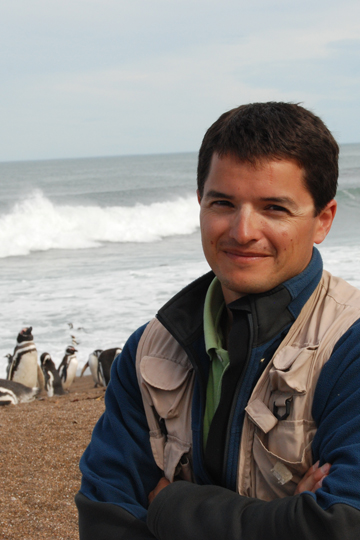 |
| Borboroglu with Magellanic penguins in the background. Photo courtesy of GPS. |
On top of overfishing, oil spills have pummeled a number of penguin species year-after-year, including African penguins (Spheniscus demersus) and Magellanic penguins (Spheniscus magellanicus). Other species have also been hurt by less common spill incidents, such as the spill that oiled thousands of northern rockhopper penguins (Eudyptes moseleyi) last year in the remote Tristan da Cunha archipelago. Oil spills have resulted in dramatic, in some cases, unprecedented rescue efforts, but even surviving birds suffer from reproduction problems due to the pollution.
Finally, climate change is, according to Borboroglu, "creating penguin winners and losers." Increasing and worsening El Niño conditions due to climate change could push the Galápagos penguin (Spheniscus mendiculus) to extinction within a century. Meanwhile, Chinstrap (Pygoscelis antarcticus) and Adelie penguins (Pygoscelis adeliae) may end up losing out if a warmer world means less krill in their feeding grounds as predicted. Emperor penguins could face problems due to a lack of shore ice needed for breeding. While two penguins, the King penguin (Aptenodytes patagonicus) and Gentoo penguin (Pygoscelis papua), appear to be currently benefitting from climate change due to habitat expansion.
But despite these two "winners" the general picture of the world's penguins is one of rapid and alarming decline. Sixty-one percent of penguins are considered threatened with extinction, and if the IUCN's Near Threatened category is included, the percentage jumps to 83 percent. Borboroglu sees this as evidence of the wider crisis facing the world's oceans.
"Ocean conservation is crucial to life in the sea, the land, and to the quality of human life," he says, adding that, "we are living in an unprecedented age of modifications to marine systems."
But according to Borboroglu, penguins not only show us problems in our marine ecosystems, but can also help lead to positive action—if only people wake up the penguin's plight.
"As charismatic, keystone, and seascape species, penguins can foster public and political support for integrated ocean conservation," he notes. This is where GPS comes in, aiding efforts to conserve penguins through working directly with governments on creating protected areas and improving management; helping craft conservation plans and conducting research with other experts; and providing local education through field trips, lectures, and a new, comprehensive book coming out this winter: Penguins: Natural History and Conservation.
In a September 2012 interview, Pablo Garcia Borboroglu discusses the threats facing penguins worldwide, the many solution necessary to make sure penguins don't vanish, and how the Global Penguin Society is contributing to this mission.
Borboroglu will be presenting at the up-coming Wildlife Conservation Network Expo in San Francisco on October 13th, 2012, an event which will be headed by Charles Knowles and Dr. Jean-Gael Collomb.
INTERVIEW WITH PABLO GARCIA BORBOROGLU
Gentoo penguin on a beach. Photo by: J. Weller.
Mongabay: What drew you to penguins?
Pablo Garcia Borboroglu: When I was 2-3 years old I lived in a city in Argentina where there were no penguins. But my grandmother used to tell me about the penguins of Patagonia and for me it was something really magical. I think her passionate description of the penguin colonies left a special message in my memory.
Later, as a teenager, I decided to become an ambassador. To do so in Argentina, you have to become a lawyer first. So I studied languages (English and French) and laws for 2 years, but I did not like it that much. Therefore I moved to Patagonia for the summer and I started working in a travel agency. In those years (80s) there were a very large numbers of oiled penguins found along the beach and 40,000 died annually from pollution. I felt really shocked by this problem and started picking up oiled live penguins and set up and emergency station in a farm where I used to rehabilitate them. Working as a tour guide for foreign tourists, I learned a lot about wildlife, particularly penguins, and I realized that I could transmit a conservation message to a lot of people. So I decided to study biology at the University and after that I completed my Ph.D. working on ecology, management and the conservation of seabirds. Throughout these periods I kept working on penguin science and conservation.
PENGUINS: THE FORGOTTEN ENDANGERED SPECIES
King penguins. Photo by: J. Weller.
Mongabay: One rarely hears about how endangered penguins are as compared to other species like big cats or rhinos. Why do you think that is?
Pablo Garcia Borboroglu: That is absolutely true, people love penguins but they are unaware of their decline. So it is not a matter of charisma.
I guess one reason is that big cats and rhinos face threats that are more tangible and direct for humans, like hunting for instance. Besides, most of their conservation problems are on land and people can see them. In the case of penguins, most threats are not necessarily visible and concrete. For example, lack of food availability in the ocean, change in oceanographic conditions caused by climate change, and pollution in remote areas.
I think it also has something to do with the image of penguins broadcast in mainstream media. Typically images show colonies of particular species in Antarctica, with hundreds of animals, like the Emperor penguin. Since there is no vegetation and they nest in dense aggregations people perceive there are a lot of penguins. Besides, many documentary films or movies always show the funny and amusing part of penguins but not necessarily their conservation status. This issue related with communication is also reflected in the fact that most people think that penguins only live on the ice in the South Pole, and they ignore that most species live in temperate regions and even above the Equator line.
Mongabay: More than half of all penguin species are currently threatened with extinction. What happened to the world's penguins? What are the biggest threats to penguins today?
Pablo Garcia Borboroglu: Ocean conservation is fundamental to assure that ecosystems function while humanity and other living forms thrive. Unfortunately, we have initiated an unprecedented age of alterations to marine and coastal environments. Penguins are particularly affected by these phenomena. As top predators, penguins are key constituents of marine ecosystems, and as such are indicators of the oceanic and coastal ecosystem health. Penguins are telling us a story that we need to hear: 11 of the 18 species of penguins are listed as Vulnerable or Endangered by IUCN.
 |
| Magellanic penguin furnishing nest. Photo by: W. Conway. |
In addition, penguins are among the most conspicuous victims of marine pollution. They are particularly sensitive to petroleum spills because they swim low in the water, surface regularly to breathe, do not fly and are less able to avoid petroleum than other seabirds. Mortality of penguins from accidental and chronic petroleum discharge is a both long-term and large-scale problem, having killed thousands of penguins in Africa, South America, Australia and New Zealand, and even Antarctica. The African penguin populations, in particular, have been devastated by this threat, in combination with guano harvest, egging, and fishing, showing a decline from 1.5 million a hundred years ago to 25,000 pairs today. Approximately 40,000 Magellanic penguins were killed each year by oil pollution within their breeding range in Argentina in the 1980s and there are at least 25 organizations in Brazil, Uruguay and Argentina dedicated to washing oiled penguins. Current trends in the economy of the countries where penguins breed or migrate indicate an exponential increase in petroleum development suggesting that the risk of petroleum spills will only increase.
Fisheries are also a threat to penguins. Large-scale industrial fisheries starting in the mid 20th Century removed enormous numbers of fish from the Southern Oceans. Some prey species for Sub-Antarctic penguins, such as mackerel icefish are 10 percent of their population size prior to fishing. Commercial fishing has also reduced the carrying capacity of the Benguela ecosystem for penguins to only 10 to 20 percent of what it was in the 1920s, and hence it is not a surprise that African penguins declined by 90 percent. Fishing for anchovy in the Pacific Ocean contributed to the tremendous decrease of Humboldt penguin from a million in the 1930s to less than 30,000 now. Expanding fisheries in the Southwest Atlantic will increasingly compete with Magellanic penguins. As prey continues to be reduced by commercial fishing, and climate perturbation becomes more common, penguin colonies will be harmed.
Currently, some species of penguins face hazards within their colonies related to inadequate management of human activities, such as egging, irresponsible tourism, coastal development, and introduced predators.
To what extent is the condition of the marine environment mirrored by penguin populations’ conservation status? Penguins use a wide range of marine habitats covering hundreds and even thousands of kilometers in their foraging and wintering migrations. Therefore, they cover a relatively large portion of the vast Southern Oceans. As ocean samplers, they can serve as cost-effective indicators of the health of the oceans they inhabit, allowing us to have a better scientific insight into the nature, magnitude and location of priority marine conservation issues to address.
Mongabay: What changes are needed for global fisheries to ensure penguins have enough food? How do we ensure protection at penguin foraging areas?
Penguin drowned by fishing net. Photo by: D. Boersma.
Pablo Garcia Borboroglu: The negative effects of fisheries on penguin populations vary depending on the species and the area.
For example, with the African penguin the large, more recent decline seems to be related to decreased prey availability in part due to competition with industrial fisheries for food and the eastward shift in prey abundance. This shift could be the consequence of climate change and also overfishing. In South Africa the existing marine reserves may be too small or may need to be re-designed to produce a positive impact on the recovery of the population. In the case of the Humboldt penguin, the decrease in abundance has been linked to overfishing, direct take of birds and eggs for human consumption as well as for bait, and habitat degradation due to guano harvesting. Prey availability has been suggested as the main impact limiting the growth of the population. To benefit penguins and many other organisms, it is necessary to implement an ecosystem-based management of the anchovy fishery.
There are other cases, like the yellow-eyed penguin, where entanglement in fishing gear seems to be an important cause of mortality, but there is a need to conduct more studies to assess the real magnitude and nature of the problem.
In general, it is necessary to create or expand no-fishing zones around major rookeries. To be able to stabilize or recover some penguin populations it would be important to implement additional measures in already existing protected areas. In some regions it is also imperative to implement serious recommendations made to achieve a real ecosystem-based fishery management where the demands of the penguins (and other top and meso-predators) are considered in calculating the fish total allowable catches.
We have participated in a statement coordinated by the Pew Environmental Group to submit recommendations to the Marine Stewardship Council regarding the certification of krill fishery in Antarctica to improve fishing management and practices.
Mongabay: The drive for fossil fuels is also imperiling penguin populations. Will you tell us about how oil pollution is imperiling Magellanic penguins?
Oiled Magellanic penguins. Photo by: D. Boersma.
Pablo Garcia Borboroglu: Oiling of penguins is likely a common problem wherever tankers and penguins mix. One of the best documentations of how vulnerable penguins are to petroleum discharge is the chronic pollution problems along the coast of Argentina. For decades chronic oil pollution killed Magellanic penguins in Argentina and more recently has been documented as a problem in Brazil. It was estimated that over 40,000 Magellanic penguins were killed each year by chronic oil pollution along the coast of Chubut Province, Argentina, from 1982 to 1991. In 1994 tanker lanes were moved 100 km farther offshore, and few penguins are now found dead with petroleum along the Chubut coast.
Magellanic penguins migrate between Argentina and Brazil in the Atlantic Ocean on routes that overlap with heavy maritime traffic and petroleum development. Twenty-five groups from Salvador, Brazil to San Antonio Oeste, Argentina survey or rehabilitate sick or oiled seabirds. An average of 63.7 percent of the seabirds found were Magellanic penguins, with 3,869 reported since 1987. Mainly adult penguins were found in Argentina (1,605 of 2102 penguins of known age class) and Uruguay (158 of 197). Juveniles were most common in Brazil (234 of 325). Oil fouling was the most frequent cause of injury or sickness.
In long-lived seabirds such as penguins, that mature late and lay small clutches, even small decreases in adult survival can cause populations to decline. In addition, even small amounts of petroleum reduce reproductive success in penguins. The large number of adult penguins affected by chronic oil pollution in their wintering range suggests that this problem will have to be ameliorated before populations of Magellanic penguins rebound at their breeding colonies.
The number of oiled penguins reported in their wintering range has greatly increased since the early 1990s and is strongly correlated with petroleum exports from Argentina.
Regulations and enforcement are failing to protect living resources. We conclude that governments are failing to adequately protect penguins from petroleum pollution in the Southwest Atlantic. We need to enforce the national and international regulations that prohibit oil discharge and create more incentives to reduce both accidental and intentional oil spills.
Mongabay: If climate change isn't dealt with what will that mean for the world's penguin species?
Spot the penguin! A single Adelie penguin on pack ice. Photo by: J. Weller.
Pablo Garcia Borboroglu: Climate change is suggested as one of the main causes of decline of many penguin species. It results in changes in sea ice cover and timing as well as key oceanographic characteristics such as surface temperature, upwelling, circulation, and seawater acidity. All of these factors can change prey availability affecting the abundance, nutritional quality and species composition of food for penguins.
Climate change is creating penguin winners and losers. Climate change is apparently already a major factor in the decline of four species. Two species, the King and Gentoo, have benefited by expanding their range south. Others like the Galapagos, African, and Humboldt penguins are losers because of the increased frequency or intensity of environmental events such as El Niño. Chinstrap and Adelie penguin in the Antarctic Peninsula depend on krill. Krill winter under ice where they can feed on algae. The melting of ice decreases krill survival and their abundance plummets. Climate warming is predicted to be highest at high latitudes where it has already caused Chinstrap and Adelie penguins in the Antarctic Peninsula to decline. Warming will also likely remove breeding habitat for Emperor penguins. Early break-up of shore ice, where Emperor penguins breed, can cause complete reproductive failure for the colony. Lack of ice may also result in problems finding a site to molt for ice-associated penguins.
Increased rainfall coupled with a cold wind can kill chicks that historically grew up in a dry desert climate on the coast of Peru, Argentina, South Africa or a sub-Antarctic island. The losers in climate change are not only temperate species. From the Galapagos to the Antarctic, climate change will likely have a negative impact on the breeding success of penguins. Rainfall increases in deserts and rain instead of snow in the Antarctic, depending on when it occurs, lowers penguin reproductive success.
Some of the best-documented signals of regional warming come from the western Antarctic Peninsula (WAP). In the WAP, the mean winter air temperature has risen more rapidly (6 degrees Celsius since 1950) than anywhere else in the world. Reduction in winter sea-ice cover caused shifts in penguin abundance and distribution.
One of the predicted results of climate warming is an increase in the frequency and severity of normal environmental events such as El Niño. The first seabird reported to show the biological effects of El Niño farther west than the South American coast was the Galápagos penguin. El Niño, with its warm, unproductive waters, caused adult Galápagos penguins to desert their eggs and chicks to search for food to save themselves while their chicks starved to death. Galápagos penguin populations are now about 25% of what they were in the 1970s. After the 1982–1983 and 1997–1998 events, Galápagos penguins declined by more than 65%. Using population viability analyses, researchers estimate that the chance of Galápagos penguins’ becoming extinct in the next 100 years is 30% without assuming more frequent and more severe El Niños.
Climate change is a large temporal scale problem. Improving the resiliency of penguins is the main goal to secure penguin populations.
Mongabay: Do you support efforts to safeguard much of Antarctica and the Southern Ocean from commercial fisheries? Are current fisheries imperiling penguin populations there?
Adelie penguin jumping out of the water. Photo by: J. Weller.
Pablo Garcia Borboroglu: The main problem for penguins caused by commercial fisheries in Antarctica is related to forage fish, which are mainly exploited for use in fishmeal, fish oil, and for direct consumption.
Forage species often serve an important and unique role in marine ecosystems. As small, plankton-feeding pelagic fishes and crustaceans, forage species are prey for other fishes, marine mammals and seabirds, transferring energy from plankton to these higher trophic levels. Forage species thus maintain energy flow through ecosystems and can regulate overall trophic dynamics. Reduction in forage species availability therefore can negatively impact predators and ecosystems. In most systems, only a few forage species occur, so ecosystems may not be resilient to forage species removal. Forage fisheries must therefore be managed under a regime that accounts for the dynamics of the target stock, its predators and prey, and climate-forcing. Management must be precautionary and adaptive, and requires an ecosystem approach.
In the Southern Ocean ecosystem, Antarctic krill is one of the main forage fish species. It serves as the prey base for fishes, birds and marine mammals. Sea ice density, climate, and oceanography affect krill population dynamics. Climate change will impact the dynamics of krill and their predators as will fishing and the combination of the two factors.
Fishing and foraging ranges overlap in some areas. Predators can be geographically constrained (e.g,. land-based breeding colonies of marine mammals and seabirds) and depend upon localized sources of krill. A recent study indicates that spatially concentrated harvest already occurs. Spatial management should limit fishing in some areas where predators feed.
THE GLOBAL PENGUIN SOCIETY AND SOLUTIONS
Adelie swimming. Photo by: J. Weller.
Mongabay: You're President of the Global Penguin Society. What makes this organization unique?
Pablo Garcia Borboroglu: Ocean conservation is crucial to life in the sea, the land, and to the quality of human life. We are living in an unprecedented age of modifications to marine systems. Penguins are particularly impacted by these phenomena: the International Union for the Conservation of Nature (IUCN) listes 60% of penguin species as Vulnerable or Endangered. Variations in ecosystem structure, processes, and productivity, caused mainly by climate change, pollution, and overfishing have impoverished living marine systems. Penguins are sensitive to these changes, and can reflect the status of oceans, providing information about the nature, magnitude, and location of priority conservation issues.
Penguins can also increase awareness of ocean health, making us reconsider our policies and behaviors. As charismatic, keystone, and seascape species, penguins can foster public and political support for integrated ocean conservation. However, there is no international organization directed toward penguin conservation.
The goal of the Global Penguin Society (GPS) is to promote the protection of penguin populations, through science, management and education, developing and advocating solutions for sustainable marine activities and management. Penguin research and conservation group efforts are being integrated synergistically into this coalition to speed up ocean conservation efforts. This coalition promotes science-based conservation, educates and advises governments and communities, influences policies, and campaigns through the media to educate people on how to improve both penguins’ and peoples’ quality of life.
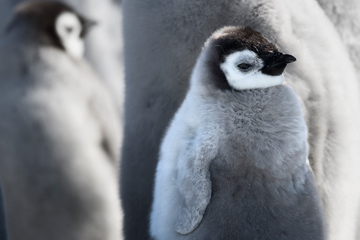 |
| Emperor penguin chick. Photo by: J. Weller. |
The coalition makes penguin conservation a global issue, but focuses at a local level. It develops an international cooperative team for better stewardship of the ocean, aligning the expertise of marine conservation leaders and penguin researchers and fostering the accumulation and use of knowledge and experience. Working as a learning network, we can share lessons extracted from similar local problems among different countries. For instance, the estimation and implementation methods of visitors carrying capacity has been solved for colonies in Australia, but continues to be a problem for South American penguin species. Lessons learned from other key management actions in colonies opened for tourism or the design of effective contingency plans for oil spills or fires can also be shared.
The existence of this international coalition provides a solid position when communicating concerns, submitting demands or negotiating solutions. One aim is to increase the effectiveness of local groups and individuals by linking them to similar efforts in other parts of the world. Isolated groups are also supported by the Global Penguin Society.
Science is extremely necessary, but in some cases it is not sufficient by itself to fix conservation problems. Most environmental problems have social roots, and the answers will only be found in the social arena. We need to increase awareness of what is happening to the ocean to catalyse changes in people´s behavior.
Unmistakably, penguins are a perfect tool to inspire major changes in actions and choices of individuals, of businesses, of governments, and of the international community. Penguins can create public and political interest and generate support; they can be a vehicle for integrated ocean conservation, and allow the protection of many other marine species and their habitats through ecosystem-based marine conservation planning. However, strategy, synergy and integration are lacking. GPS seeks to provide direction and action in this endeavour, because people care about penguins and the problems are often well documented, but the absence of integration and unified vision limits the scope of conservation achievements.
Mongabay: What are the group's biggest accomplishments so far?
Borboroglu with Magellanic penguins. Photo courtesy of GPS.
Pablo Garcia Borboroglu:
• New Book called Penguins: Natural History and Conservation: The book will be a remarkable product and a longtime contribution for the science, conservation and awareness of penguions in the international community. The effort made is reflected in the quality of the content. This book is a symbol of the integration we wanted to achieve within the penguin conservation world. The book will be a source of highly credible information about penguins. It will provide academics, conservation groups, NGOs and decision-makers will have a trust worthy source of information and recommendations.
• Discovery and protection of a new penguin colony (El Pedral, Patagonia): mo more penguin are killed there and habitat is protected from damage. We discovered El Pedral, conducted research, designed its management plan, implemented a protection proposal, and generated a sustainable tourism operation.
• The South African government invited us to contribute to the Management Plan of the Endangered African penguin. They also asked us for permission to use our book chapter on that species for their plan’s base document.
• Design and launching of our website: we have visitors from 71 countries and penguin conservation groups from all over send us material very frequently for publishing.
• Penguins meet the neighbor kids: taking the kids that live close to penguin colonies in Argentina and South Africa to visit penguins for the first time and learn about penguins and ocean conservation needs. Only 15% of the kids had visited the penguins before.
• Fourteen newspaper articles including The Washington Post and The Boston Globe (U.S.A.), Frankfurter Allgemeine Zeitung (Germany) , Folhas de Sao Paulo (Brazil), Clarin, Jornada, Diario de Madryn and Chubut (Argentina). Six Interviews on national and regional TV stations and several radio program participation.
• Five scientific papers were published in international journals: Research Priorities for Seabirds: improving seabird conservation and management in the 21st Century / Endangered Species Research; Magellanic Penguin Mortality in 2008 in Brazil / Marine Pollution Bulletin; Feather Loss disorder in African and Magellanic penguins / Waterbirds; Magellanic penguins in Patagonia: Conservation and management challenges / New Zealand Journal of Zoology.
Progress on specific goals:
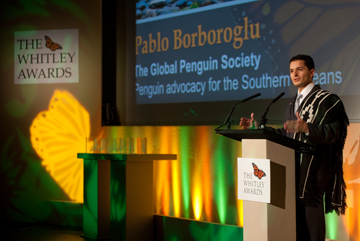 |
| Borboroglu accepting the Whitely Award in 2010. Photo courtesy of GPS. |
We also involved 56 researchers in of the book: PENGUINS: Natural History and Conservation. Some of the institutions included in our activities are: the British Antarctic Survey, the University of Cape Town, University of Otago, Univ of Maryland, University of Washington, Centre National de Recherche Scientifique (France), Australian Antarctic Division, Antarctic Research Trust (Germany), Ministry of Fisheries and Marine Resources of Namibia, Phillip Island Nature Parks (Australia), The Peregrine Fund, Charles Darwin Foundation and Galapagos National Park (Ecuador), Universidad Cayetano Heredia (Peru), etc.
2) Creation of the IUCN Penguin Specialist Group. IUCN specialist groups represent the highest level of scientific rigor and credibility with regards to conservation. We made very good progress to reach the goal of creating a specialist group for penguins. We have met with the IUCN General Director and other major authorities in Switzerland, and with authorities of the Species Survival Commission in Cambridge to get started in the process of creating this group.
3) Compile updated information for all penguin species. We accomplished this goal by editing the book mentioned above, that will be printed by University of Washington Press and will be available in English, Spanish and Japanese. It will have 400 full colour pages divided into 18 chapters with 190 figures and 89 tables. All 56 authors provided the most up-to-date information. Main section include diagnostic characteristics, distribution, population size and trends, threats, research gaps and needs, current conservation efforts and conservation priorities. The book will be available to order in mid-November.
4) Discuss a Global Penguin Conservation Strategy. We organized a Penguin Status conservation Symposium in Boston where experts presented the status of all penguin species. We coordinated meetings to discuss conservation priorities. Another joint presentation was done at the World Seabird Conference in Victoria together with leading authors.
In the book there are four sections on each penguin species that refer to this conservation strategy: Main threats, Recommendations of priority research actions for conservation, Current Conservation Efforts, and Recommendations of priority conservation actions.
5) Collaborate with and formulate advice for governments based on scientific, technical and empirical evidence, aiming at influencing decisions and policies. The coalition will formally offer assistance to governments. Such as:
Punta Tombo Advisory Management Commission: We fostered the creation and coordination of an Advisory Management Committee by the Provincial Government. We interested the administration in the creation of a marine protected area adjacent to Punta Tombo.
El Pedral Colony: During our research with penguins we discovered a new Magellanic penguin colony. However, the site selected by the first 13 penguins pairs was far from pristine. Unregulated recreational activities took place there, with fishermen and visitors leaving garbage all around and setting on fire bushes, where penguins nest, to make barbecues. Moreover, people with 4-wheel trucks and motorbikes crossed the area not paying attention to the nests. The fate and persistence of this colony depended on our ability to improve their habitat and design and implement an adequate management of human activities. We coordinated a multisectorial management plan for the area and submitted the application for its designation as Provincial Wildlife Refuge, which was approved. Now penguins are protected and we designed a very restricted touristic operation. The colony grew from 13 original nests in 2009 to 176 nests in 2011. This is now a model for a changing ocean environmental scenario that fosters the movements of species to areas where they never occurred before.
New Marine National Park at San Jorge Gulf, Argentina: We participated in meetings and workshops on the management of this park located in Central Patagonia that were organized by the National Government of Argentina.
We have also interacted with the Department of Conservation of New Zealand in a workshop about the Fiordland penguin. We submitted letters of concern to the National Government of Chile regarding their plans to build thermal power plants within a major Humboldt penguin breeding area. Wewere also involved in the design of a management plan for penguin colonies in Southern Chile (Magellanic National Park, Cape Horn) and Central Chile ( Region ed Los Lagos), where we facilitated material form management plans from Australia, South Africa and Argentina. Finally, we intervened with the Ambassador of Uruguay in Japan to avoid the purchase of wild penguins for an Aquarium in Tokio.
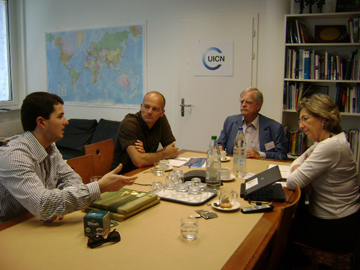 |
| Borboroglu at meeting with IUCN. Photo courtesy of GPS. |
GPS was the scientific advisor for the complete exhibits of the new Interpretation Center for Magellanic Penguins in the Province of Chubut, Argentina, where 130,000 visit the area per year.
7) Campaigning through the media in association with other worldwide conservation initiatives. This includes highlighting the power of individual responsibility to make a change for ocean conservation byway of penguins. GPS activities (including television documentary films) were covered by the media in Argentina and several countries: Argentina, Brazil, Germany, France, England, the Netherlands and the United States, among others.
8) Promote and help consolidate marine conservation initiatives, such as the designation of Marine Protected Areas (MPAs) or other more appropriate marine conservation tools in the Southern Oceans.
To promote the designation of new marine protected areas we obtained critical information about penguin colonies along Patagonia, foraging areas (from satellite tracked penguins), and estimated abundance.
After succeeding in protecting the new colony at El Pedral, we are working to foster on the incorporation of a marine protected area to protect the foraging ground.
We are collaborating with the Government of Ecuador (Galapagos) to improve the breeding habitat for Galpagos penguins and we are assisting the government of Rio Negro Province (Argentina) in the research and protection of 3 penguin colonies recently settled in their coasts.
9) Foster the signature and implementation of multilateral agreements. Migration ranges often extend across borders of many countries, so we promote the generation of Regional Conventions for penguin conservation. Toward this end, we published an article in Marine Pollution Bulletin, about an extreme migration never reported historically, coupled with a mass mortality of Magellanic penguins during the winter 2008. We suggest that this mortality event may have resulted from a lack of prey related to a low sea surface temperature anomaly, potentially linked to climate variability. This paper complements a previous one we published in 2006, justifying the need to propose an international agreement between Argentina, Uruguay and Brazil for this species.
Mongabay: How is the Global Penguin Society working to make people more aware of the precarious position for penguins?
Borboroglu giving presentation on penguins to school children. Photo courtesy of GPS.
Pablo Garcia Borboroglu: The Global Penguin Society has an education program with several key activities designed to increase visibility for penguins:
1. We promote participatory processes where stakeholders are part of the design and implementation of community-based management plans or guidelines for penguin colonies.
2. We empower local communities by training them to generate sustainable incomes through ecotourism mainly in developing countries. We offer lectures to train local people to become tour guides, wardens and other roles related with ecotourism.
3. Communication is crucial to reach communities that coexist with penguins and involve them in deciding the fate of penguins. Sometimes there is less information and education of people near the resource than for people that live far from them. Both groups are needed, however, if penguins are to be conserved. We also target local education efforts at communities and schools near colonies so that the next generation will value, respect and protect penguins more.
Activities include:
• School trips for kids to visit nearby natural areas with penguins to teach them about their needs and value them more.
• Providing poor school libraries and low-income family kids with books about penguins, marine conservation and natural resources.
• Producing posters, leaflets and educational material for schools and general audiences.
4. Mainstream media participation: We broadcast project activities, findings and conservation concerns publishing popular articles in newspapers and magazines, participating in radio interviews and television programs to reach broader and discrete audiences. We already had press cover (TV, radio, newspapers and documentary films) in many countries: Argentina, Brazil, U.S.A., Mexico, U.S.A., Canada, Germany, Netherlands and France. We also share content on our website and Facebook pages.
5. Provide ideas and information to empower children and families who play Disney Club Penguin online. Millions of kids and their families interact with penguins when they are playing online. We offer information about penguins and suggest ideas and interesting pieces of information so that kids can learn about real penguin lives, their home habitat, lifestyles, tastes, and needs.
Mongabay: How could improving understanding of penguins' plight aid the health of the oceans altogether?
Adelie penguin on blue iceberg. Photo by: J. Weller.
Pablo Garcia Borboroglu: The oceans are in trouble, and so are penguins. Many species of penguins are becoming more endangered and the increasing anthropogenic sources of mortality appear to be an important driving factor in their decline.
The Global Penguin Society works at different scales. Sometimes we deal with specific penguin colony management, and in other cases we work to improve the stewardship of anthropogenic activities in the ocean. In this last case, the benefits are seen in the marine ecosystem of interest and also by many other species. A typical example is the oil pollution problem that affects penguins. Penguins are hardy animals that can swim many kilometers in the ocean after they get oiled. Once they reach the coast they cannot go back to the ocean to feed by themselves, so they starve to death during weeks. People see them and they feel very sorry for them, so they want the problem to be solved for penguins. So, the charisma of penguins leads to improved management of some activities, such as oil development, which can also be helpful for the oceans in general and many other creatures.
Penguin Species
Endangered:
Erect-crested penguin ( Eudyptes sclateri)
Galapagos penguin (Spheniscus mendiculus)
Northern rockhopper penguin (Eudyptes moseleyi)
Yellow-eyed penguin (Megadyptes antipodes)
African penguin ( Spheniscus demersus)
Vulnerable:
Fiordland penguin (Eudyptes pachyrynchus)
Humboldt penguin (Spheniscus humboldti)
Macaroni penguin (Eudyptes chrysolophus)
Royal penguin (Eudyptes schlegeli)
Snares penguin (Eudyptes robustus)
Southern rockhopper penguin (Eudyptes chrysocome)
Near Threatened:
Gentoo penguin ( Pygoscelis papua)
Magellanic penguin ( Spheniscus magellanicus)
Emperor penguin ( Aptenodytes forsteri)
Adelie penguin ( Pygoscelis adeliae)
Least Concern:
Chinstrap penguin ( Pygoscelis antarctica)
King penguin (Aptenodytes patagonicus)
Little penguin ( Eudyptula minor)
source