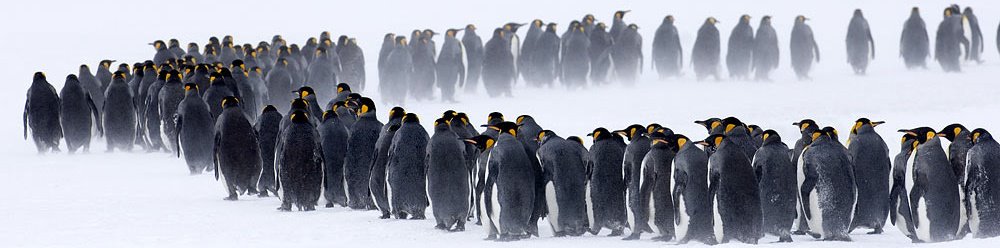
Images looked at by 1.5 million online volunteers flagged up images to aid scientists in the discovery.
Louis Doré
Sunday 26 April 2015
A citizen science project has found that penguins use their faeces to melt rocky breeding sites in order to lay their eggs.
The project of 1.5 million online volunteers, organised by the
University of Oxford, clicked through 175,000 images of penguins and
flagged up images showing strange or surprising behaviour in order to
aid scientific discovery.
It suggests penguins form large groups
before they start to breed with the dark colour of their faeces
attracting heat faster than the lighter colours of the surrounding snow,
causing the area to melt faster.
The video below shows one year of the Cuverville Island Gentoo penguin colony on the Antarctic Peninsula.
Researchers hope that over the coming year, with 500,000 new images for
volunteers to look at, and cameras that will take photos every minute
during the breeding season, that they will learn more about the animals
through Penguin Watch.
Scientists synthesized
decades of scientific discoveries to illuminate the common and unique
patterns driving the extraordinary transitions that whales, dolphins,
seals and other species underwent as they moved from land to sea.
Drawing on recent breakthroughs in diverse fields such as paleontology,
molecular biology and conservation ecology, their findings offer a
comprehensive look at how life in the ocean has responded to environmental change from the Triassic to the Anthropocene. ___________________________________________________
Modern dolphins
(pictured) and extinct marine reptiles called ichthyosaurs descended
from distinct terrestrial species, but independently converged on
an extremely similar fish-like body plan although they were separated
in time by more than 50 million years. In April 2015, a team of
Smithsonian scientists synthesized decades of scientific discoveries to
illuminate the common and unique patterns driving the extraordinary
transitions that whales, dolphins, seals and other species underwent as
they moved from land to sea, offering a comprehensive look at how life
in the ocean has responded to environmental change from the Triassic to
the Anthropocene. Credit: Courtesy of NOAA
For more
than 250 million years, four-limbed land animals known as tetrapods have
repeatedly conquered the Earth's oceans. These creatures--such as
plesiosaurs, penguins and sea turtles--descended from separate groups of
terrestrial vertebrates that convergently evolved to thrive in aquatic
environments.
In a new scientific review, a team of Smithsonian scientists
synthesized decades of scientific discoveries to illuminate the common
and unique patterns driving the extraordinary transitions that whales,
dolphins, seals and other species underwent as they moved from land to
sea. Drawing on recent breakthroughs in diverse fields such as
paleontology, molecular biology and conservation ecology, their findings
offer a comprehensive look at how life in the ocean has responded to
environmental change over time. The paper also highlights how
evolutionary history informs an understanding of the impact of human
activities on marine species today. More information is available in the
April 17 issue of Science.
Marine tetrapods represent a diverse group of living and extinct
species of mammals, reptiles, amphibians and birds that all play--or
played--a critical role as large ocean predators in marine ecosystems.
The repeated transitions between land and sea have driven innovation,
convergence and diversification against a backdrop of changing marine
ecosystems and mass extinctions dating back to the Triassic period. In
this way, they provide ideal models for testing hypotheses about the
evolution of species over long periods of time. Modern species of marine
tetrapods now face a suite of human-driven impacts to their
environment, including climate change, habitat degradation, ship
collisions and underwater noise.
"We know from the fossil record that previous times of profound
change in the oceans were important turning points in the evolutionary
history of marine species," said Neil Kelley, a Peter Buck post-doctoral
researcher in the National Museum of Natural History's department of
paleobiology and lead author in the study. "Today's oceans continue to
change, largely from human activities. This paper provides the
evolutionary context for understanding how living species of marine
predators will evolve and adapt to life in the Anthropocene."
Recent investigations in the fossil record have provided new insight
into the evolution of traits that allowed marine tetrapods to thrive in
the sea. In some cases, similar anatomy evolved among lineages that
adapted to marine lifestyles. For example, modern dolphins and extinct
marine reptiles called ichthyosaurs descended from distinct terrestrial
species, but independently converged on an extremely similar fish-like
body plan although they were separated in time by more than 50 million
years.
The repeated transformation of legs adapted for walking on land
into fins is another classic example of convergent evolution. Species
ranging from seals to mosasaurs independently developed streamlined
forelimbs as they transitioned from living on land to the ocean,
allowing them to move quickly and efficiently in the water. This
transformation may have been achieved by parallel changes at the genome
level.
"Land to sea transitions have happened dozens of times among
reptiles, mammals and birds, across major mass extinctions," said
Nicholas Pyenson, the museum's curator of fossil marine mammals. "You
often get similar looking results but convergence is more than skin
deep. It can be seen on a broad range of scales, from molecules to food
webs, over hundreds of millions of years."
In the case of deep divers such as beaked whales and seals, these
species have independently evolved to have positively charged
oxygen-binding proteins called myoglobin in their muscles, allowing them
to survive underwater for long periods of time. Scientists also have
found identical genetic sequences in different marine species, such as
whales, seals and sea cows. Whether these invisible molecular
similarities account for larger-scale visible patterns of convergent
evolution, or whether convergent anatomy follows different genetic
pathways in different groups, remains an important open question to be
tackled as genomic sequences become available for more species.
Not all adaptations observed in marine tetrapods can be attributed to
convergent evolution. For instance, as baleen whales evolved to live
underwater, they developed a unique filter-feeding system that depends
on hair-like plates instead of teeth. In contrast, toothed whales
evolved to catch and feed on prey by emitting calls and using
echolocation, a kind of sonar, to process the echoes from these noises
and detect objects in the sea.
Kelley and Pyenson synthesized research from existing studies and
referenced the Smithsonian's paleobiology collections during the course
of their research. They intend that this comprehensive review will
encourage future collaboration between researchers across scientific
fields and lead to new insights about evolutionary biology, paleontology
and marine conservation.
Story Source:
The above story is based on materials provided by Smithsonian. Note: Materials may be edited for content and length.
Journal Reference:
Neil P. Kelley, Nicholas D. Pyenson. Evolutionary innovation and ecology in marine tetrapods from the Triassic to the Anthropocene. Science, 2015 DOI: 10.1126/science.aaa3716
Warmer waters off the coast of California are likely driving away sea lions’ prey such as squid, anchovies, and sardines,
said Justin Viezbicke, stranding services coordinator for the National
Oceanic and Atmospheric Administration (NOAA). As a result, mother sea
lions are having to go further from birthing grounds — usually around
the Channel Islands
— to forage for food, meaning that pups probably don’t get enough
nutrients from their mothers when they return. The pups then wean off
their mothers earlier and are underweight when they leave the island,
likely to find food of their own.
“They’re leaving with a low tank of gas and there’s really not much
out there to help them out,” said Viezbicke. “They’re jumping into … a
challenging environment and then they’re ending up washing ashore on the
mainland, starving.”
Organizations like NOAA and other animal rescue programs have been
taking in pups and feeding them — but that’s only a stopgap measure.
“This is something that’s naturally occurring out there, so there’s
really not much we can do other than watch and learn from the
situation,” Viezbicke said. “We can’t really prevent or stop it,
unfortunately.”
Left to their own devices, these stranded sea lion pups probably
wouldn’t make it. (No judgement if you need a tissue here. I’ll wait.) Fred Hochstaedter
As sad as it sounds, starvation events and mass mortality events (in
which vast numbers of animals die), are becoming more and more common in
this wacky, warming world. Thanks to a number of large-scale, systemic
alterations (lookin’ at you, El Niño and warming ocean temps), the world’s ecosystems hang in a delicate balance.
Meet the Cassin auklet — a pudgy, fist-sized seabird with crescent-shaped eye markings and pale blue feet. They’re pretty dang cute. And thousands of them are washing up dead along the West Coast — all the way from Northern California to British Columbia.
“My volunteers alone … have found 7,000 carcasses [over the last four
months],” said Julia Parrish, executive director of the Coastal
Observation and Seabird Survey Team (COASST) at the University of
Washington. “It’s a scary big number.”
Like the sea lions, auklets are literally dying for a meal. The birds
primarily feed on zooplankton or krill. However, in the last year, a
mass of warm water — very scientifically named “the blob” — drove the
usual Pacific krill into deeper waters and brought in a host of
zooplankton that the auklets don’t eat, reported Audubon Magazine.
When a high number of birds wash ashore dead, the events are called
“wrecks.” Generally speaking, smaller wrecks are fairly normal, Parrish
explained. If there’s a storm out at sea, it’s not unusual for seabirds
caught in its path to die, whether from starvation or storm conditions,
and later wash up on beaches. That’s just how it goes.
But this time, something is different. “This is the biggest wreck
we’ve ever seen in the 16 years we’ve been doing this work,” Parrish
said. “I think it’s probably the largest wreck we’ve seen on West Coast …
That makes me sit up and take notice.”
This winter’s wreck could be especially bad if enough of the dead
auklets turn out to be adults, because an entire reproductive group may
have been wiped out. They won’t know for sure until the birds return to
their breeding grounds. Until then, it’s a lot of waiting and counting
dead birds. D. Derickson/COASST
So is this climate change at play? Scientists are hesitant to say.
Dee Boersma, a conservation scientist and founder of the Penguin Sentinels Project
at UW, compares the vulnerability of seabirds to weather and climate to
the vulnerability of a human crossing a busy street: You could
get hit by a truck, but it doesn’t happen every time. And just as it’s
hard to predict exactly how likely you are to survive a street-crossing
as a human, the same goes for storms and their effects on Magellanic penguins, she said.
In 2014, Boersma and other penguin researchers published a study in PLOS ONE which found that climate change was directly responsible for the deaths of more than 200 Magellanic penguin chicks from 1983 to 2010 in Punta Tombo,
Argentina. There, climate change is increasing the intensity and
frequency of storms, while lowering the reproductive success of
Magellanic penguins, the study reported.
During the 27-year-long study, young penguins perished at a high rate
due to a combination of starvation and overexposure during
exceptionally rainy and hot seasons. The chicks’ feather coats keep them
cozy when they are dry, but that changes when they get wet: The fluffy
down isn’t waterproof, like adult penguin feathers. So if a penguin
chick gets caught in the rain during a storm, it’s like a human “being
stuck outside and naked in a wet sleeping bag … the penguins basically
die of hypothermia like you or I would,” said Boersma.
Plus, a lack of food leaves the chicks unprepared to cool themselves
down when things heat up, since they rely on the food their parents
bring them for all of their water. Without adequate hydration, the
chicks can’t depend on evaporation to keep cool and become vulnerable to
heat stress.
It’s a lethal combination: Over the course of the study, an average
of 65 percent of the Punta Tombo chicks died every year, with about 40
percent dying of starvation. Chicks that died of hypothermia after a rainstorm.Dee Boersma / University of WashingtonSo what was that about climate change
again? Mass animal die-offs and starvation epidemics are shocking no
matter what, even to hardened scientists. Climate change is just
exacerbating these kinds of things.
“The fact is that we have populations responding to warming events,
whether the warming is temporary or inexorable,” said Parrish, the
researcher studying the dying auks.
The world’s ecosystems are hanging on as best they can, but small
things can throw them out of balance. It’s unfair to compare the
temperatures that a wild ecosystem can withstand to the temperatures
humans can, because we have tools and technology on our side. “Wildlife
needs habitat,” Parrish said. “In today’s crowded world, habitat only
exists in certain places — places that we protect. And when the climate
warms, those places change.”
“[Even one degree] is a huge deal,” Parrish points out. To understand
and support conservation efforts, humans need to “think like a fish, a
clam, or an oyster, and not like a person.”
Guess it’s time to get in touch with your inner oyster or auklet — getting hungry yet?
17 March 2015 By Rebecca MorelleScience Correspondent, BBC News
A penguin's waddle is one of nature's weirdest walks
"Come on Puddle… You can do it!" yells Prof John Hutchinson.
Puddle - a Humboldt penguin - seems more than a little bemused.
And with good reason.
***
A team of scientists have come
to Penguin Beach at London Zoo, installed a hi-tech track and are now
trying to lure Puddle and his penguin pals across it.
"Go Puddle, go!" encourages Prof Hutchinson, from the Royal Veterinary College (RVC).
And at last - with a fishy treat to help him along the way - the little bird waddles along the runway.
It is this distinctive walk that scientists from RVC and University of Texas at Austin are here to study.
Beneath the track lie force plates loaded with sensors, which allow the researchers to analyse how these birds get around.
"Penguins move in a really weird way," explains Prof Hutchinson.
"They have a very upright posture like a human, but they also have very short, crouched legs - it is very comical."Prof John Hutchinson on the eccentricity of the penguin's walk
He adds: "But when I see an animal do something weird, as an
evolutionary biologist, I want to know how that evolved, how it got that
way.
"And with these experiments, we're trying to tie what we know about penguin evolution with penguin physics."
Foot swing
Previous studies of the penguin's ungainly gait have revealed
that the waddle is in fact the most energy efficient way for them to
get about on land.
But these experiments will reveal exactly how they are doing this.
"They are applying forces left and right as they swing their bodies from side to side," says Prof Hutchinson.
"But what is not known about penguins is how the legs do
that, how big are the sideways forces on penguin legs and how that
compares to other waddling birds.
"And that's why we need these force platforms to measure the forces in the legs individually."
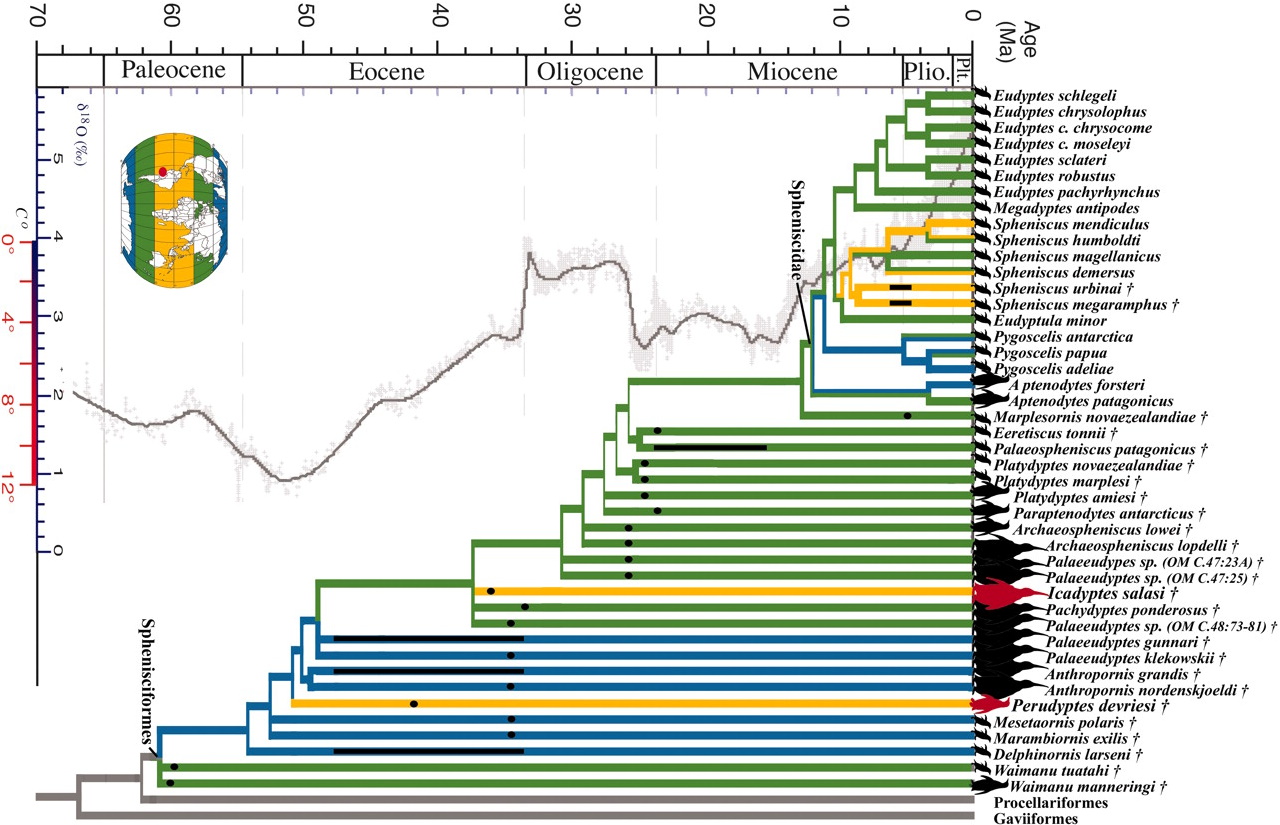
The Waimanu is one of the oldest penguins discovered - and most likely had a more horizontal posture
But it turns out that penguins didn't always waddle. Fossils reveal that their ancient ancestors moved in a different way.
"We have all kinds of fossils as far back as 60 million years
ago from the Southern Hemisphere," says palaeobiologist James Proffitt,
who has come from Texas to study the birds.
"That gives us a chance to
understand how these unusual anatomies and behaviours have evolved in
deep time and how we have all these bizarre things we see today."
The bird bones show that the first penguins were a varied
bunch: some were tiny, but others grew as tall as humans, hunting large
fish with their spear-like beaks.
James Proffitt is particularly interested in a genus of penguins known as Waimanu.
These birds, unearthed in New Zealand, are the oldest-known penguins, living between 58-60 million years ago.
Mr Proffitt explains: "We know that penguins such as Waimanu were also flightless, wing-propelled divers based on things like their wing proportions and their relative size.
"But in many ways they were different, and they probably
moved about differently on land based on the anatomy of their legs and
hip bones."
The team believes that these proto-penguins had a more
horizontal posture, and their walk would have looked similar to that of a
modern-day albatross.
Today's penguins most likely evolved their unusual anatomy
and resulting waddle as they became better and better adapted to
swimming.
As their body shape changed to help them fly through the water with ease, they became more and more clumsy on land.
Penguins use their wings to fly through the water
Back at the running track, and the penguins seem to be enjoying not quite doing what they are told.
But Zuzana Matyasova, London Zoo's deputy team leader for the bird department, has found a way to attract their attention.
A combination of some dangling string, a tennis ball on a stick - or some fish - is proving hard for some penguins to resist.
"Some of the youngsters are really inquisitive: anything new
in their enclosure is almost like a challenge and they want to be the
first ones to try it out," she explains.
She's hoping all this hard work will shed light on these birds.
"I work with them every day, and I wonder about their way of moving - their distinctive waddle is just amazing."
While not every bird fancies taking a waddle down the runway,
after several days, the scientists manage to collect enough data to
begin their analysis.
And by comparing this with their studies of ancient penguins,
they hope to establish how and when one of nature's most distinctive
walks evolved.
Bones left behind by a penguin that was eaten to extinction reveal that
a remarkably fast turnover in species occurred after Polynesian
seafarers wiped out New Zealand's weird wildlife, a new study reports.
Archaeological evidence has already confirmed the first humans to arrive in New Zealand treated the islands like a giant buffet.
Seals and sea lions were on the menu, but the main course was giant
birds. With no land mammals present in the area before humans arrived,
birds ruled the islands, with a huge predatory eagle at the top of the
food chain.
The first Pacific Islanders arrived in the late 13th century, and
within 200 years, about 40 percent of the islands' bird species had
vanished, studies show. Rats traveling with the settlers drove the
extinction of smaller bird species, while human hunters vanquished the
megafauna, including the nine species of large, flightless moa.
Similar species soon claimed the abandoned habitat, researchers are now
finding. New DNA evidence and radiocarbon dating of penguin bones and
fossils show the replacements arrived remarkably fast.
"These extinctions
and recolonizations are quite a unique thing in the fossil record, and
the speed is quite unique as well," said lead study author Nic Rawlence,
a paleoecologist at the University of Otago in New Zealand.
According to the new study, the waitaha penguin went extinct in about
1487, Rawlence said. Within 20 to 30 years, yellow-eyed penguins had
started colonizing the waitaha's coastal niches. By the time Europeans
arrived in the 1800s, the yellow-eyed penguins had completely taken over
the southeast coast on New Zealand's South Island.
Rawlence said he suspects that yellow-eyed penguins
were always washing up in New Zealand, but could never establish a
population because the waitaha penguins outcompeted them. Although the
yellow-eyed penguin is an endangered species today, with only about
7,000 individuals alive, they have a wide range centered on the Campbell
and Auckland islands near Antarctica.
"The population [in the 1500s] would have been quite healthy to produce
a lot of vagrants to come to New Zealand," Rawlence said.
But how did the interlopers survive the hunters?
It turns out that people on the South Island nearly went extinct from
their own voracious appetites. The human population crashed around 1500 ,
and the Polynesian-Maori people
abandoned the southern third of that island. At the same time, the
humans changed their diet. Instead of subsisting on food from the land,
they got most of their protein from fish and shellfish.
"What we think changed is all the big animals were killed off,"
Rawlence said. The islanders then retreated north because sweet
potatoes, a staple food, can't grow south of what is now Christchurch,
he said.
But even without human pressure, the yellow-eyed penguins, which are
adapted to a colder climate, never took over the wide swaths of beach
previously inhabited by the waitaha penguin.
Rawlence and his colleagues are now studying the population patterns of
other species to look at the influence of hunting, habitat destruction
and climate on New Zealand's lost creatures. The research was published Feb. 9 in the journal Quaternary Science Reviews.
Emperor penguins are adapted to the bitter cold of Antarctica,
but a new study reveals that during the last ice age it got too cold
even for them.
Not too hot, not too cold, but just right.
Gary Miller/Australian Antarctic Division, Author provided
Emperor penguins are truly remarkable birds – they thrive
in the coldest environment on Earth and live year-round on the ice.
Breeding colonies congregate on sea ice during the Antarctic winter and
must withstand temperatures that regularly drop below -30C.
In fact, emperor penguins are so adapted to cold conditions that they
become heat stressed when temperatures climb above 0C. Emperor penguins
are therefore particularly threatened by climate change, and their
numbers are expected to decline in the coming decades.
However a new study, published today in Global Change Biology, shows that it was once too cold even for emperor penguins.
Penguins past and present
In our study of how changing climate has affected emperor penguins
over the past 30,000 years we found that, during the last ice age,
emperor penguins were roughly seven times less common than today. What’s
more, it appears that only three populations survived the last ice age.
The Ross Sea was a refuge for one of these populations.
In the first continental-scale genetic study of emperor penguins, we
examined genetic diversity of penguins modern and ancient to find out
how they’re related. We collected genetic samples from eight breeding
colonies – no easy feat given that emperor penguins live in some of the
remotest places on Earth in conditions that would send most people
running for a roaring fire and a hot cup of tea. A rookery near Mawson station.Chris Wilson/Australian Antarctic Division, Author provided
Reaching the colonies involved weeks on the notoriously wild Southern
Ocean (and considerable seasickness), helicopter journeys over pristine
expanses of sea ice, and long snow shoe and ski traverses. The “A” (for
Antarctic) factor was a constant presence, with delays caused by heavy
sea ice that trapped ships for days at a time and blizzards that
grounded helicopters.
Nevertheless, the effort paid off. Analyses of genetic data allowed
us to reconstruct the population history of penguins, and correlate it
with environmental conditions inferred from ice core data. The findings
indicate that approximately 12,000 years ago, after the ice age ended
and temperatures began to rise and sea ice around Antarctica decreased,
emperor penguin numbers began to climb.
Goldilocks penguins
The emperor penguin’s relationship with sea ice can be described as a Goldilocks phenomenon.
The penguins need stable sea ice to stand on during their breeding
season. If the sea ice extent is too great then the journey between the
colony and their feeding grounds in the ocean may prove too costly in
terms of energy reserves.
If there is too little sea ice or if the sea ice is not stable
enough, then the penguins cannot establish successful breeding colonies.
The duration of the sea ice season is also important – if the season is
too short for the chicks to adequately mature, then they may not have
time to grow their adult, waterproof feathers and will not survive at
sea. Some like it hot… but not emperor penguins.Frederique Olivier/Australian Antarctic Division, Author provided
During the last ice age there was about twice as much ice as there is
today. Emperor penguins were probably unable to breed in more than a
few locations around Antarctica. The distances from the open ocean,
where the penguins feed, to the stable sea ice where they breed was
probably too great in most of their modern breeding locations.
The three populations that did manage to survive the ice age may have
done so by breeding near polynyas – areas of ocean that are kept free
of sea ice by wind and currents. One of the most important of these
polynyas was located in the Ross Sea.
Uncertain future
Because of this Goldilocks relationship emperor penguins are facing
an uncertain future. Antarctic sea ice extent has been measured using
satellites for the past 35 years. In this time, large changes with very
different trends in different regions have been observed.
For the past three years in a row winter sea ice has broken records
for total maximum extent. This overall increasing trend masks major
regional changes in the extent of the sea ice field and the duration of
the sea ice season. Emperor penguin colonies are found right around the Antarctic continent.Jane Younger, Author provided
In some areas, such as the Bellingshausen Sea, there has been a large
decline in sea ice while in others, including the Ross Sea, sea ice is
increasing. These fluctuations in sea ice are likely placing a huge strain on emperor penguin populations,
which is set to continue into the future. As areas suitable for emperor
penguin breeding become scarcer it is becoming increasingly important
to conserve areas known to support penguin populations.
It’s clear that the Ross Sea was a critical area for emperor penguins
in the past and this suggests it will provide an important refuge for
breeding colonies in the future. This emphasises the need for careful
protection of this vital part of the Antarctic ecosystem.
A marine protected area, to protect roughly 1.34 million square
kilometres of the Ross Sea from commercial fishing, was proposed by New
Zealand and the United States at the last meeting of the Commission for the Conservation of Antarctic Marine Living Resources in October 2014. The proposal was rejected, but a Ross Sea marine park is likely to be on the agenda again at the 2015 meeting.
Emperor penguins are remarkably hardy birds, surviving in one of the
harshest environments on earth. However their reliance on a narrow range
of suitable habitat highlights their fragility, and raises concern over
their future in a world undergoing its most rapid environmental change
in history.
What does the future hold for Emperor penguins?Gary Dowse/Australian Antarctic Division, Author providedsource
NEW
YORK (GenomeWeb) – Penguins appear to lack taste receptor genes
governing three of the five tastes, according to a genomic analysis
conducted by a trio of researchers from the US and China.
The trio, led by Jianzhi Zhang at the University of Michigan, searched through the genomes of the Adélie penguin (Pygoscelis adeliae) and emperor penguin (Aptenodytes forsteri)
and other birds for taste receptor genes. Penguins, they found, lacked
receptors involved in perceiving sweet, bitter, and umami taste, but
have retained salty and sour taste receptors, as they reported in Current Biology.
"Penguins
eat fish, so you would guess that they need the umami receptor genes,
but for some reason they don't have them," Michigan's Zhang said in a
statement. "These findings are surprising and puzzling, and we do not
have a good explanation for them. But we have a few ideas."
Zhang
and his team searched for genes that encode taste receptors — sour's
PKD2L1, salty's ENaC, umami's Tas1r1–Tas1r3 heterodimer, sweet's
Tas1r2–Tas1r3 heterodimer, and bitter's Tas2r genes — in Adélie and
emperor penguins, as well as in the little egret and a dozen or so other
birds whose genomes were publicly available.
None of
the birds had the Tas1r2 gene, which encodes part of the sweet taste
receptor, though the researchers did find the gene in mammalian and
reptile outgroups.
Tas1r3, which makes up the other
part of the sweet taste receptor heterodimer as well as part of the
umami taste receptor heterodimer, was also lacking in penguins. It was,
the researchers noted, present in other birds.
The
other half of the umami taste-specific receptor, Tas1r1, is actually a
pseudogene in penguins, the researchers found, as it contains a two
basepair deletion that leads to a premature stop codon.
Other penguin species shared this pseudogene, but other birds have working copies, Zhang and his team reported.
Similarly,
the researchers identified three Tas2r pseudogenes in penguins while
most other birds had working copies of the gene behind bitter taste.
They noted, though, those three penguin pseudogenes were orthologous to
the two working copies and one pseudogene version of Tas2r found in the
little egret.
This, Zhang and his colleagues said,
indicates that the common ancestor of all penguins lost the umami and
bitter tastes, while the sweet taste was lost even earlier in the avian
lineage.
The receptor gene for sour taste was present
in all birds, including penguins, as were the genes encoding the
subunits of the salty taste receptor, ENaC.
Zhang and
his colleagues said they suspect that the penguin's ancestral stomping
grounds of Antarctica might have had a role in this gene loss.
Trpm5,
which is involved in transducing the sweet, umami, and bitter tastes,
doesn't work well at lower temperatures. At freezing temperatures, the
researchers suggested that it might not work at all, leading to the
inability to taste sweet, umami, and bitter, and then to the loss of the
genes linked to those tastes.
Huabin Zhao, Jianwen Li, Jianzhi Zhang. Molecular evidence for the loss of three basic tastes in penguins. Current Biology, 2015; 25 (4): R141 DOI:10.1016/j.cub.2015.01.026
When yellow-eyed penguins arrived in New Zealand just decades
after the country's native waitaha penguin became extinct, it
became one of the most rapid prehistoric animal turnovers
ever found, University of Otago researchers say.
The team of researchers used carbon dating and DNA analysis
of penguin remains from coastal New Zealand to establish the
timing of the waitaha's extinction and the colonisation by
yellow-eyed penguins from the subantarctic.
University of Otago postdoctoral research fellow Dr Nic
Rawlence, who carried out the study, said the combination of
ecology, archaeology and DNA in this way was new and was also
being used to investigate if similar patterns exist with New
Zealand sea lions, Stewart Island shags, elephant seals and
fur seals.
Previous research had shown at the time of human arrival, New
Zealand was inhabited by the waitaha penguin. ''Hunting and habitat change apparently caused the extinction
of this unique mainland penguin, before the yellow-eyed
penguin later arrived here from the subantarctic,'' Dr
Rawlence said.
The new dating study showed waitaha went extinct around the
same time as the giant flightless moa, within 200 years of
Polynesian settlement of New Zealand - before 1500 AD. The
yellow-eyed penguin then replaced the extinct penguin within
about 20 to 30 years, in the early 1500s. ''It's one of the most rapid biological turnovers ever
documented.''
Associate Prof Ian Smith, who was also involved in the study,
said the very rapid biological shift implied a substantial
change in human pressure around that time. ''Interestingly, recent archaeological studies similarly
suggest that the Maori population in southern New Zealand
declined around 1500 AD, and coincided with a major dietary
shift.''
Dr Rawlence said if there had not been the dietary shift from
large animals to fish and shellfish, yellow-eyed penguins
would not have been able to fill the niche left by the
waitaha. ''Yellow-eyeds would have arrived and then become extinct if
there hadn't been that change.''
The near absence of the yellow-eyed penguin from the mainland
before the extinction of the waitaha was similar to what
happened to New Zealand's sea lions.
A University of Otago study published last year found today's
sea lions replaced an extinct prehistoric New Zealand sea
lion. The Marsden and Allan Wilson Centre-funded research on
penguins included team members from the Universities of
Auckland, Otago, Adelaide and Oslo, as well as Canterbury
Museum and Te Papa.
The team's findings were published this week in the leading
international journal Quaternary Science Reviews.
Climate change is putting picky penguin eaters at risk, according to a new study. (Photo : Rachael Herman, LSU)
Climate change is putting picky penguin eaters at risk, according to a new study.
Chinstrap and Gentoo penguins live in close proximity to one another
in the Antarctic Peninsula, especially during the summer breeding
season. So in order to peacefully co-exist and avoid competition for
food resources, they evolved different feeding strategies over time.
Now, however, this seems to be backfiring on one of the two species.
Named for the black stripe under their chins, Chinstrap penguin
populations are decreasing while Gentoo penguins, recognized by their
bright orange beaks, are actually increasing in number.
"Our data shows Gentoo penguins have a more diverse and flexible diet
than Chinstrap penguins, which forage farther offshore and
preferentially feed on Antarctic krill during the breeding season," lead
author Michael Polito, from Louisiana State University, said in a press release.
Thanks to climate change, the Antarctic Peninsula is the fastest
warming region in the Southern Hemisphere, according to the British
Antarctic Survey. Over the past 50 years, the annual air temperature has
risen by about 5 degrees Fahrenheit (2.8 degrees Celsius).
"For a region that for most of the year hovers around the point of
freezing, a few degrees plus or minus is the difference between freezing
and melting, particularly of sea ice," Polito explained.
This isn't just bad for penguins, but for the Antarctic krill that
they mainly feed on, which use sea ice for protection from predators.
Krill also feed on algae that grow beneath these slabs of ice, so as
temperatures warm the lack of sea ice means fewer krill are around for
penguin species to eat.
Based on the laws of supply and demand, there isn't enough krill to
go around - especially during breeding season when penguins have to
worry about feeding their chicks. So Chinstrap penguins whose diet
relies on Antarctic krill find themselves in a tough spot.
On the other hand, adaptable Gentoo penguins are doing just fine,
even amongst rapidly changing environmental conditions. They are
flexible in their diet and breeding location, and also likely ease the
transition of their chicks into adulthood by feeding them for a longer
period of time.
Researchers determined the species' feeding habits by examining their
stomach contents, studying the ear bones of fishes to determine if the
penguins were feeding nearshore or offshore, and analyzing breast
feathers from fully grown chicks to see how much krill versus fish they
were fed. The results showed two very different strategies.
"These may be the reasons why Gentoo penguins in the Antarctic
Peninsula are benefiting from changes in climate and their populations
are increasing, but Chinstrap penguins are decreasing," Polito said.
A take-off in tourism could open the door to new bird diseases (Image: Frans Lanting/National Geographic Creative)
For those who go, it's the trip of a lifetime – and
it wouldn't be complete without a selfie with penguins. But growing
tourism to the Antarctic, in combination with its warming climate, could
be placing penguins at a risk of infectious diseases.
Antarctic species are believed to have
weaker immune systems due to their long isolation from the world's
common pathogens. Humans only started visiting Antartica roughly 200
years ago.
Antarctica is no longer a stranger to human contact: more than 37,000 people visited the continent in the 2013-14 season
as part of a growing tourist industry, compared with an estimated 8000
just twenty years earlier. An additional 4400 researchers can be
accommodated simultaneously in Antarctica during peak months.
"The effects of both a growing tourism
industry and research presence will not be without consequences," says
Wray Grimaldi of the University of Otago in Dunedin, New Zealand.
"Penguins are highly susceptible to infectious diseases." She bases that
on a survey by her team of penguin diseases in captivity, reaching as
far back as 1947. It found reports of Salmonella, E. coli, West Nile virus and Avian pox virus infections, among others.
Widespread deaths
The team also found evidence of a number of
mass penguin mortality events across the Antarctic since 1969. A number
of infectious agents are implicated, including Avian pox, which killed
more than 400 gentoo penguins in 2006, and caused 60 per cent mortality
rates throughout another outbreak in 2008.
Grimaldi says disease agents may have
arrived in Antarctica via migrating birds like skuas or giant petrels,
although some pathogenic bacteria could have been introduced by humans.
There isn't enough evidence to test either possibility, she says.
Yet, as the climate warms, more birds are
expected to visit Antarctic regions, bringing their pathogens with them,
while diseases borne by other animals could expand their ranges
southwards.
But Norman Ratcliffe
of the British Antarctic Survey in Cambridge, UK, says there is not a
lot of evidence that wild penguin populations have been significantly
affected by disease, adding that the Antarctic's tourism industry has
been very active for 20 years and takes appropriate precautions.
"The tour companies are quite careful to
make sure everyone cleans their boots before they go ashore," he says.
"They don't allow any animal products to be taken ashore."
Warming warning
Grimaldi warns that climate change could help
drive the emergence of new penguin diseases in Antarctica. Claire
Christian of the Antarctic and Southern Ocean Coalition, a group of environmental NGOs, agrees.
"Climate change may result in a number of
stressors that make it more difficult for penguin populations to deal
with disease," she says. In addition to prompting the arrival of new
pathogens or species carrying pathogens, warming temperatures could have
a negative impact on food sources like krill, which might leave the
penguins less able to fight off illness, she adds.
"A coordinated monitoring system needs to
be in place," argues Grimaldi. "That way, responses can be directed by
science." Christian agrees, but she says research alone is not enough –
the countries that are signatories to the Antarctic Treaty also need to cooperate in implementing protective and precautionary measures.
A question that has intrigued
biologists is: Were teeth lost in the common ancestor of all living
birds or convergently in two or more independent lineages of birds? A
research team used the degraded remnants of tooth genes in birds to
determine that teeth were lost in the common ancestor of all living
birds more than 100 million years ago.
Birds are evolutionarily derived from theropod dinosaurs.
Credit: Image courtesy of University of California - Riverside
The absence of
teeth or "edentulism" has evolved on multiple occasions within
vertebrates including birds, turtles, and a few groups of mammals such
as anteaters, baleen whales and pangolins. Where early birds are
concerned, the fossil record is fragmentary. A question that has
intrigued biologists is: Based on this fossil record, were teeth lost in
the common ancestor of all living birds or convergently in two or more
independent lineages of birds?
A research team led by biologists at the University of California,
Riverside and Montclair State University, NJ, has found an answer. Using
the degraded remnants of tooth genes in birds to determine when birds
lost their teeth, the team reports in the Dec. 12 issue of Science that teeth were lost in the common ancestor of all living birds more than 100 million years ago.
"One of the larger lessons of our finding is that 'dead genes,' like
the remnants of dead organisms that are preserved in the fossil record,
have a story to tell," said Mark Springer, a professor of biology and
one of the lead authors of the study along with Robert Meredith at
Montclair State University who was previously a graduate student and
postdoctoral researcher in Springer's laboratory. "DNA from the crypt is
a powerful tool for unlocking secrets of evolutionary history."
Springer explained that edentulism and the presence of a horny beak are hallmark features of modern birds. "Ever since the discovery of the fossil bird Archaeopteryx
in 1861, it has been clear that living birds are descended from toothed
ancestors," he said. "However, the history of tooth loss in the ancestry
of modern birds has remained elusive for more than 150 years."
All toothless/enamelless vertebrates are descended from an ancestor
with enamel-capped teeth. In the case of birds, it is theropod
dinosaurs. Modern birds use a horny beak instead of teeth, and part of
their digestive tract to grind up and process food.
Tooth formation in vertebrates is a complicated process that involves
many different genes. Of these genes, six are essential for the proper
formation of dentin (DSPP) and enamel (AMTN, AMBN, ENAM, AMELX, MMP20).
The researchers examined these six genes in the genomes of 48 bird
species, which represent nearly all living bird orders, for the presence
of inactivating mutations that are shared by all 48 birds. The presence
of such shared mutations in dentin and enamel-related genes would
suggest a single loss of mineralized teeth in the common ancestor of all
living birds.
Springer, Meredith, and other members of their team found that the 48
bird species share inactivating mutations in both dentin-related (DSPP) and enamel-related genes (ENAM, AMELX,AMTN, MMP20), indicating that the genetic machinery necessary for tooth formation was lost in the common ancestor of all modern birds. "The presence of several inactivating mutations that are shared by
all 48 bird species suggests that the outer enamel covering of teeth was
lost around ~116 million years ago," Springer said.
On the basis of fossil and molecular evidence, the researchers
propose a two-step scenario whereby tooth loss and beak development
evolved together in the common ancestor of all modern birds. In the
first stage, tooth loss and partial beak development began on the
anterior portion of both the upper and lower jaws. The second stage
involved concurrent progression of tooth loss and beak development from
the anterior portion of both jaws to the back of the rostrum. "We propose that this progression ultimately resulted in a complete
horny beak that effectively replaced the teeth and may have contributed
to the diversification of living birds," Springer said.
The research team also examined the genomes of additional
toothless/enamelless vertebrates including three turtles and four
mammals (pangolin, aardvark, sloth, and armadillo) for inactivating
mutations in the dentin- and enamel-related genes. For comparison, the
researchers looked at the genomes of mammalian taxa with enamel-capped
teeth. "All edentulous vertebrate genomes that we examined are characterized by inactivating mutations in DSPP, AMBN, AMELX, AMTN, ENAM, and MMP20, rendering these genes non-functional," Springer said. "The dentin-related gene DSPP
is functional in vertebrates with enamelless teeth -- sloth, aardvark,
armadillo. All six genes are functional in the American alligator, a
representative of Crocodylia, the closest living relatives of birds, and
mammalian taxa with enamel capped teeth."
The research was supported, in part, by a grant to Springer from the National Science Foundation. Springer and Meredith were joined in the research by Guojie Zhang at
China National GeneBank, China; M. Thomas P. Gilbert at the University
of Copenhagen Oster Voldgade, Denmark; and Erich D. Jarvis at Duke
University Medical Center, NC.
All the scientists are coauthors with several others, including UC
Riverside biologist John Gatesy, on a second paper in the same issue of Science. This paper employs the same 48 bird genomes to ask the question: "What makes a bird a bird?"
"The new bird genomes represent a major advance given that only a
handful of bird genomes -- zebra finch, turkey, chicken and duck -- were
previously available," Springer said.
Story Source:
The above story is based on materials provided by University of California - Riverside. The original article was written by Iqbal Pittalwala. Note: Materials may be edited for content and length.
Journal Reference:
R. W. Meredith, G. Zhang, M. T. P. Gilbert, E. D. Jarvis, M. S. Springer. Evidence for a single loss of mineralized teeth in the common avian ancestor. Science, 2014; 346 (6215): 1254390 DOI: 10.1126/science.1254390
Crocodiles are the
closest living relatives of birds, sharing a common ancestor that lived
around 240 million years ago and also gave rise to the dinosaurs.
Credit: Stephen J. O'Brien, Avian Phylogenomics Group
Date:
December 11, 2014
Source:
Duke University
Summary:
The first findings of the
Avian Phylogenomics Consortium are being reported nearly simultaneously
in 29 papers -- eight papers in a Dec. 12 special issue of Science and
21 more in Genome Biology, GigaScience and other journals. The analyses
suggest some remarkable new ideas about bird evolution, including
insights into vocal learning and the brain, colored plumage, sex
chromosomes and the birds' relationship to dinosaurs and crocodiles.
The genomes of
modern birds tell a story of how they emerged and evolved after the mass
extinction that wiped out dinosaurs and almost everything else 66
million years ago. That story is now coming to light, thanks to an
ambitious international collaboration that has been underway for four
years.
The first findings of the Avian Phylogenomics Consortium are being
reported nearly simultaneously in 29 papers -- eight papers in a Dec. 12
special issue of Science and 21 more in Genome Biology, GigaScience and other journals.
Scientists already knew that the birds who survived the mass
extinction experienced a rapid burst of evolution. But the family tree
of modern birds has confused biologists for centuries and the molecular
details of how birds arrived at the spectacular biodiversity of more
than 10,000 species is barely known.
To resolve these fundamental questions, a consortium led by Guojie
Zhang of the National Genebank at BGI in China and the University of
Copenhagen, Erich D. Jarvis of Duke University and the Howard Hughes
Medical Institute and M. Thomas P. Gilbert of the Natural History Museum
of Denmark, has sequenced, assembled and compared full genomes of 48
bird species. The species include the crow, duck, falcon, parakeet,
crane, ibis, woodpecker, eagle and others, representing all major
branches of modern birds.
"BGI's strong support and four years of hard work by the entire
community have enabled us to answer numerous fundamental questions to an
unprecedented scale," said Guojie Zhang. "This is the largest whole
genomic study across a single vertebrate class to date. The success of
this project can only be achieved with the excellent collaboration of
all the consortium members."
"Although an increasing number of vertebrate genomes are being
released, to date no single study has deliberately targeted the full
diversity of any major vertebrate group," added Tom Gilbert. "This is
precisely what our consortium set out to do. Only with this scale of
sampling can scientists truly begin to fully explore the genomic
diversity within a full vertebrate class."
"This is an exciting moment," said neuroscientist Erich Jarvis. "Lots
of fundamental questions now can be resolved with more genomic data
from a broader sampling. I got into this project because of my interest
in birds as a model for vocal learning and speech production in humans,
and it has opened up some amazing new vistas on brain evolution."
This first round of analyses suggests some remarkable new ideas about bird evolution. The first flagship paper published in Science
presents a well-resolved new family tree for birds, based on
whole-genome data. The second flagship paper describes the big picture
of genome evolution in birds. Six other papers in the special issue of Science
describe how vocal learning may have independently evolved in a few
bird groups and in the human brain's speech regions; how the sex
chromosomes of birds came to be; how birds lost their teeth; how
crocodile genomes evolved; ways in which singing behavior regulates
genes in the brain; and a new method for phylogenic analysis with
large-scale genomic data.
The Avian Phylogenomics Consortium has so far involved more than 200
scientists hailing from 80 institutions in 20 countries, including the
BGI in China, the University of Copenhagen, Duke University, the
University of Texas at Austin, the Smithsonian Museum, the Chinese
Academy of Sciences, Louisiana State University and many others.
A Clearer Picture of the Bird Family Tree
Previous attempts to reconstruct the avian family tree using partial
DNA sequencing or anatomical and behavioral traits have met with
contradiction and confusion. Because modern birds split into species
early and in such quick succession, they did not evolve enough distinct
genetic differences at the genomic level to clearly determine their
early branching order, the researchers said. To resolve the timing and
relationships of modern birds, the consortium authors used whole-genome
DNA sequences to infer the bird species tree.
"In the past, people have been using 10 to 20 genes to try to infer
the species relationships," Jarvis said. "What we've learned from doing
this whole-genome approach is that we can infer a somewhat different
phylogeny [family tree] than what has been proposed in the past. We've
figured out that protein-coding genes tell the wrong story for inferring
the species tree. You need non-coding sequences, including the
intergenic regions. The protein coding sequences, however, tell an
interesting story of proteome-wide convergence among species with
similar life histories."
This new tree resolves the early branches of Neoaves (new birds) and
supports conclusions about some relationships that have been
long-debated. For example, the findings support three independent
origins of waterbirds. They also indicate that the common ancestor of
core landbirds, which include songbirds, parrots, woodpeckers, owls,
eagles and falcons, was an apex predator, which also gave rise to the
giant terror birds that once roamed the Americas.
The whole-genome analysis dates the evolutionary expansion of Neoaves
to the time of the mass extinction event 66 million years ago that
killed off all dinosaurs except some birds. This contradicts the idea
that Neoaves blossomed 10 to 80 million years earlier, as some recent
studies suggested.
Based on this new genomic data, only a few bird lineages survived the
mass extinction. They gave rise to the more than 10,000 Neoaves species
that comprise 95 percent of all bird species living with us today. The
freed-up ecological niches caused by the extinction event likely allowed
rapid species radiation of birds in less than 15 million years, which
explains much of modern bird biodiversity.
Increasingly sophisticated and more affordable genomic sequencing
technologies and the advent of computational tools for reconstructing
and comparing whole genomes have allowed the consortium to resolve these
controversies with better clarity than ever before, the researchers
say.
With about 14,000 genes per species, the size of the datasets and the
complexity of analyzing them required several new approaches to
computing evolutionary family trees. These were developed by computer
scientists Tandy Warnow at the University of Illinois at
Urbana-Champaign, Siavash Mirarab, a student at the University of Texas
at Austin and Alexis Stamatakis at the Heidelburg Institute for
Theoretical Studies. Their algorithms required the use of parallel
processing supercomputers at the Munich Supercomputing Center (LRZ), the
Texas Advanced Computing Center (TACC) and the San Diego Supercomputing
center (SDSC).
"The computational challenges in estimating the avian species tree
used around 300 years of CPU time, and some analyses required
supercomputers with a terabyte of memory," Warnow said.
The bird project also had support from the Genome 10K Consortium of
Scientists (G10K), an international science community working toward
rapidly assessing genome sequences for 10,000 vertebrate species.
"The Avian Genomics Consortium has accomplished the most ambitious
and successful project that the G10K Project has joined or endorsed,"
said G10K co-leader Stephen O'Brien, who co-authored a commentary on the
bird sequencing project appearing in GigaScience.
A Genomic Perspective of Avian Evolution and Biodiversity
For all their biological intricacies, birds are surprisingly light on
DNA. A study led by Zhang, Cai Li and the consortium authors found that
compared to other reptile genomes, avian genomes contain fewer of the
repeating sequences of DNA and lost hundreds of genes in their early
evolution after birds split from other reptiles.
"Many of these genes have essential functions in humans, such as in
reproduction, skeleton formation and lung systems," Zhang said. "The
loss of these key genes may have a significant effect on the evolution
of many distinct phenotypes of birds. This is an exciting finding,
because it is quite different from what people normally think, which is
that innovation is normally created by new genetic material, not the
loss of it. Sometimes, less is more."
From the whole chromosome level to the order of genes, this group
found that the genomic structure of birds has stayed remarkably the same
among species for more than 100 million years. The rate of gene
evolution across all bird species is also slower compared to mammals.
Yet some genomic regions display relatively faster evolution in
species with similar lifestyles or phenotypes, such as involving vocal
learning. This pattern of what is called convergent evolution may be the
underlying mechanism that explains how distant bird species evolved
similar phenotypes independently. Zhang said these analyses on
particular gene families begin to explain how birds evolved a lighter
skeleton, a distinct lung system, dietary specialties, color vision, as
well as colorful feathers and other sex-related traits.
Important Lessons
The new studies have shed light on several other questions about birds, including:
How did vocal learning evolve? Eight studies in the package examined
the subject of vocal learning. According to new evidence in the two
flagship papers, vocal learning evolved independently at least twice,
and was associated with convergent evolution in many proteins. A Science
study led by Andreas Pfenning, Alexander Hartemink, Jarvis and others
at Duke, in collaboration with researchers at the Allen Institute for
Brain Science in Seattle and the RIKEN Institute in Japan, found that
the specialized song-learning brain circuitry of vocal learning birds
(songbirds, parrots and hummingbirds) and human brain speech regions
have convergent changes in the activity of more than 50 genes. Most of
these genes are involved in forming neural connections.
Osceola Whitney,
Pfenning and Anne West, also of Duke, found in another Science
study that singing is associated with the activation of 10 percent of
the expressed genome, with diverse activation patterns in different
song-learning regions of the brain, controlled by epigenetic regulation
of the genome. Duke's Mukta Chakraborty and others found in a PLoS ONE
study that parrots have a song system within a song system, with the
surrounding song system unique to them. This might explain their greater
ability to imitate human speech. In a BMC Genomics study, Morgan
Wirthlin, Peter Lovell and Claudio Mello from Oregon Health &
Science University found unique genes in the song-control brain regions
of songbirds.
The XYZW of sex chromosomes. Just as the sex of humans is determined
by the X and Y chromosomes, the sex of birds is controlled by the Z and W
chromosomes. The W makes birds female, just as the Y makes humans male.
Most mammals share a similar evolutionary history of the Y chromosome,
which now contains many degenerated genes that no longer function and
only a few active genes related to "maleness." A Science study
led by Qi Zhou and Doris Bachtrog from the University of California,
Berkeley, and Zhang found that half of bird species still contain
substantial numbers of active genes in their W chromosomes. This
challenges the classic view that the W chromosome is a "graveyard of
genes" like the human Y.
This group also found that bird species are at drastically different
states of sex chromosome evolution. For example, the ostrich and emu,
which belong to one of the older branches of the bird family tree, have
sex chromosomes resembling their ancestors. Yet some modern birds such
as the chicken and zebra finch have sex chromosomes that contain few
active genes. This opens a new set of questions on how the diversity of
sex chromosomes may drive the diversity of sex differences in the
outward appearance of various bird species. Peacocks and peahens are
dramatically different; male and female crows are indistinguishable.
How did birds lose their teeth? In a Science study led by
Robert Meredith from Montclair State University and Mark Springer from
the University of California, Riverside, a comparison between the
genomes of living bird species and those of vertebrate species that have
teeth identified key mutations in the parts of the genome that code for
enamel and dentin, the building blocks of teeth. The evidence suggests
that five tooth-related genes were disabled within a short time period
in the common ancestor of modern birds more than 100 million years ago.
What's the connection between birds and dinosaurs? Unlike mammals,
birds (along with reptiles, fish and amphibians) have a large number of
tiny microchromosomes. These smaller packages of gene-rich material are
thought to have been present in their dinosaur ancestors. A study of
genome karyotype structure in BMC Genomics analyzed whole genomes of the
chicken, turkey, Peking duck, zebra finch and budgerigar. It found the
chicken has the most similar overall chromosome pattern to an avian
ancestor, which was thought to be a feathered dinosaur. This work was
led by Darren Griffin and Michael Romanov from the University of Kent,
and by Dennis Larkin and Marta Farré from the Royal Veterinary College,
University of London.
Another study in Science examined birds' closest living
relatives, the crocodiles. This team, led by Ed Green and Benedict Paton
from the University of California, Santa Cruz, David Ray from Texas
Tech University and Ed Braun from the University of Florida, found that
crocodiles have one of the slowest-evolving genomes. The researchers
were able to infer the genome sequence of the common ancestor of birds
and crocodilians (archosaurs) and therefore all dinosaurs, including
those that went extinct 66 million years ago.
Do differences in gene trees versus species trees matter? In the
phylogenomics flagship study by Jarvis and others, the consortium found
that no gene tree has a history exactly the same as the species tree,
partly due to a process called incomplete lineage sorting. Another Science
study, led by Tandy Warnow at the University of Texas and the
University of Illinois, and her student Siavash Mirarab, developed a new
computational approach called "statistical binning." They used this
approach to show it does not matter much that the gene trees differ from
the species tree because they were able to infer the first
coalescent-based, genome-scale species tree, combining gene trees with
similar histories to accurately infer a species tree.
Do bird genomes carry fewer virus sequences than other species?
Mammalian genomes harbor a diverse set of genomic "fossils" of past
viral infections called "endogenous viral elements" (EVEs). A study
published in Genome Biology led by Jie Cui of Duke-NUS Graduate
Medical School in Singapore, Edward Holmes of the University of Sydney
and Zhang, found that bird species had 6-13 times fewer EVE infections
in their past than mammals. This finding is consistent with the fact
that birds have smaller genomes than mammals. It also suggests birds may
either be less susceptible to viral invasions or better able to purge
viral genes.
When did colorful feathers evolve? Elaborate, colorful feathers are
thought to be evolutionarily advantageous, giving a male bird in a given
species an edge over his competitors when it comes to mating. Zhang's
flagship paper in Science, which is further analyzed by Matthew
Greenwold and Roger Sawyer from the University of South Carolina in a
companion study in BMC Evolutionary Biology, found that genes involved
in feather coloration evolved more quickly than other genes in eight of
46 bird lineages. Waterbirds have the lowest number of beta keratin
feather genes, landbirds have more than twice as many, and in
domesticated pet and agricultural bird species, there are eight times
more of these genes.
What happens to species facing extinction or recovering from
near-extinction? Birds are like the proverbial canaries in the coal mine
because of their sensitivity to environmental changes that cause
extinction. In a Genome Biology study led by Shengbin Li, Cheng
Cheng and Jun Yu from Xi'an Jiaotong University and Jarvis, researchers
analyzed the genomes of species that have recently gone nearly extinct,
including the crested ibis in Asia and the bald eagle in the Americas.
They found genes that break down environmental toxins have a higher rate
of mutations in these species and there is lower diversity of immune
system genes in endangered species. In a recovering crested ibis
population, genes involved in brain function and metabolism are evolving
more rapidly. The researchers found more genomic diversity in the
recovering population than was expected, giving greater hope for species
conservation.
The Start of Something Bigger
This sweeping genome-level comparison of an entire class of life is
being powered by frozen bird tissue samples collected over the past 30
years by museums and other institutions around the world. Samples are
sent as fingernail-sized chunks of frozen flesh mostly to Duke
University and University of Copenhagen for DNA separation. Most of the
genome sequencing and critical initial analyses of the genomes have then
been conducted by the BGI in China.
The avian genome consortium is now creating a database that will be
made publicly available in the future for scientists to study the
genetic basis of complex avian traits.
Setting up the pipeline for the large-scale study of whole genomes --
collecting and organizing tissue samples, extracting the DNA, analyzing
its quality, sequencing and managing torrents of new data -- has been a
massive undertaking. But the scientists say their work should help
inform other major efforts for the comprehensive sequencing of
vertebrate classes. To encourage other researchers to dig through this
'big data' and discover new patterns that were not seen in small-scale
data before, the avian genome consortium has released the full dataset
to the public in GigaScience, and in NCBI, ENSEMBL and CoGe databases.
Under the leadership of Dave Burt, the National Avian Research
Facility at the Roslin Institute and Edinburgh University, UK, has
created genome browser databases based on the ENSEMBL model for 48
species.
Story Source:
The above story is based on materials provided by Duke University. Note: Materials may be edited for content and length.
Duke
University. "'Big Bang' of bird evolution mapped: Genes reveal deep
histories of bird origins, feathers, flight and song." ScienceDaily.
ScienceDaily, 11 December 2014.
<www.sciencedaily.com/releases/2014/12/141211142136.htm>.