Thursday, August 30, 2012

Rare Find: Feathered Dinosaur Feasted On Flying Food

Holotype of Sinocalliopteryx gigas. (Credit: Xing et al., Abdominal Contents from Two Large Early Cretaceous Compsognathids (Dinosauria: Theropoda) Demonstrate Feeding on Confuciusornithids and Dromaeosaurids. PLoS ONE, 2012; 7 (8): e44012 DOI: 10.1371/journal.pone.0044012)


ScienceDaily (Aug. 29, 2012) — University of Alberta researchers found evidence that a feathered, but flightless dinosaur was able to snag and consume small flying dinosaurs.

The U of A paleontology team found the fossilized remains of three flying dinosaurs in the belly of a raptor-like predator called Sinocalliopteryx. Sinocalliopteryx was about two meters in length and roughly the size of a modern-day wolf.

Sinocalliopteryx's flying meals were three Confuciusornis. Confuciusornis was one of the earliest birds and had a crude version of a modern bird's skeleton and muscles. The researchers say such primitive birds were probably limited to slow take-offs and short flights.
According to the researchers, this is the first time a predator has been linked to the killing of multiple flying dinosaurs.

Scott Persons, a U of A paleontology student and research coauthor, says Sinocalliopteryx may have used stealth to stock the flyers. "Sinocalliopteryx didn't have wings or the physical tools needed to be an adept tree climber," said Persons.

Persons explains Sinocalliopteryx had feathers or hair-like fuzz covering its body creating a level of insulation that helped maintain a warm body temperature and high metabolism that required a lot of food to fuel.

"The fact that this Sinocalliopteryx had, not one, but three undigested birds in its stomach indicate it was a voracious eater and a very active hunter," said Persons.

This find was made in China's Liaoning province, and U of A researchers analyzed stomach contents of a second Sinocalliopteryx fossil discovery from that area. The researchers identified this Sinocalliopteryx's last meal as a Sinornithosaurus, a small feathered meat-eater about the size of a house cat that may have been able to fly or glide short distances.

"Sinornithosaurus is a relative of Velociraptor which means this is the first direct evidence of a raptor becoming another predatory dinosaur's meal," said Persons.


Story Source:
The above story is reprinted from materials provided by University of Alberta, via EurekAlert!, a service of AAAS.
Note: Materials may be edited for content and length. For further information, please contact the source cited above.

Journal Reference:
  1. Lida Xing, Phil R. Bell, W. Scott Persons, Shuan Ji, Tetsuto Miyashita, Michael E. Burns, Qiang Ji, Philip J. Currie. Abdominal Contents from Two Large Early Cretaceous Compsognathids (Dinosauria: Theropoda) Demonstrate Feeding on Confuciusornithids and Dromaeosaurids. PLoS ONE, 2012; 7 (8): e44012 DOI: 10.1371/journal.pone.0044012

University of Alberta (2012, August 29). Rare find: Feathered dinosaur feasted on flying food. ScienceDaily. Retrieved August 30, 2012, from http://www.sciencedaily.com­ /releases/2012/08/120829171943.htm

Decline in Breeding Chinstrap Penguins in Antarctic Peninsula Confirmed

Chinstrap penguins at Baily Head, Deception Island. (Credit: Copyright Thomas Mueller)
 
ScienceDaily (Aug. 29, 2012) — In a paper published this week in the journal Polar Biology, researchers from the Antarctic Site Inventory confirm significant declines in the breeding population of chinstrap penguins in the vastly warming Antarctic Peninsula, where it's warming faster than, or as fast as, any other place on Earth.

New results and analyses stem from fieldwork conducted in December 2011 at Deception Island, one of the most frequently visited locations in Antarctica.

Overseen by Ron Naveen, founder of the nonprofit science and conservation organization, Oceanites, Inc., the Deception Island census effort analyses were undertaken by Dr. Heather Lynch, Assistant Professor of Ecology and Evolution at Stony Brook University, and chief scientist of the Antarctic Site Inventory project.

The Inventory has been collecting and analyzing Antarctic Peninsula-wide penguin population data since 1994, and these new findings have important implications both for the advancement of Antarctic science and the management of Antarctica by the Antarctic Treaty nations.

"Our Deception Island work, using the yacht Pelagic as our base, occurred over 12 days and in the harshest of conditions -- persistent clouds, precipitation, and high winds, the latter sometimes reaching gale force and requiring a lot of patience waiting out the blows," said Naveen. "But, in the end, we achieved the first-ever survey of all chinstraps breeding on the island."

The other Inventory researchers on the team were Steven Forrest (Oceanites, Inc.), Dr. Thomas Mueller (Biodiversity and Climate Research Centre), and Dr. Michael Polito (now at Woods Hole Oceanographic Institute). The scientific effort of the Inventory is supported by the U.S. National Science Foundation and public contributions, and the project's on-the-ground fieldwork at Deception Island was specifically supported by a grant from The Tinker Foundation. The Inventory is the only publicly supported science project working in Antarctica and the only science project tracking penguin populations throughout the entire Antarctic Peninsula region.

The scientific effort of the Inventory is supported by the U.S. National Science Foundation and public contributions, and the project's on-the-ground fieldwork at Deception Island was specifically supported by a grant from The Tinker Foundation. The Inventory is the only publicly supported science project working in Antarctica and the only science project tracking penguin populations throughout the entire Antarctic Peninsula region.

Deception Island is frequently visited and there has been speculation that tourism may have a negative impact on breeding chinstrap penguins -- especially, at Deception Island's largest chinstrap colony known as Baily Head. Previously, Antarctic Treaty-level discussions regarding the management of visitors at Baily Head proceeded in the absence of concrete site-wide census data.
The results and analyses, according to Dr. Lynch, shed new light on the massive changes occurring in this region.

"Our team found 79,849 breeding pairs of chinstrap penguins at Deception, including 50,408 breeding pairs at Baily Head. Combined with a simulation designed to capture uncertainty in an earlier population estimate, there is strong evidence to suggest a significant (>50%) decline in the abundance of chinstraps breeding at Baily Head since 1986/87.

"The decline of chinstrap penguins at Baily Head is consistent with declines in this species throughout the region, including at sites that receive little or no tourism; further, as a consequence of regional environmental changes that currently represent the dominant influence on penguin dynamics, we cannot ascribe any direct link in this study between chinstrap declines and tourism."
The Baily Head analysis was abetted by Dr. Lynch's cutting-edge analyses of high-resolution satellite imagery. Images were available for the 2002/03 and the 2009/10 seasons that suggest a 39% decline over that seven-year period, and which provide independent confirmation of this population decline. Via assistance from the U.S. National Science Foundation and a cooperative effort the University of Minnesota's Polar Geospatial Center, the Inventory continues to demonstrate the use of satellite imagery to analyze and describe environmental change in sensitive habitats.

"We now know," says Naveen, "that two of the three predominant penguin species in the Peninsula -- chinstrap and Adélie -- are declining significantly in a region where, in the last 60 years, it's warmed by 3˚ C. (5˚ F.) annually and by 5˚ C. (9˚ F.) in winter. By contrast, gentoo penguins, the third of these species, are expanding both its numbers and range. These divergent responses are an ongoing focus of our Inventory work effort."

Adds Lynch: "While there has been considerable focus in the policy and management community about the potential impact of tourism on these penguin populations, we cannot forget the overwhelming evidence that climate is responsible for the dramatic changes that we are seeing on the Peninsula. If tourism is having a negative impact on these populations, it's too small an effect to be detected against the background of climate change."


Story Source:
The above story is reprinted from materials provided by Stony Brook University.
Note: Materials may be edited for content and length. For further information, please contact the source cited above.

Journal Reference:
  1. Ron Naveen, Heather J. Lynch, Steven Forrest, Thomas Mueller, Michael Polito. First direct, site-wide penguin survey at Deception Island, Antarctica, suggests significant declines in breeding chinstrap penguins. Polar Biology, 2012; DOI: 10.1007/s00300-012-1230-3

Stony Brook University (2012, August 29). Decline in breeding chinstrap penguins in Antarctic Peninsula confirmed. ScienceDaily. Retrieved August 30, 2012, from http://www.sciencedaily.com­ /releases/2012/08/120829103413.htm
Tuesday, August 21, 2012

Six-ton feathered dinosaurs once flocked in Denali region

Numerous tracks of therizinosaurs were found over the summer.

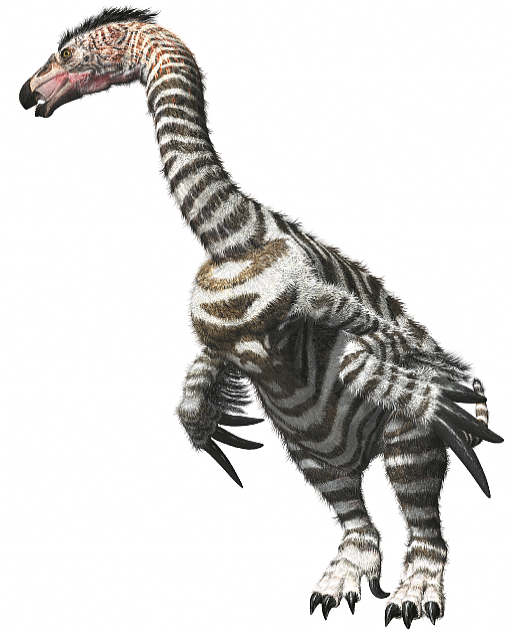
Therizinosaurs weighed six tons, had a giraffe-length neck, claws like scimitars -- and feathers. Alaska once had a lot of them, said paleontologist Anthony Fiorillo. 

Click to enlarge
Anthony Fiorillo --->

Fiorillo, curator of earth sciences at the Perot Museum of Nature and Science in Dallas, and his colleague Thomas Adams published a paper in the June online edition of the scholarly journal Palaios identifying a single track found in Denali National Park as belonging to the odd plant-eating dinosaur related to Tyrannosaurus rex and the modern chickadee.
In an interview last week, Fiorillo said several more therizinosaur tracks were found in the park over the course of this summer.

Scientists have been baffled by this family of dinosaurs, originally thinking they were something like turtles. The first incomplete specimens came from Mongolia. More fossils were then found in China and North America. The Denali tracks are the first evidence that they were among the ancient reptiles that lived in high latitudes, sometimes called "polar dinosaurs." 

 Anthony Fiorillo, curator of earth sciences at the Perot Museum of Nature and Science in Dallas, works to recover the remains of a horned pachyrhinosaur on the North Slope  in 2006.
Anthony Fiorillo, curator of earth sciences at the Perot Museum of Nature and Science in Dallas, works to recover the remains of a horned pachyrhinosaur on the North Slope in 2006.

The biggest Therizinosaurus is estimated to have stretched 40 feet. Even the smallest member of the family was 7 feet from the tip of its tail to its tiny head. They walked on their hind legs -- very well, as it turns out. Despite those ferocious front-limb talons, which could be a yard long, they seem to have come from a meat-eating species that turned vegetarian. 

The purpose of the Edward Scissorhands-like claws is something of a mystery. They could have been used to scythe leaves or stalks, Fiorillo said. Therizinosaur is Greek for "reaping lizard."
Likewise, "The feathers are the source of a lot of speculation," Fiorillo said. Perhaps they were for display. Perhaps they helped the animal control its body temperature.

For purposes of identifying the Alaska animal as a therizinosaur, however, the important feature is its feet.
In their paper, Fiorillo and Adams document the configuration of the original Denali track, saying, "Four-toed theropod tracks are decidedly uncommon." Theropods are the suborder of dinosaurs to which therizinosaurs belonged. Only two groups have all four toes facing forward, the researchers note as they meticulously eliminate other possibilities. 


In the case of therizinosaurs, all four toes bear some weight. It's a design not unlike the human foot, built for walking rather then springing, perching, swimming or other things feet do.
And walk they did. The Palaios article includes a map showing a possible therizinosaur highway from Lake Baikal in Central Asia to central Canada by way of the Bering Land Bridge. It likely took generations for the clan to travel that far.

The Denali region, on the other hand, may have been a major seasonal migration corridor, similar to those used by the birds and fish that swarm into Alaska during the summer nowadays. It was a place where different species fed and mingled; the therizinosaur tracks were found in the same layer of "bedding plains" as a number of duck-billed dinosaur tracks. It was a family place; different-size prints show adults and juveniles traveling together.

The abundant signs of various dinosaurs and prehistoric birds in Denali suggest to Fiorillo a scene not unlike the African savannah, with the Cretaceous versions of wildebeest and zebra herds eying each other across the plain.
"Alaska is the best place on the planet to study a high latitude ecosystem in deeper geologic time," he said. "We have something we can contribute to the discussion of what a warming Arctic might look like."

"There's so much (paleontological) potential in this state," Fiorillo said. "You never know what's around the corner."
The Denali footprints supply something like a photograph of what was happening in the far North 70 million years ago or more, he said. "We don't have bones. But the tracks give us a component to the biodiversity of the area that we didn't have before."

The therizinosaur isn't the first feathered dinosaur found in Alaska. That honor probably belongs to the small, wide-eyed, big-brained carnivore Troodon, fossils of which were previously found on the North Slope. 

source 

Thursday, August 2, 2012

Become an Antarctic explorer with panoramic imagery


Become an Antarctic explorer with panoramic imagery

In the winter of 1913, a British newspaper ran an advertisement to promote the latest imperial expedition to Antarctica, apparently placed by polar explorer Ernest Shackleton. It read, "Men wanted for hazardous journey. Low wages, bitter cold, long hours of complete darkness. Safe return doubtful. Honour and recognition in event of success." While the ad appears apocryphal, the dangerous nature of the journey to the South Pole is certainly not—as explorers like Roald Amundsen, Robert Falcon Scott and Shackleton himself discovered as they tried to become the first men to reach it.

Back in September 2010, we launched the first Street View imagery of the Antarctic, enabling people from more habitable lands to see penguins in Antarctica for the first time. Today we’re bringing you additional panoramic imagery of historic Antarctic locations that you can view from the comfort of your homes. We’ll be posting this special collection to our World Wonders site, where you can learn more about the history of South Pole exploration.


With the help of the Polar Geospatial Center at the University of Minnesota and the New Zealand Antarctic Heritage Trust, we’ve added 360-imagery of many important spots, inside and out, such as the South Pole Telescope, Shackleton's hut, Scott’s hut, Cape Royds Adélie Penguin Rookery and the Ceremonial South Pole.

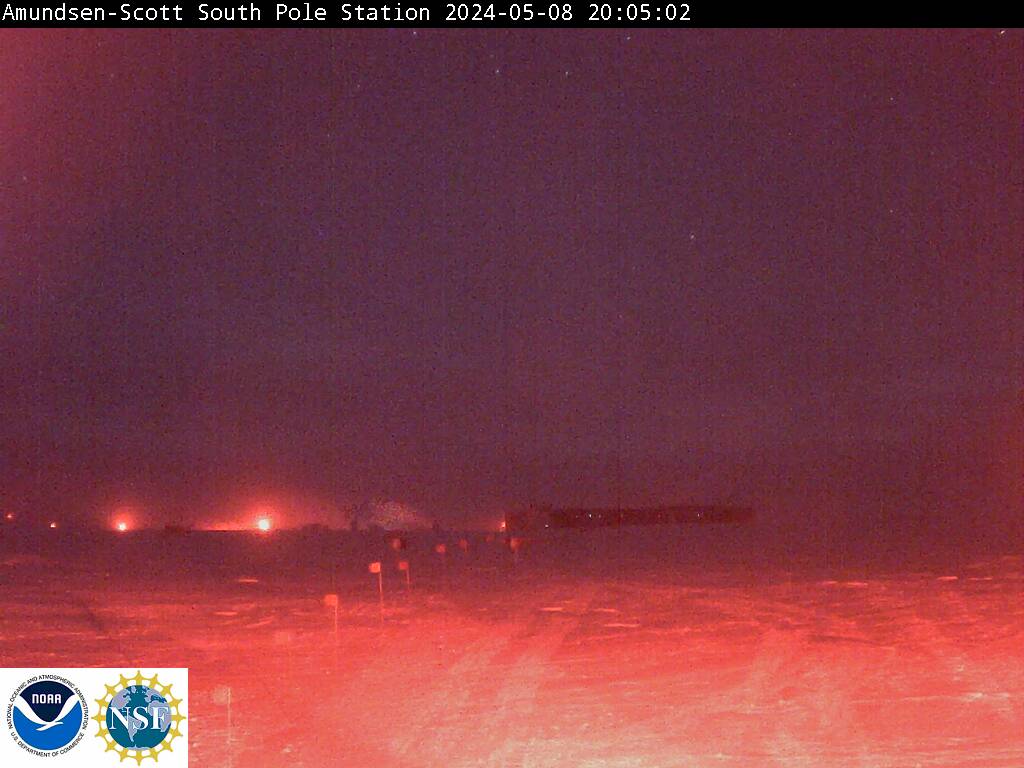
The ceremonial South Pole (View Larger Map)


The interior of Shackleton’s Hut demonstrates the host of supplies used in early 20th century Antarctic expeditions—everything from medicine and food to candles and cargo sleds can be found neatly stored inside. (View Larger Map)

With this technology, you can go inside places like Shackleton’s Hut (pictured above) and the other small wooden buildings that served as bases from which the explorers launched their expeditions. They were built to withstand the drastic weather conditions only for the few short years that the explorers inhabited them, but remarkably, after more than a century, the structures are still intact, along with well-preserved examples of the food, medicine, survival gear and equipment used during the expeditions. Now anyone can explore these huts and get insight into how these men lived for months at a time.


The landscape outside of Robert Falcon Scott’s supply hut conveys just how desolate the area is. For these early explorers, the supply huts were an oasis of warmth and comfort in a cold and inhospitable landscape. (View Larger Map)

This new imagery was collected with a lightweight tripod camera with a fisheye lens—equipment typically used to capture business interiors through the Business Photos program. We worked with this technology because of its portability, reliability and ease-of-use (our Street View trikes wouldn’t be much use in the snow).

The goal of these efforts is to provide scientists and travel (or penguin) enthusiasts all over the world with the most accurate, high-resolution data of these important historic locations. With this access, schoolchildren as far as Bangalore can count penguin colonies on Snow Hill Island, and geologists in Georgia can trace sedimentary layers in the Dry Valleys from the comfort of their desks. Feel free to leave your boots and mittens behind, and embark on a trip to Antarctica.

Posted by Alex Starns, Technical Program Manager, Street View


source 

Wednesday, July 25, 2012

Bare Feet: Why So Warm (Download Great Podcast)

Bare Feet: Why So Warm

E
What keeps penguin's feet from freezing? Penguins' feet don't freeze because of the blood circulating in them.
penguin_feet

The circulatory system of a penguin's legs and feet has evolved to lose as little heat as possible.
What keeps penguin’s feet from freezing?
Penguins’ feet don’t freeze because of the blood circulating in them.

The circulatory system of a penguin’s legs and feet has evolved to lose as little heat as possible, while keeping the penguin’s feet just above freezing. One way a penguin’s feet hold onto heat is by restricting the flow of blood in really cold weather. Actually, humans can do this too. That’s why your hands turn whiter in cold weather, there’s less blood in them.

Also, the tops of penguins’ legs work like a kind of natural heat-exchanger, cooling the blood from their bodies on the way to their feet, and heating the blood as it returns to their bodies. The arteries and veins here become very fine and interwoven. That way the feet only get pre-cooled blood, so there’s less heat to lose.

source

Friday, July 13, 2012

Antarctica at Risk from Human Activities

 
 Penguins nest. (Credit: © Goinyk Volodymyr / Fotolia)

ScienceDaily (July 12, 2012) — The continent of Antarctica is at risk from human activities and other forces, and environmental management is needed to protect the planet's last great wilderness area, says an international team of researchers, including a Texas A&M University oceanographer, in a paper published in the current issue of Science magazine.

Mahlon "Chuck" Kennicutt II, professor of oceanography who has conducted research in the area for more than 25 years, says Antarctica faces growing threats from global warming, loss of sea ice and landed ice, increased tourism, over-fishing in the region, pollution and invasive species creeping into the area. One of the longer-term concerns that may present the greatest threat overall is the potential for oil, gas and mineral exploitation on the continent and in the surrounding ocean, the authors note.
Kennicutt says the Antarctic Treaty System that governs the continent has worked well since it was established in 1962 and that 50 countries currently adhere to the treaty, but it is under pressure today from global climate changes and the ever-present interest in the area's natural resources, from fish to krill to oil to gas to minerals.

"Many people may not realize that Antarctica is a like a 'canary in a coal mine' when it comes to global warming, and Antarctica serves as a sort of thermostat for Earth," he points out. "The polar regions are the most sensitive regions on Earth to global warming, responding rapidly, so what happens in Antarctica in response to this warming affects the entire Earth system in many ways that we barely understand," Kennicutt explains. "Antarctica contains over 90 percent of the fresh water in the world, locked up as solid water in its massive ice sheets. Research that develops fundamental knowledge and understanding of these complex systems conducted in and from Antarctica is critical to understanding many of the challenges facing Earth today."

In addition to conducting research in the area, Kennicutt is also president of the Scientific Committee for Antarctic Research (SCAR), formed in 1958 to coordinate international research in the region.
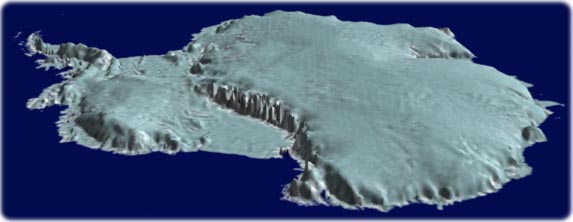
More than twice the size of the United States, Antarctica has no cities, no government and no permanent residents. All who go to Antarctica are short-time visitors, whether they are scientists, personnel that support scientists or tourists. Antarctica is the coldest, driest and windiest location on Earth and is the only continent with no time zones.

"The Antarctic Treaty has worked well for the past 50 years, but we need to rethink how best to protect the continent from a range of growing of threats," Kennicutt adds.

"The treaty forbids oil or gas development, but it's possible that could be challenged in the years to come. Until now, energy companies have shown little interest in exploring the southern reaches of our planet because of the harsh conditions, the distance to market and the lack of technologies make it a very expensive commercial proposition.

"In the 1960s, most believed that drilling on the North Slope of Alaska was not economical, and in less than 30 years, it became one of the world's major sources of oil. Deep-water drilling today is practiced worldwide and subfloor completion technologies are rapidly advancing, so barriers in the past may soon be overcome increasing the threat to Antarctica in the not-so-distant future."
Another problem -- melting ice from several areas of Antarctica -- is a very real concern today, Kennicutt adds.

"A report in the news last week shows that sea-level rise on the east coast of the U.S. is occurring much faster than predicted," he notes.

"As the planet warms and the massive ice sheets break apart and melt, sea levels could continue to rise dramatically, not only in the U.S. but around the world. The ice sheets of Antarctica are known as the 'sleeping giants' in the ongoing debates about climate change and sea level rise. Scientists have only rudimentary understanding of how and when these 'giants' will contribute to sea level in the future."

He adds that the first explorers to Antarctica more than 100 years ago would be surprised to see how things have changed in the region.

For instance, it has been proven there are more than 300 sub-glacial lakes in Antarctica, some of them as big as the Great Lakes, and the huge ice sheets in the area flow like rivers to the ocean. He adds that growing tourism in the area and numerous scientific expeditions suggest that the prospect of permanent human settlements is not out of the question.

"All of these concerns pose serious challenges to conservation and protection efforts in Antarctica," Kennicutt notes.

"The bottom line is that we need to make sure that existing agreements and practices that address and respond to these threats are robust enough to last for the next 50 years, and that they truly provide the necessary protection of Antarctica that we all wish for and that we owe to future generations."


Story Source:
The above story is reprinted from materials provided by Texas A&M University, via Newswise.
Note: Materials may be edited for content and length. For further information, please contact the source cited above.

Journal Reference:
  1. S. L. Chown, J. E. Lee, K. A. Hughes, J. Barnes, P. J. Barrett, D. M. Bergstrom, P. Convey, D. A. Cowan, K. Crosbie, G. Dyer, Y. Frenot, S. M. Grant, D. Herr, M. C. Kennicutt II, M. Lamers, A. Murray, H. P. Possingham, K. Reid, M. J. Riddle, P. G. Ryan, L. Sanson, J. D. Shaw, M. D. Sparrow, C. Summerhayes, A. Terauds, and D. H. Wall. Challenges to the Future Conservation of the Antarctic. Science, 13 July 2012: 158-159 DOI: 10.1126/science.1222821

Texas A&M University (2012, July 12). Antarctica at risk from human activities. ScienceDaily. Retrieved July 13, 2012, from ­source

Fossil Egg Links Dinosaurs to Modern Birds

Researchers have discovered a series of dinosaur eggs with a unique characteristic: they are oval in shape. The discovery supports the theory that birds and non-avian theropods, dinosaurs from the Cretaceous Period, could have a common ancestor. (Credit: Image courtesy of Universitat Autònoma de Barcelona)

ScienceDaily (July 12, 2012) — Researchers have discovered a series of dinosaur eggs with a unique characteristic: they are oval in shape. The discovery supports the theory that birds and non-avian theropods, dinosaurs from the Cretaceous Period, could have a common ancestor.

Before her death in December 2010, Nieves López Martínez, palaeontologist of the Complutense University of Madrid, was working on the research of dinosaur eggs with a very peculiar characteristic: an ovoid, asymmetrical shape. Together with Enric Vicens, palaeontologist of the Universitat Autònoma de Barcelona, the two scientists conducted an exhaustive analysis of their discovery, recently published in the journal Palaeontology.

The new type of dinosaur egg has been given the scientific name of Sankofa pyrenaica. The eggs were discovered in the Montsec area of Lleida, in two sites located on either side of the Terradets pass in Spain.

The South Pyrenean area is rich in dinosaur egg sites, most of which correspond to sauropod eggs from the upper Cretaceous, dating back more than 70 million years ago. During that period, the area was a coastal area full of beaches and deltas which won land from the sea through sediment accumulation. Sand and mud from that period gave way, millions of years later, to the sandstone and marl where dinosaur remains now can be found. On the beach ridges and flat coastal lands is where a large group of dinosaurs laid their eggs.

The sites where the discoveries were made correspond to the upper Cretaceous, between the Campanian and Maastrichtian periods, some 70 to 83 million years ago. The fossils found belong to small eggs measuring some 7 centimeters tall and 4 cm wide, while the eggshell was on average 0.27mm thick. Most of the eggs found were broken in small fragments, but scientists also discovered more or less complete eggs, which can be easily studied in sections. The eggs found at the sites all belong to the same species. The main difference when compared to other eggs from the same period is their asymmetrical shape, similar to that of chicken eggs. The more complete samples clearly show an oval form rarely seen in eggs from the upper Cretaceous period and similar to modern day eggs.
Their shape is a unique characteristic of theropod eggs from the upper Cretaceous period and suggests a connection with bird eggs. Non avian dinosaur eggs are symmetrical and elongated.

Asymmetry in bird eggs is associated to the physiology of birds: they take on this shape given the existence of only one oviduct which can form only one egg at a time. In this case the isthmus, the region in the oviduct creating the eggshell membrane, is what gives the egg its asymmetrical shape.

Thanks to this shape, the wider end contains a bag of air which allows the bird to breathe in the last stages of its development. This evolutionary step was still relatively underdeveloped in dinosaurs.
Thus, the egg discovered by UCM and UAB researchers may represent the missing link between dinosaurs and birds. Only one other egg, discovered in Argentina and corresponding to a primitive bird from the same period, has similar characteristics. The discover supports the theory that non avian theropods, the dinosaurs of the Cretaceous period, and birds could have had a common ancestor.


Story Source:
The above story is reprinted from materials provided by Universitat Autònoma de Barcelona.
Note: Materials may be edited for content and length. For further information, please contact the source cited above.

Journal Reference:
  1. Nieves López-Martínez, Enric Vicens. A new peculiar dinosaur egg, Sankofa pyrenaica oogen. nov. oosp. nov. from the Upper Cretaceous coastal deposits of the Aren Formation, south-central Pyrenees, Lleida, Catalonia, Spain. Palaeontology, 2012; 55 (2): 325 DOI: 10.1111/j.1475-4983.2011.01114.x

Universitat Autònoma de Barcelona (2012, July 12). Fossil egg links dinosaurs to modern birds. ScienceDaily. Retrieved July 13, 2012, from source­ 

Wednesday, July 11, 2012

King Penguin Colony Getting Used to Humans

Jeanna Bryner, LiveScience Managing Editor
King penguins on Possession Island.
The researchers aren't sure if the king penguins are acclimating to humans and so don't get stressed when in their presence or if human presence weeded out those stress-sensitive penguins, leaving the copers behind.
CREDIT: Vincent Viblanc
 
Updated Wednesday, July 11

Scientists studying king penguins on a sub-Antarctic island, along with tourists, may be stressing the waddling, flightless birds, new research suggests. However, it seems the penguins are getting used to their human visitors.

The new study reveals how more than 50 years of human presence, or the time since a permanent research station was set up, on Possession Island, has impacted a major colony of breeding king penguins (Aptenodytes patagonicus), called the "Baie du Marin" colony. Research reported last year on these penguins found that flipper tagging was linked with fewer chicks and a lower survival rate for the birds compared with untagged king penguins.


Turns out, according to the new study, penguins that are used to humans being around didn't get too upset by noise and human-presence stressors, though capturing these penguins for scientific measurements did cause a stress surge, according to the study published this week in the journal BMC Ecology.


"A central question for ecologists is the extent to which anthropogenic disturbances (e.g. tourism) might impact wildlife and affect the systems under study," lead researcher Vincent Viblanc of the University of Lausanne in Switzerland said in a statement. "One of the major pitfalls of such research is in forgetting that, from the perspective of the wildlife studied, tourism and scientific research are not two worlds apart."

In some ways, this island is perfect for studying stress in penguins. That's because some parts of the Baie du Marin colony have been exposed more intensely to humans than others, Viblanc told LiveScience. In disturbed parts of the colony scientists and tourists, sometimes in groups of tens, come into the presence of the penguins. A small number, about 50 birds, in this area are captured and handled by scientists one to five times each year. Meanwhile, another part of the colony is relatively undisturbed, Viblanc said, with one to two visits per week by scientists.

The king penguins come ashore on the sub-antarctic island to breed each year. Hundreds of the penguins waddle onto land to find a mate, and hopefully, make some chicks.
CREDIT: Pierre Bize

Viblanc and his colleagues compared 15 breeding penguins in these disturbed areas with 18 undisturbed penguins. All of the penguins were brooding a chick between 2 days and a month old.
To get a sense of the penguins' stress levels, the researchers measured their heart rates in response to three stressors: two low-intensity stressors that included a human approach to about 33 feet (10 meters) and a loud noise, meant to mimic tourists, scientists and noises from machines operating on the outskirts of the colony. The high-intensity stressor involved capturing a penguin to simulate what happens when scientists take direct measurements.

Compared with penguins from undisturbed areas, the disturbed penguins were less stressed by noise and approaching humans; the increase in heart rate above resting levels was much lower, 81 percent and 74 percent lower, in birds used to humans when they heard stressful sounds and saw humans approaching, respectively.

However, following capture, the human-acclimated penguins' maximum relative heart rate increased 42 percent higher than it did for undisturbed birds, though it recovered faster afterwards.
"Penguins habituate to the distant presence of human observers in disturbed areas, whereas they do not habituate to being captured," Viblanc wrote in an email to LiveScience. "This makes sense, as from an adaptive perspective, stress responses enable the organism to deal with life-threatening situations. Captures may indeed be assimilated as predation events from the birds, whereas the distant presence of observers poses no immediate threat."

Their findings can't tease out whether the lower heart-rate numbers in the highly disturbed areas are a result of penguins becoming habituated to human presence or if they are the result of a selection process. For instance, have penguins whose "animal personalities" are more susceptible to stress deserted these areas, leaving behind those that are better at coping, the researchers wonder.

source

Tuesday, July 10, 2012

'Depraved' sex acts by penguins shocked polar explorer

Image of adelie penguins taken by George Levick (Image: Natural History Museum)  
 
 
Scientists now understand the biological reasons for behavior Dr Levick considered to be "depraved"
Accounts of unusual sexual activities among penguins, observed a century ago by a member of Captain Scott's polar team, are finally being made public.
Details, including "sexual coercion", recorded by George Murray Levick were considered so shocking that they were removed from official accounts.

However, scientists now understand the biological reasons behind the acts that Dr Levick considered "depraved".
The Natural History Museum has published his unedited papers.

Mr Levick, an avid biologist, was the medical officer on Captain Scott's ill-fated Terra Nova expedition to the South Pole in 1910. He was a pioneer in the study of penguins and was the first person to stay for an entire breeding season with a colony on Cape Adare.

He recorded many details of the lives of adelie penguins, but some of their activities were just too much for the Edwardian sensibilities of the good doctor.

He was shocked by what he described as the "depraved" sexual acts of "hooligan" males who were mating with dead females. So distressed was he that he recorded the "perverted" activities in Greek in his notebook.

Graphic account
  On his return to Britain, Mr Levick attempted to publish a paper entitled "the natural history of the adelie penguin", but according to Douglas Russell, curator of eggs and nests at the Natural History Museum, it was too much for the times.

"He submitted this extraordinary and graphic account of sexual behaviour of the adelie penguins, which the academic world of the post-Edwardian era found a little too difficult to publish," Mr Russell said.

Pages from Dr Levick's notebook with some sections coded in Greek
 
Levick notebook (Image: NHM/R Kossow)
The sexual behaviour section was not included in the official paper, but the then keeper of zoology at the museum, Sidney Harmer, decided that 100 copies of the graphic account should be circulated to a select group of scientists.

Mr Russell said they simply did not have the scientific knowledge at that time to explain Mr Levick's accounts of what he termed necrophilia.

"What is happening there is not in any way analogous to necrophilia in the human context," Mr Russell said. "It is the males seeing the positioning that is causing them to have a sexual reaction.
"They are not distinguishing between live females who are awaiting congress in the colony, and dead penguins from the previous year which just happen to be in the same position."

Sexual coercion
  Only two of the original 100 copies of Mr Levick's account survive. Mr Russell and colleagues have now published a re-interpretation of Mr Levick's findings in the journal Polar Record.
Mr Russell described how he had discovered one of the copies by accident.

"I just happened to be going through the file on George Murray Levick when I shifted some papers and found underneath them this extraordinary paper which was headed 'the sexual habits of the adelie penguin, not for publication' in large black type.

"It's just full of accounts of sexual coercion, sexual and physical abuse of chicks, non-procreative sex, and finishes with an account of what he considers homosexual behavior, and it was fascinating."
The report and Mr Levick's handwritten notes are now on display at the Natural History Museum for the first time. Mr Russell believes they show a man who struggled to understand penguins as they really are.

"He's just completely shocked. He, to a certain extent, falls into the same trap as an awful lot of people in seeing penguins as bipedal birds and seeing them as little people. They're not. They are birds and should be interpreted as such."

source

Monday, July 9, 2012

Antarctic moss lives on ancient penguin poo

5 July 2012
By Victoria Gill
 Science reporter, BBC Nature


Moss plants that survive the freezing conditions of Antarctica have an unusual food source, scientists say.

The vibrant green plants take nutrients from the poo left behind by penguins that lived in the same area thousands of years ago.

Scientists made their discovery whilst testing the plants to find out how they manage to survive in the icy landscape.

The findings were presented at the Society for Experimental Biology's annual meeting in Salzburg, Austria.

Prof Sharon Robinson, from the University of Wollongong in Australia, has been studying Antarctica's plants for 16 years.

She explained that she was interested in where the plants get their nutrients, because the Antarctic soil on which they grow is so poor.

"Plants need water, sunlight and nutrients; there's plenty of sunlight in the summer and as long as the ice melts there's water," she told BBC Nature.

"But the soil is basically sand and gravel."

To find out where the plants were getting the food they needed to grow, Prof Robinson and her team used a technique that allowed them to see all of the chemicals that made up a moss plant.

This "chemical signature" revealed nitrogen that had passed through a marine predator.

"Nitrogen that's gone through algae, krill and fish and then penguins has a characteristic 'seabird signature'," Prof Robinson told BBC Nature.

Since no penguins live on the elevated lakeside site in East Antarctica, the researchers had to work out where the mysterious seabird poo came from.

They realised that their moss beds were growing on the site of an ancient penguin colony.

"Between 3,000 and 8,000 years ago, on the site where the moss is now growing, there used to be [Adelie] penguins," said Prof Robinson.

"There's fossil evidence to support that, and the little pebbles that the penguins use to make their nests are actually still there.

"The other thing that's still there is the penguin poo.

 Six different species of moss live on the islands of East Antarctica studied by the scientists
"And because Antarctica is so cold, those nutrients have just stayed frozen in the soil; they're now feeding this moss."

Prof Robinson said that the hardy plants, which grow just 2-3mm per year, create "luxuriant green beds" that are home to some of the insects and other miniature creatures that manage to live in this frozen desert.

Prof Robinson hopes to learn exactly how they adapt to this extreme environment.

The mosses are able to "freeze-dry" in order to survive the winter and produce sunscreen compounds to protect themselves from UV rays.

"It's amazing that the plants can do [these things], but it's also interesting to know which compounds they use," said Prof Robinson.

Learning the molecular mechanisms behind plants' abilities to dry out but remain viable could help researchers to develop ways to store food or even medicines for long periods.

source

Tuesday, July 3, 2012

Newly Discovered Dinosaur Implies Greater Prevalence of Feathers in Dinos Not Related to Birds

Caption: Skeleton of Sciurumimus as found on a limestone slab. (Credit: H. Tischlinger\Jura Museum Eichstatt)

Newly Discovered Dinosaur Implies Greater Prevalence of Feathers; Megalosaur Fossil Represents First Feathered Dinosaur Not Closely Related to Birds

ScienceDaily (July 2, 2012) — A new species of feathered dinosaur discovered in southern Germany is further changing the perception of how predatory dinosaurs looked. The fossil of Sciurumimus albersdoerferi,which lived about 150 million years ago, provides the first evidence of feathered theropod dinosaurs that are not closely related to birds.

The fossil is described in a paper published in the Proceedings of the National Academy of Sciences on July 2.

"This is a surprising find from the cradle of feathered dinosaur work, the very formation where the first feathered dinosaur Archaeopteryx was collected over 150 years ago," said Mark Norell, chair of the Division of Palaeontology at the American Museum of Natural History and an author on the new paper along with researchers from Bayerische Staatssammlung für Paläontologie und Geologie and the Ludwig Maximilians University.

Theropods are bipedal, mostly carnivorous dinosaurs. In recent years, scientists have discovered that many extinct theropods had feathers. But this feathering has only been found in theropods that are classified as coelurosaurs, a diverse group including animals likeT. rexand birds. Sciurumimus -- identified as a megalosaur, nota coelurosaur -- is the first exception to this rule. The new species also sits deep within the evolutionary tree of theropods, much more so than coelurosaurs, meaning that the species that stem from Sciurumimus are likely to have similar characteristics.

"All of the feathered predatory dinosaurs known so far represent close relatives of birds," said palaeontologist Oliver Rauhut, of the Bayerische Staatssammlung für Paläontologie und Geologie. "Sciurumimus is much more basal within the dinosaur family tree and thus indicates that all predatory dinosaurs had feathers."

The fossil, which is of a baby Sciurumimus, was found in the limestones of northern Bavaria and preserves remains of a filamentous plumage, indicating that the whole body was covered with feathers. The genus name ofSciurumimus albersdoerferirefers to the scientific name of the tree squirrels,Sciurus, and means "squirrel-mimic"-referring to the especially bushy tail of the animal. The species name honours the private collector who made the specimen available for scientific study.
"Under ultraviolet light, remains of the skin and feathers show up as luminous patches around the skeleton," said co-author Helmut Tischlinger, from the Jura Museum Eichstatt.

Sciurumimusis not only remarkable for its feathers. The skeleton, which represents the most complete predatory dinosaur ever found in Europe, allows a rare glimpse at a young dinosaur. Apart from other known juvenile features, such as large eyes, the new find also confirmed other hypotheses.

"It has been suggested for some time that the lifestyle of predatory dinosaurs changed considerably during their growth," Rauhut said. "Sciurumimus shows a remarkable difference to adult megalosaurs in the dentition, which clearly indicates that it had a different diet."

Adult megalosaurs reached about 20 feet in length and often weighed more than a ton. They were active predators, which probably also hunted other large dinosaurs. The juvenile specimen of Sciurumimus, which was only about 28 inches in length, probably hunted insects and other small prey, as evidenced by the slender, pointed teeth in the tip of the jaws.

"Everything we find these days shows just how deep in the family tree many characteristics of modern birds go, and just how bird-like these animals were," Norell said. "At this point it will surprise no one if feather like structures were present in the ancestors of all dinosaurs.

The study was financed by the Volkswagen Foundation and the American Museum of Natural History.


Story Source:
The above story is reprinted from materials provided by American Museum of Natural History.
Note: Materials may be edited for content and length. For further information, please contact the source cited above.

Journal Reference:
  1. Oliver W. M. Rauhut, Christian Foth, Helmut Tischlinger, and Mark A. Norell. Exceptionally preserved juvenile megalosauroid theropod dinosaur with filamentous integument from the Late Jurassic of Germany. Proceedings of the National Academy of Sciences, July 2, 2012 DOI: 10.1073/pnas.1203238109

American Museum of Natural History (2012, July 2). Newly discovered dinosaur implies greater prevalence of feathers; Megalosaur fossil represents first feathered dinosaur not closely related to birds. ScienceDaily. Retrieved July 3, 2012, from ­http://www.sciencedaily.com­ /releases/2012/07/120702210225.htm

Thursday, June 21, 2012

Melting Sea Ice Threatens Emperor Penguins

At nearly four feet tall, the Emperor penguin is Antarctica’s largest sea bird. Unlike other sea birds, Emperor penguins breed and raise their young almost exclusively on sea ice. If global temperatures continue to rise, the Emperor penguins in Terre Adélie in East Antarctica may eventually disappear. (Credit: Photo courtesy Glen Grant, U.S. Antarctic Program, National Science Foundation)
 
ScienceDaily (June 20, 2012) — At nearly four feet tall, the Emperor penguin is Antarctica's largest sea bird -- and thanks to films like "March of the Penguins" and "Happy Feet," it's also one of the continent's most iconic. If global temperatures continue to rise, however, the Emperor penguins inTerre Adélie, in East Antarcticamay eventually disappear, according to a new study by led by researchers from the Woods Hole Oceanographic Institution (WHOI).

The study was published in the June 20th edition of the journal Global Change Biology.
"Over the last century, we have already observed the disappearance of the Dion Islets penguin colony, close to the West Antarctic Peninsula," says Stephanie Jenouvrier, WHOI biologist and lead author of the new study. "In 1948 and the 1970s, scientists recorded more than 150 breeding pairs there. By 1999, the population was down to just 20 pairs, and in 2009, it had vanished entirely." Like in Terre Adélie, Jenouvrier thinks the decline of those penguins might be connected to a simultaneous decline in Antarctic sea ice due to warming temperatures in the region.

Unlike other sea birds, Emperor penguins breed and raise their young almost exclusively on sea ice. If that ice breaks up and disappears early in the breeding season, massive breeding failure may occur, says Jenouvrier. "As it is, there's a huge mortality rate just at the breeding stages, because only 50 percent of chicks survive to the end of the breeding season, and then only half of those fledglings survive until the next year," she says.

Disappearing sea ice may also affect the penguins' food source. The birds feed primarily on fish, squid, and krill, a shrimplike animal, which in turn feeds on zooplankton and phytoplankton, tiny organisms that grow on the underside of the ice. If the ice goes, Jenouvrier says, so too will the plankton, causing a ripple effect through the food web that may starve the various species that penguins rely on as prey.

To project how penguin populations may fare in the future, Jenouvrier's team used data from several different sources, including climate models, sea ice forecasts, and a demographic model that Jenouvrier created of the Emperor penguin population at Terre Adélie, a coastal region of Antarctica where French scientists have conducted penguin observations for more than 50 years.

Combining this type of long-term population data with information on climate was key to the study, says Hal Caswell, a WHOI senior mathematical biologist and collaborator on the paper.

"If you want to study the effects of climate on a particular species, there are three pieces that you have to put together," he says. "The first is a description of the entire life cycle of the organism, and how individuals move through that life cycle. The second piece is how the cycle is affected by climate variables. And the crucial third piece is a prediction of what those variables may look like in the future, which involves collaboration with climate scientists."

Marika Holland of the National Center for Atmospheric Research is one such scientist. She specializes in studying the relationship between sea ice and global climate, and helped the team identify climate models for use in the study.

Working with Julienne Stroeve, another sea ice specialist from the National Snow and Ice Data Center, Holland ultimately recommended five distinct models. "We picked the models based on how well they calculated the sea ice cover for the 20th century," she says. "If a model predicted an outcome that matched what was actually observed, we felt it was likely that its projections of sea ice change in the future could be trusted."

Jenouvrier used the output from these various climate models to determine how changes in temperature and sea ice might affect the Emperor penguin population at Terre Adélie. She found that if greenhouse gas emissions continue to rise at levels similar to today -- causing temperatures to rise and Antarctic sea ice to shrink -- penguin population numbers will diminish slowly until about 2040, after which they would decline at a much steeper rate as sea ice coverage drops below a usable threshold.

"Our best projections show roughly 500 to 600 breeding pairs remaining by the year 2100. Today, the population size is around 3000 breeding pairs," says Jenouvrier.

The effect of rising temperature in the Antarctic isn't just a penguin problem, according to Caswell. As sea ice coverage continues to shrink, the resulting changes in the Antarctic marine environment will affect other species, and may affect humans as well.

"We rely on the functioning of those ecosystems. We eat fish that come from the Antarctic. We rely on nutrient cycles that involve species in the oceans all over the world," he says. "Understanding the effects of climate change on predators at the top of marine food chains -- like Emperor penguins -- is in our best interest, because it helps us understand ecosystems that provide important services to us."
Also collaborating on the study were Christophe Barbraud and Henri Weimerskirch of the Centre d'Etudes Biologiques de Chizé, in France, and Mark Serreze of the National Snow and Ice Data Center in the United States.


Story Source:
The above story is reprinted from materials provided by Woods Hole Oceanographic Institution.
Note: Materials may be edited for content and length. For further information, please contact the source cited above.

Journal Reference:
  1. Stephanie Jenouvrier, Marika Holland, Julienne Stroeve, Christophe Barbraud, Henri Weimerskirch, Mark Serreze, Hal Caswell. Effects of climate change on an emperor penguin population: analysis of coupled demographic and climate models. Global Change Biology, 2012; DOI: 10.1111/j.1365-2486.2012.02744.x

Woods Hole Oceanographic Institution (2012, June 20). Melting sea ice threatens emperor penguins. ScienceDaily. Retrieved June 21, 2012, from http://www.sciencedaily.com­ /releases/2012/06/120620113342.htm ­ /