Wednesday, July 25, 2012

Bare Feet: Why So Warm (Download Great Podcast)

Bare Feet: Why So Warm

E
What keeps penguin's feet from freezing? Penguins' feet don't freeze because of the blood circulating in them.
penguin_feet

The circulatory system of a penguin's legs and feet has evolved to lose as little heat as possible.
What keeps penguin’s feet from freezing?
Penguins’ feet don’t freeze because of the blood circulating in them.

The circulatory system of a penguin’s legs and feet has evolved to lose as little heat as possible, while keeping the penguin’s feet just above freezing. One way a penguin’s feet hold onto heat is by restricting the flow of blood in really cold weather. Actually, humans can do this too. That’s why your hands turn whiter in cold weather, there’s less blood in them.

Also, the tops of penguins’ legs work like a kind of natural heat-exchanger, cooling the blood from their bodies on the way to their feet, and heating the blood as it returns to their bodies. The arteries and veins here become very fine and interwoven. That way the feet only get pre-cooled blood, so there’s less heat to lose.

source

Friday, July 13, 2012

Antarctica at Risk from Human Activities

 
 Penguins nest. (Credit: © Goinyk Volodymyr / Fotolia)

ScienceDaily (July 12, 2012) — The continent of Antarctica is at risk from human activities and other forces, and environmental management is needed to protect the planet's last great wilderness area, says an international team of researchers, including a Texas A&M University oceanographer, in a paper published in the current issue of Science magazine.

Mahlon "Chuck" Kennicutt II, professor of oceanography who has conducted research in the area for more than 25 years, says Antarctica faces growing threats from global warming, loss of sea ice and landed ice, increased tourism, over-fishing in the region, pollution and invasive species creeping into the area. One of the longer-term concerns that may present the greatest threat overall is the potential for oil, gas and mineral exploitation on the continent and in the surrounding ocean, the authors note.
Kennicutt says the Antarctic Treaty System that governs the continent has worked well since it was established in 1962 and that 50 countries currently adhere to the treaty, but it is under pressure today from global climate changes and the ever-present interest in the area's natural resources, from fish to krill to oil to gas to minerals.

"Many people may not realize that Antarctica is a like a 'canary in a coal mine' when it comes to global warming, and Antarctica serves as a sort of thermostat for Earth," he points out. "The polar regions are the most sensitive regions on Earth to global warming, responding rapidly, so what happens in Antarctica in response to this warming affects the entire Earth system in many ways that we barely understand," Kennicutt explains. "Antarctica contains over 90 percent of the fresh water in the world, locked up as solid water in its massive ice sheets. Research that develops fundamental knowledge and understanding of these complex systems conducted in and from Antarctica is critical to understanding many of the challenges facing Earth today."

In addition to conducting research in the area, Kennicutt is also president of the Scientific Committee for Antarctic Research (SCAR), formed in 1958 to coordinate international research in the region.
More than twice the size of the United States, Antarctica has no cities, no government and no permanent residents. All who go to Antarctica are short-time visitors, whether they are scientists, personnel that support scientists or tourists. Antarctica is the coldest, driest and windiest location on Earth and is the only continent with no time zones.

"The Antarctic Treaty has worked well for the past 50 years, but we need to rethink how best to protect the continent from a range of growing of threats," Kennicutt adds.

"The treaty forbids oil or gas development, but it's possible that could be challenged in the years to come. Until now, energy companies have shown little interest in exploring the southern reaches of our planet because of the harsh conditions, the distance to market and the lack of technologies make it a very expensive commercial proposition.

"In the 1960s, most believed that drilling on the North Slope of Alaska was not economical, and in less than 30 years, it became one of the world's major sources of oil. Deep-water drilling today is practiced worldwide and subfloor completion technologies are rapidly advancing, so barriers in the past may soon be overcome increasing the threat to Antarctica in the not-so-distant future."
Another problem -- melting ice from several areas of Antarctica -- is a very real concern today, Kennicutt adds.

"A report in the news last week shows that sea-level rise on the east coast of the U.S. is occurring much faster than predicted," he notes.

"As the planet warms and the massive ice sheets break apart and melt, sea levels could continue to rise dramatically, not only in the U.S. but around the world. The ice sheets of Antarctica are known as the 'sleeping giants' in the ongoing debates about climate change and sea level rise. Scientists have only rudimentary understanding of how and when these 'giants' will contribute to sea level in the future."

He adds that the first explorers to Antarctica more than 100 years ago would be surprised to see how things have changed in the region.

For instance, it has been proven there are more than 300 sub-glacial lakes in Antarctica, some of them as big as the Great Lakes, and the huge ice sheets in the area flow like rivers to the ocean. He adds that growing tourism in the area and numerous scientific expeditions suggest that the prospect of permanent human settlements is not out of the question.

"All of these concerns pose serious challenges to conservation and protection efforts in Antarctica," Kennicutt notes.

"The bottom line is that we need to make sure that existing agreements and practices that address and respond to these threats are robust enough to last for the next 50 years, and that they truly provide the necessary protection of Antarctica that we all wish for and that we owe to future generations."


Story Source:
The above story is reprinted from materials provided by Texas A&M University, via Newswise.
Note: Materials may be edited for content and length. For further information, please contact the source cited above.

Journal Reference:
  1. S. L. Chown, J. E. Lee, K. A. Hughes, J. Barnes, P. J. Barrett, D. M. Bergstrom, P. Convey, D. A. Cowan, K. Crosbie, G. Dyer, Y. Frenot, S. M. Grant, D. Herr, M. C. Kennicutt II, M. Lamers, A. Murray, H. P. Possingham, K. Reid, M. J. Riddle, P. G. Ryan, L. Sanson, J. D. Shaw, M. D. Sparrow, C. Summerhayes, A. Terauds, and D. H. Wall. Challenges to the Future Conservation of the Antarctic. Science, 13 July 2012: 158-159 DOI: 10.1126/science.1222821

Texas A&M University (2012, July 12). Antarctica at risk from human activities. ScienceDaily. Retrieved July 13, 2012, from ­source

Fossil Egg Links Dinosaurs to Modern Birds

Researchers have discovered a series of dinosaur eggs with a unique characteristic: they are oval in shape. The discovery supports the theory that birds and non-avian theropods, dinosaurs from the Cretaceous Period, could have a common ancestor. (Credit: Image courtesy of Universitat Autònoma de Barcelona)

ScienceDaily (July 12, 2012) — Researchers have discovered a series of dinosaur eggs with a unique characteristic: they are oval in shape. The discovery supports the theory that birds and non-avian theropods, dinosaurs from the Cretaceous Period, could have a common ancestor.

Before her death in December 2010, Nieves López Martínez, palaeontologist of the Complutense University of Madrid, was working on the research of dinosaur eggs with a very peculiar characteristic: an ovoid, asymmetrical shape. Together with Enric Vicens, palaeontologist of the Universitat Autònoma de Barcelona, the two scientists conducted an exhaustive analysis of their discovery, recently published in the journal Palaeontology.

The new type of dinosaur egg has been given the scientific name of Sankofa pyrenaica. The eggs were discovered in the Montsec area of Lleida, in two sites located on either side of the Terradets pass in Spain.

The South Pyrenean area is rich in dinosaur egg sites, most of which correspond to sauropod eggs from the upper Cretaceous, dating back more than 70 million years ago. During that period, the area was a coastal area full of beaches and deltas which won land from the sea through sediment accumulation. Sand and mud from that period gave way, millions of years later, to the sandstone and marl where dinosaur remains now can be found. On the beach ridges and flat coastal lands is where a large group of dinosaurs laid their eggs.

The sites where the discoveries were made correspond to the upper Cretaceous, between the Campanian and Maastrichtian periods, some 70 to 83 million years ago. The fossils found belong to small eggs measuring some 7 centimeters tall and 4 cm wide, while the eggshell was on average 0.27mm thick. Most of the eggs found were broken in small fragments, but scientists also discovered more or less complete eggs, which can be easily studied in sections. The eggs found at the sites all belong to the same species. The main difference when compared to other eggs from the same period is their asymmetrical shape, similar to that of chicken eggs. The more complete samples clearly show an oval form rarely seen in eggs from the upper Cretaceous period and similar to modern day eggs.
Their shape is a unique characteristic of theropod eggs from the upper Cretaceous period and suggests a connection with bird eggs. Non avian dinosaur eggs are symmetrical and elongated.

Asymmetry in bird eggs is associated to the physiology of birds: they take on this shape given the existence of only one oviduct which can form only one egg at a time. In this case the isthmus, the region in the oviduct creating the eggshell membrane, is what gives the egg its asymmetrical shape.

Thanks to this shape, the wider end contains a bag of air which allows the bird to breathe in the last stages of its development. This evolutionary step was still relatively underdeveloped in dinosaurs.
Thus, the egg discovered by UCM and UAB researchers may represent the missing link between dinosaurs and birds. Only one other egg, discovered in Argentina and corresponding to a primitive bird from the same period, has similar characteristics. The discover supports the theory that non avian theropods, the dinosaurs of the Cretaceous period, and birds could have had a common ancestor.


Story Source:
The above story is reprinted from materials provided by Universitat Autònoma de Barcelona.
Note: Materials may be edited for content and length. For further information, please contact the source cited above.

Journal Reference:
  1. Nieves López-Martínez, Enric Vicens. A new peculiar dinosaur egg, Sankofa pyrenaica oogen. nov. oosp. nov. from the Upper Cretaceous coastal deposits of the Aren Formation, south-central Pyrenees, Lleida, Catalonia, Spain. Palaeontology, 2012; 55 (2): 325 DOI: 10.1111/j.1475-4983.2011.01114.x

Universitat Autònoma de Barcelona (2012, July 12). Fossil egg links dinosaurs to modern birds. ScienceDaily. Retrieved July 13, 2012, from source­ 

Wednesday, July 11, 2012

King Penguin Colony Getting Used to Humans

Jeanna Bryner, LiveScience Managing Editor
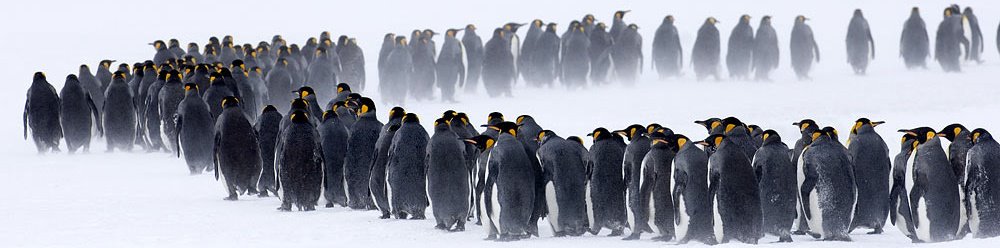
King penguins on Possession Island.
The researchers aren't sure if the king penguins are acclimating to humans and so don't get stressed when in their presence or if human presence weeded out those stress-sensitive penguins, leaving the copers behind.
CREDIT: Vincent Viblanc
 
Updated Wednesday, July 11

Scientists studying king penguins on a sub-Antarctic island, along with tourists, may be stressing the waddling, flightless birds, new research suggests. However, it seems the penguins are getting used to their human visitors.

The new study reveals how more than 50 years of human presence, or the time since a permanent research station was set up, on Possession Island, has impacted a major colony of breeding king penguins (Aptenodytes patagonicus), called the "Baie du Marin" colony. Research reported last year on these penguins found that flipper tagging was linked with fewer chicks and a lower survival rate for the birds compared with untagged king penguins.


Turns out, according to the new study, penguins that are used to humans being around didn't get too upset by noise and human-presence stressors, though capturing these penguins for scientific measurements did cause a stress surge, according to the study published this week in the journal BMC Ecology.


"A central question for ecologists is the extent to which anthropogenic disturbances (e.g. tourism) might impact wildlife and affect the systems under study," lead researcher Vincent Viblanc of the University of Lausanne in Switzerland said in a statement. "One of the major pitfalls of such research is in forgetting that, from the perspective of the wildlife studied, tourism and scientific research are not two worlds apart."

In some ways, this island is perfect for studying stress in penguins. That's because some parts of the Baie du Marin colony have been exposed more intensely to humans than others, Viblanc told LiveScience. In disturbed parts of the colony scientists and tourists, sometimes in groups of tens, come into the presence of the penguins. A small number, about 50 birds, in this area are captured and handled by scientists one to five times each year. Meanwhile, another part of the colony is relatively undisturbed, Viblanc said, with one to two visits per week by scientists.

The king penguins come ashore on the sub-antarctic island to breed each year. Hundreds of the penguins waddle onto land to find a mate, and hopefully, make some chicks.
CREDIT: Pierre Bize

Viblanc and his colleagues compared 15 breeding penguins in these disturbed areas with 18 undisturbed penguins. All of the penguins were brooding a chick between 2 days and a month old.
To get a sense of the penguins' stress levels, the researchers measured their heart rates in response to three stressors: two low-intensity stressors that included a human approach to about 33 feet (10 meters) and a loud noise, meant to mimic tourists, scientists and noises from machines operating on the outskirts of the colony. The high-intensity stressor involved capturing a penguin to simulate what happens when scientists take direct measurements.

Compared with penguins from undisturbed areas, the disturbed penguins were less stressed by noise and approaching humans; the increase in heart rate above resting levels was much lower, 81 percent and 74 percent lower, in birds used to humans when they heard stressful sounds and saw humans approaching, respectively.

However, following capture, the human-acclimated penguins' maximum relative heart rate increased 42 percent higher than it did for undisturbed birds, though it recovered faster afterwards.
"Penguins habituate to the distant presence of human observers in disturbed areas, whereas they do not habituate to being captured," Viblanc wrote in an email to LiveScience. "This makes sense, as from an adaptive perspective, stress responses enable the organism to deal with life-threatening situations. Captures may indeed be assimilated as predation events from the birds, whereas the distant presence of observers poses no immediate threat."

Their findings can't tease out whether the lower heart-rate numbers in the highly disturbed areas are a result of penguins becoming habituated to human presence or if they are the result of a selection process. For instance, have penguins whose "animal personalities" are more susceptible to stress deserted these areas, leaving behind those that are better at coping, the researchers wonder.

source

Tuesday, July 10, 2012

'Depraved' sex acts by penguins shocked polar explorer

Image of adelie penguins taken by George Levick (Image: Natural History Museum)  
 
 
Scientists now understand the biological reasons for behavior Dr Levick considered to be "depraved"
Accounts of unusual sexual activities among penguins, observed a century ago by a member of Captain Scott's polar team, are finally being made public.
Details, including "sexual coercion", recorded by George Murray Levick were considered so shocking that they were removed from official accounts.

However, scientists now understand the biological reasons behind the acts that Dr Levick considered "depraved".
The Natural History Museum has published his unedited papers.

Mr Levick, an avid biologist, was the medical officer on Captain Scott's ill-fated Terra Nova expedition to the South Pole in 1910. He was a pioneer in the study of penguins and was the first person to stay for an entire breeding season with a colony on Cape Adare.

He recorded many details of the lives of adelie penguins, but some of their activities were just too much for the Edwardian sensibilities of the good doctor.

He was shocked by what he described as the "depraved" sexual acts of "hooligan" males who were mating with dead females. So distressed was he that he recorded the "perverted" activities in Greek in his notebook.

Graphic account
  On his return to Britain, Mr Levick attempted to publish a paper entitled "the natural history of the adelie penguin", but according to Douglas Russell, curator of eggs and nests at the Natural History Museum, it was too much for the times.

"He submitted this extraordinary and graphic account of sexual behaviour of the adelie penguins, which the academic world of the post-Edwardian era found a little too difficult to publish," Mr Russell said.

Pages from Dr Levick's notebook with some sections coded in Greek
 
Levick notebook (Image: NHM/R Kossow)
The sexual behaviour section was not included in the official paper, but the then keeper of zoology at the museum, Sidney Harmer, decided that 100 copies of the graphic account should be circulated to a select group of scientists.

Mr Russell said they simply did not have the scientific knowledge at that time to explain Mr Levick's accounts of what he termed necrophilia.

"What is happening there is not in any way analogous to necrophilia in the human context," Mr Russell said. "It is the males seeing the positioning that is causing them to have a sexual reaction.
"They are not distinguishing between live females who are awaiting congress in the colony, and dead penguins from the previous year which just happen to be in the same position."

Sexual coercion
  Only two of the original 100 copies of Mr Levick's account survive. Mr Russell and colleagues have now published a re-interpretation of Mr Levick's findings in the journal Polar Record.
Mr Russell described how he had discovered one of the copies by accident.

"I just happened to be going through the file on George Murray Levick when I shifted some papers and found underneath them this extraordinary paper which was headed 'the sexual habits of the adelie penguin, not for publication' in large black type.

"It's just full of accounts of sexual coercion, sexual and physical abuse of chicks, non-procreative sex, and finishes with an account of what he considers homosexual behavior, and it was fascinating."
The report and Mr Levick's handwritten notes are now on display at the Natural History Museum for the first time. Mr Russell believes they show a man who struggled to understand penguins as they really are.

"He's just completely shocked. He, to a certain extent, falls into the same trap as an awful lot of people in seeing penguins as bipedal birds and seeing them as little people. They're not. They are birds and should be interpreted as such."

source

Monday, July 9, 2012

Antarctic moss lives on ancient penguin poo

5 July 2012
By Victoria Gill
 Science reporter, BBC Nature


Moss plants that survive the freezing conditions of Antarctica have an unusual food source, scientists say.

The vibrant green plants take nutrients from the poo left behind by penguins that lived in the same area thousands of years ago.

Scientists made their discovery whilst testing the plants to find out how they manage to survive in the icy landscape.

The findings were presented at the Society for Experimental Biology's annual meeting in Salzburg, Austria.

Prof Sharon Robinson, from the University of Wollongong in Australia, has been studying Antarctica's plants for 16 years.

She explained that she was interested in where the plants get their nutrients, because the Antarctic soil on which they grow is so poor.

"Plants need water, sunlight and nutrients; there's plenty of sunlight in the summer and as long as the ice melts there's water," she told BBC Nature.

"But the soil is basically sand and gravel."

To find out where the plants were getting the food they needed to grow, Prof Robinson and her team used a technique that allowed them to see all of the chemicals that made up a moss plant.

This "chemical signature" revealed nitrogen that had passed through a marine predator.

"Nitrogen that's gone through algae, krill and fish and then penguins has a characteristic 'seabird signature'," Prof Robinson told BBC Nature.

Since no penguins live on the elevated lakeside site in East Antarctica, the researchers had to work out where the mysterious seabird poo came from.

They realised that their moss beds were growing on the site of an ancient penguin colony.

"Between 3,000 and 8,000 years ago, on the site where the moss is now growing, there used to be [Adelie] penguins," said Prof Robinson.

"There's fossil evidence to support that, and the little pebbles that the penguins use to make their nests are actually still there.

"The other thing that's still there is the penguin poo.

 Six different species of moss live on the islands of East Antarctica studied by the scientists
"And because Antarctica is so cold, those nutrients have just stayed frozen in the soil; they're now feeding this moss."

Prof Robinson said that the hardy plants, which grow just 2-3mm per year, create "luxuriant green beds" that are home to some of the insects and other miniature creatures that manage to live in this frozen desert.

Prof Robinson hopes to learn exactly how they adapt to this extreme environment.

The mosses are able to "freeze-dry" in order to survive the winter and produce sunscreen compounds to protect themselves from UV rays.

"It's amazing that the plants can do [these things], but it's also interesting to know which compounds they use," said Prof Robinson.

Learning the molecular mechanisms behind plants' abilities to dry out but remain viable could help researchers to develop ways to store food or even medicines for long periods.

source

Tuesday, July 3, 2012

Newly Discovered Dinosaur Implies Greater Prevalence of Feathers in Dinos Not Related to Birds

Caption: Skeleton of Sciurumimus as found on a limestone slab. (Credit: H. Tischlinger\Jura Museum Eichstatt)

Newly Discovered Dinosaur Implies Greater Prevalence of Feathers; Megalosaur Fossil Represents First Feathered Dinosaur Not Closely Related to Birds

ScienceDaily (July 2, 2012) — A new species of feathered dinosaur discovered in southern Germany is further changing the perception of how predatory dinosaurs looked. The fossil of Sciurumimus albersdoerferi,which lived about 150 million years ago, provides the first evidence of feathered theropod dinosaurs that are not closely related to birds.

The fossil is described in a paper published in the Proceedings of the National Academy of Sciences on July 2.

"This is a surprising find from the cradle of feathered dinosaur work, the very formation where the first feathered dinosaur Archaeopteryx was collected over 150 years ago," said Mark Norell, chair of the Division of Palaeontology at the American Museum of Natural History and an author on the new paper along with researchers from Bayerische Staatssammlung für Paläontologie und Geologie and the Ludwig Maximilians University.

Theropods are bipedal, mostly carnivorous dinosaurs. In recent years, scientists have discovered that many extinct theropods had feathers. But this feathering has only been found in theropods that are classified as coelurosaurs, a diverse group including animals likeT. rexand birds. Sciurumimus -- identified as a megalosaur, nota coelurosaur -- is the first exception to this rule. The new species also sits deep within the evolutionary tree of theropods, much more so than coelurosaurs, meaning that the species that stem from Sciurumimus are likely to have similar characteristics.

"All of the feathered predatory dinosaurs known so far represent close relatives of birds," said palaeontologist Oliver Rauhut, of the Bayerische Staatssammlung für Paläontologie und Geologie. "Sciurumimus is much more basal within the dinosaur family tree and thus indicates that all predatory dinosaurs had feathers."

The fossil, which is of a baby Sciurumimus, was found in the limestones of northern Bavaria and preserves remains of a filamentous plumage, indicating that the whole body was covered with feathers. The genus name ofSciurumimus albersdoerferirefers to the scientific name of the tree squirrels,Sciurus, and means "squirrel-mimic"-referring to the especially bushy tail of the animal. The species name honours the private collector who made the specimen available for scientific study.
"Under ultraviolet light, remains of the skin and feathers show up as luminous patches around the skeleton," said co-author Helmut Tischlinger, from the Jura Museum Eichstatt.

Sciurumimusis not only remarkable for its feathers. The skeleton, which represents the most complete predatory dinosaur ever found in Europe, allows a rare glimpse at a young dinosaur. Apart from other known juvenile features, such as large eyes, the new find also confirmed other hypotheses.

"It has been suggested for some time that the lifestyle of predatory dinosaurs changed considerably during their growth," Rauhut said. "Sciurumimus shows a remarkable difference to adult megalosaurs in the dentition, which clearly indicates that it had a different diet."

Adult megalosaurs reached about 20 feet in length and often weighed more than a ton. They were active predators, which probably also hunted other large dinosaurs. The juvenile specimen of Sciurumimus, which was only about 28 inches in length, probably hunted insects and other small prey, as evidenced by the slender, pointed teeth in the tip of the jaws.

"Everything we find these days shows just how deep in the family tree many characteristics of modern birds go, and just how bird-like these animals were," Norell said. "At this point it will surprise no one if feather like structures were present in the ancestors of all dinosaurs.

The study was financed by the Volkswagen Foundation and the American Museum of Natural History.


Story Source:
The above story is reprinted from materials provided by American Museum of Natural History.
Note: Materials may be edited for content and length. For further information, please contact the source cited above.

Journal Reference:
  1. Oliver W. M. Rauhut, Christian Foth, Helmut Tischlinger, and Mark A. Norell. Exceptionally preserved juvenile megalosauroid theropod dinosaur with filamentous integument from the Late Jurassic of Germany. Proceedings of the National Academy of Sciences, July 2, 2012 DOI: 10.1073/pnas.1203238109

American Museum of Natural History (2012, July 2). Newly discovered dinosaur implies greater prevalence of feathers; Megalosaur fossil represents first feathered dinosaur not closely related to birds. ScienceDaily. Retrieved July 3, 2012, from ­http://www.sciencedaily.com­ /releases/2012/07/120702210225.htm

Thursday, June 21, 2012

Melting Sea Ice Threatens Emperor Penguins

At nearly four feet tall, the Emperor penguin is Antarctica’s largest sea bird. Unlike other sea birds, Emperor penguins breed and raise their young almost exclusively on sea ice. If global temperatures continue to rise, the Emperor penguins in Terre Adélie in East Antarctica may eventually disappear. (Credit: Photo courtesy Glen Grant, U.S. Antarctic Program, National Science Foundation)
 
ScienceDaily (June 20, 2012) — At nearly four feet tall, the Emperor penguin is Antarctica's largest sea bird -- and thanks to films like "March of the Penguins" and "Happy Feet," it's also one of the continent's most iconic. If global temperatures continue to rise, however, the Emperor penguins inTerre Adélie, in East Antarcticamay eventually disappear, according to a new study by led by researchers from the Woods Hole Oceanographic Institution (WHOI).

The study was published in the June 20th edition of the journal Global Change Biology.
"Over the last century, we have already observed the disappearance of the Dion Islets penguin colony, close to the West Antarctic Peninsula," says Stephanie Jenouvrier, WHOI biologist and lead author of the new study. "In 1948 and the 1970s, scientists recorded more than 150 breeding pairs there. By 1999, the population was down to just 20 pairs, and in 2009, it had vanished entirely." Like in Terre Adélie, Jenouvrier thinks the decline of those penguins might be connected to a simultaneous decline in Antarctic sea ice due to warming temperatures in the region.

Unlike other sea birds, Emperor penguins breed and raise their young almost exclusively on sea ice. If that ice breaks up and disappears early in the breeding season, massive breeding failure may occur, says Jenouvrier. "As it is, there's a huge mortality rate just at the breeding stages, because only 50 percent of chicks survive to the end of the breeding season, and then only half of those fledglings survive until the next year," she says.

Disappearing sea ice may also affect the penguins' food source. The birds feed primarily on fish, squid, and krill, a shrimplike animal, which in turn feeds on zooplankton and phytoplankton, tiny organisms that grow on the underside of the ice. If the ice goes, Jenouvrier says, so too will the plankton, causing a ripple effect through the food web that may starve the various species that penguins rely on as prey.

To project how penguin populations may fare in the future, Jenouvrier's team used data from several different sources, including climate models, sea ice forecasts, and a demographic model that Jenouvrier created of the Emperor penguin population at Terre Adélie, a coastal region of Antarctica where French scientists have conducted penguin observations for more than 50 years.

Combining this type of long-term population data with information on climate was key to the study, says Hal Caswell, a WHOI senior mathematical biologist and collaborator on the paper.

"If you want to study the effects of climate on a particular species, there are three pieces that you have to put together," he says. "The first is a description of the entire life cycle of the organism, and how individuals move through that life cycle. The second piece is how the cycle is affected by climate variables. And the crucial third piece is a prediction of what those variables may look like in the future, which involves collaboration with climate scientists."

Marika Holland of the National Center for Atmospheric Research is one such scientist. She specializes in studying the relationship between sea ice and global climate, and helped the team identify climate models for use in the study.

Working with Julienne Stroeve, another sea ice specialist from the National Snow and Ice Data Center, Holland ultimately recommended five distinct models. "We picked the models based on how well they calculated the sea ice cover for the 20th century," she says. "If a model predicted an outcome that matched what was actually observed, we felt it was likely that its projections of sea ice change in the future could be trusted."

Jenouvrier used the output from these various climate models to determine how changes in temperature and sea ice might affect the Emperor penguin population at Terre Adélie. She found that if greenhouse gas emissions continue to rise at levels similar to today -- causing temperatures to rise and Antarctic sea ice to shrink -- penguin population numbers will diminish slowly until about 2040, after which they would decline at a much steeper rate as sea ice coverage drops below a usable threshold.

"Our best projections show roughly 500 to 600 breeding pairs remaining by the year 2100. Today, the population size is around 3000 breeding pairs," says Jenouvrier.

The effect of rising temperature in the Antarctic isn't just a penguin problem, according to Caswell. As sea ice coverage continues to shrink, the resulting changes in the Antarctic marine environment will affect other species, and may affect humans as well.

"We rely on the functioning of those ecosystems. We eat fish that come from the Antarctic. We rely on nutrient cycles that involve species in the oceans all over the world," he says. "Understanding the effects of climate change on predators at the top of marine food chains -- like Emperor penguins -- is in our best interest, because it helps us understand ecosystems that provide important services to us."
Also collaborating on the study were Christophe Barbraud and Henri Weimerskirch of the Centre d'Etudes Biologiques de Chizé, in France, and Mark Serreze of the National Snow and Ice Data Center in the United States.


Story Source:
The above story is reprinted from materials provided by Woods Hole Oceanographic Institution.
Note: Materials may be edited for content and length. For further information, please contact the source cited above.

Journal Reference:
  1. Stephanie Jenouvrier, Marika Holland, Julienne Stroeve, Christophe Barbraud, Henri Weimerskirch, Mark Serreze, Hal Caswell. Effects of climate change on an emperor penguin population: analysis of coupled demographic and climate models. Global Change Biology, 2012; DOI: 10.1111/j.1365-2486.2012.02744.x

Woods Hole Oceanographic Institution (2012, June 20). Melting sea ice threatens emperor penguins. ScienceDaily. Retrieved June 21, 2012, from http://www.sciencedaily.com­ /releases/2012/06/120620113342.htm ­ /

Tuesday, June 19, 2012

36% of Chinstrap Penguins Missing from Antarctic Island

Date: 19 June 2012


A population of chinstrap penguins is feeling the heat, with more than one-third of a breeding colony lost in the past 20 years, new research finds.

A warming planet, which is causing sea ice in Antarctica (and elsewhere) to melt, may ultimately be to blame for the plummeting penguin population, the researchers said. That's because the chinstraps' main food, shrimplike creatures called krill, depend on algae that attaches to that ice.

"Actually, in the '90s it was thought that the climate change would favor the chinstrap penguin, because this species prefers sea waters without ice, unlike the Adélie penguin, which prefers the ice pack," study researcher Andres Barbosa told LiveScience. He added that at the time, chinstraps, named for the thin black facial line from cheek to cheek, seemed to increase in numbers, with some new colonies being established.


The sea-ice decline in the winter, however, has become so big that it is now impacting krill populations, said Barbosa, of the National Museum of Natural Sciences in Madrid.

Counting chinstraps

Barbosa and his colleagues tallied chinstrap penguins (Pygoscelis antarctica) in the Vapour Col colony of Deception Island, in the Antarctic's South Shetland Islands in 1991-92 and 2008-09. They photographed nests in 19 subcolonies, mainly in December when chicks were hatching.


Results, which ended up including just 12 of the subcolonies due to availability of data, showed the occupied nests had declined by 36 percent between 1991 and 2008.

Barbosa and colleagues ruled out research activity as the cause for the loss since both studied populations and those used as controls showed similar patterns of decline.

Tourism is also not a likely culprit. Deception Island, built on a volcano, is one of the most visited places in Antarctica; the 2007-08 year saw some 25,000 visitors, according to the International Association of Antarctica Tour Operators (IAATO). Meanwhile, the nearby chinstrap penguin colony of Bailey Head, which is usually visited by 2,000 to 3,500 people every season, showed a decline of about 50 percent.

Rather, a dip in the krill population may be to blame, an idea supported by the fact that Adélie penguin population (P. adeliae) in the region is also declining, while the gentoo penguin population (P. papua), which has a more variable diet, is not.

(The chinstrap, gentoo and Adélie penguins are the three pygoscelid species (in the Pygoscelis genus) that inhabit the Antarctic Peninsula, the region of the Antarctic continent where the effects of climate change are more evident, the researchers noted.)

Saving penguins

But Barbosa says the chinstraps aren't a lost cause.

"This is an example of how the human activity far from the poles can affect the life at thousands of kilometers far from our homes," Barbosa told LiveScience. "Therefore, a more responsible use of the energy and the fossil fuels is necessary to preserve the planet and then the Antarctica."

In addition, he said, to protect the organisms that call the Antarctic home, we need to reduce human impact by reducing overfishing, tourism and even research activity.

The research was detailed online May 22 in the journal Polar Biology.

source

Chin StrapCredit: Andres BarbosaNamed for the thin black band of feathers that extends from ear to ear under their heads, chinstrap penguins grow to about 2.2 feet (68 centimeters) tall, with males being larger and heavier than females.  


Two ChicksCredit: Andres BarbosaThe female usually lays two eggs in a shallow nest in late November, with each of the pair participating in incubation duties. The chicks hatch after about 33 to 35 days.  

Deception IslandCredit: Andres BarbosaAndres Barbosa of the National Museum of Natural Sciences in Madrid and his team have been studying the chinstrap penguins of Deception Island since 1999. Its volcanic origins have shaped the island into a horseshoe shape, with the volcano's caldera at the center. The island is one of the most visited of Antarctica, drawing some 25,000 visitors in the year 2007-08.  

Find the MateCredit: Andres BarbosaMonogamy between chinstrap penguin couples often persists from year to year, with pairs even using the same nesting sites in successive years. To make sure they've got the right mate, the penguins use certain mate-recognition behavior, seen here between a pair of chinstraps, which involves the penguins pumping their chests and stretching their heads upward. 

Little NestsCredit: Andres BarbosaFemale chinstrap penguins form a circular platform nest with a shallow interior. The nests are roughly about 16 inches (40 cm) across and up to 6 inches (15 cm) high.  

Chick HuddleCredit: Andres BarbosaTypically, fledgling occurs at about 7 to 8 weeks, with the chinstrap penguin chicks eventually forming crèches, or groups of young penguins that huddle together for warmth and protection. Then, at about 50-60 days old, once the chicks have molted, they head out to sea. 

Penguin TeamCredit: Andres BarbosaThe penguin team, including Barbosa, shown here with chinstrap penguins on Deception Island. 

Nest ChecksCredit: Andres BarbosaThe researchers tallied the occupied nests on the island in 1991-92 and 2008-09. Here they are checking chinstrap nests. (They also used photographic evidence for nest counts.) 

Main FoodCredit: Andres BarbosaThe culprit for the decline is likely a loss of their main prey, tiny shrimplike creatures called krill. The krill eat algae that attach to the sea ice, so without sea ice the krill plummet, followed by a decline in chinstrap penguins. 

Sea IceCredit: Andres BarbosaSea ice around the Antarctic's Deception Island. "Actually, in the 90's it was thought that the climate change would favor the chinstrap penguin, because this species prefers sea waters without ice unlike the Adelie penguin which prefers the ice pack," study researcher Andres Barbosa told LiveScience. The sea-ice decline in the winter, however, has become so big that it is now impacting krill populations, said Barbosa, of the National Museum of Natural Sciences in Madrid.  


Saving ChinstrapsCredit: Andres BarbosaBut Barbosa says the chinstraps aren't a lost cause. "This is an example of how the human activity far from the poles can affect the live at thousands of kilometers far from our homes," Barbosa told LiveScience. "Therefore, a more responsible use of the energy and the fossil fuels is necessary to preserve the planet and then the Antarctica." 

Penguin ProtectionCredit: Andres BarbosaIn addition, he said, to protect the organisms that call the Antarctic home we need to reduce human impact by reducing overfishing, tourism and even research activity. source 

Monday, June 18, 2012

Ancient Warming Greened Antarctica, Study Finds


This artist's rendition created from a photograph of Antarctica shows what Antarctica possibly looked like during the middle Miocene epoch, based on pollen fossil data. (Credit: NASA/JPL-Caltech/Dr. Philip Bart, LSU)

ScienceDaily (June 17, 2012) — A new university-led study with NASA participation finds ancient Antarctica was much warmer and wetter than previously suspected. The climate was suitable to support substantial vegetation -- including stunted trees -- along the edges of the frozen continent.

The team of scientists involved in the study, published online June 17 in Nature Geoscience, was led by Sarah J. Feakins of the University of Southern California in Los Angeles, and included researchers from NASA's Jet Propulsion Laboratory in Pasadena, Calif., and Louisiana State University in Baton Rouge.

By examining plant leaf wax remnants in sediment core samples taken from beneath the Ross Ice Shelf, the research team found summer temperatures along the Antarctic coast 15 to 20 million years ago were 20 degrees Fahrenheit (11 degrees Celsius) warmer than today, with temperatures reaching as high as 45 degrees Fahrenheit (7 degrees Celsius). Precipitation levels also were found to be several times higher than today.

"The ultimate goal of the study was to better understand what the future of climate change may look like," said Feakins, an assistant professor of Earth sciences at the USC Dornsife College of Letters, Arts and Sciences. "Just as history has a lot to teach us about the future, so does past climate. This record shows us how much warmer and wetter it can get around the Antarctic ice sheet as the climate system heats up. This is some of the first evidence of just how much warmer it was."

Scientists began to suspect that high-latitude temperatures during the middle Miocene epoch were warmer than previously believed when co-author Sophie Warny, assistant professor at LSU, discovered large quantities of pollen and algae in sediment cores taken around Antarctica. Fossils of plant life in Antarctica are difficult to come by because the movement of the massive ice sheets covering the landmass grinds and scrapes away the evidence.

"Marine sediment cores are ideal to look for clues of past vegetation, as the fossils deposited are protected from ice sheet advances, but these are technically very difficult to acquire in the Antarctic and require international collaboration," said Warny.

Tipped off by the tiny pollen samples, Feakins opted to look at the remnants of leaf wax taken from sediment cores for clues. Leaf wax acts as a record of climate change by documenting the hydrogen isotope ratios of the water the plant took up while it was alive.

"Ice cores can only go back about one million years," Feakins said. "Sediment cores allow us to go into 'deep time.'"

Based upon a model originally developed to analyze hydrogen isotope ratios in atmospheric water vapor data from NASA's Aura spacecraft, co-author and JPL scientist Jung-Eun Lee created experiments to find out just how much warmer and wetter climate may have been.

"When the planet heats up, the biggest changes are seen toward the poles," Lee said. "The southward movement of rain bands associated with a warmer climate in the high-latitude southern hemisphere made the margins of Antarctica less like a polar desert, and more like present-day Iceland."

The peak of this Antarctic greening occurred during the middle Miocene period, between 16.4 and 15.7 million years ago. This was well after the age of the dinosaurs, which became extinct 64 million years ago. During the Miocene epoch, mostly modern-looking animals roamed Earth, such as three-toed horses, deer, camel and various species of apes. Modern humans did not appear until 200,000 years ago.

Warm conditions during the middle Miocene are thought to be associated with carbon dioxide levels of around 400 to 600 parts per million (ppm). In 2012, carbon dioxide levels have climbed to 393 ppm, the highest they've been in the past several million years. At the current rate of increase, atmospheric carbon dioxide levels are on track to reach middle Miocene levels by the end of this century.

High carbon dioxide levels during the middle Miocene epoch have been documented in other studies through multiple lines of evidence, including the number of microscopic pores on the surface of plant leaves and geochemical evidence from soils and marine organisms. While none of these 'proxies' is as reliable as the bubbles of gas trapped in ice cores, they are the best evidence available this far back in time. While scientists do not yet know precisely why carbon dioxide was at these levels during the middle Miocene, high carbon dioxide, together with the global warmth documented from many parts of the world and now also from the Antarctic region, appear to coincide during this period in Earth's history.

This research was funded by the U.S. National Science Foundation with additional support from NASA. The California Institute of Technology in Pasadena manages JPL for NASA.


Story Source:
The above story is reprinted from materials provided by NASA/Jet Propulsion Laboratory.
Note: Materials may be edited for content and length. For further information, please contact the source cited above.

Journal Reference:
  1. Sarah J. Feakins, Sophie Warny, Jung-Eun Lee. Hydrologic cycling over Antarctica during the middle Miocene warming. Nature Geoscience, 2012; DOI: 10.1038/ngeo1498

NASA/Jet Propulsion Laboratory (2012, June 17). Ancient warming greened Antarctica, study finds. ScienceDaily. Retrieved June 18, 2012, from  http://sciencedaily.com/releases/2012/06/120617170307.htm

Sunday, June 10, 2012

Anthropomorphism is Dangerous in Science


'Depraved' sex acts by penguins shocked polar explorer

 Scientists now understand the biological reasons for behaviour Dr Levick considered to be "depraved"

Accounts of unusual sexual activities among penguins, observed a century ago by a member of Captain Scott's polar team, are finally being made public.
Details, including "sexual coercion", recorded by Dr George Murray Levick were considered so shocking that they were removed from official accounts.
However, scientists now understand the biological reasons behind the acts that Dr Levick considered "depraved".

The Natural History Museum has published his unedited papers.
Dr Levick, an avid biologist, was the medical officer on Captain Scott's ill-fated Terra Nova expedition to the South Pole in 1910. He was a pioneer in the study of penguins and was the first person to stay for an entire breeding season with a colony on Cape Adare.
He recorded many details of the lives of adelie penguins, but some of their activities were just too much for the Edwardian sensibilities of the good doctor.

He was shocked by what he described as the "depraved" sexual acts of "hooligan" males who were mating with dead females. So distressed was he that he recorded the "perverted" activities in Greek in his notebook.

Graphic account
Levick notebook (Image: NHM/R Kossow)  
  On his return to Britain, Dr Levick attempted to publish a paper entitled "the natural history of the adelie penguin", but according to Douglas Russell, curator of eggs and nests at the Natural History Museum, it was too much for the times.
"He submitted this extraordinary and graphic account of sexual behaviour of the adelie penguins, which the academic world of the post-Edwardian era found a little too difficult to publish," Mr Russell said.

Pages from Dr Levick's notebook with some sections coded in Greek
 
The sexual behaviour section was not included in the official paper, but the then keeper of zoology at the museum, Sidney Harmer, decided that 100 copies of the graphic account should be circulated to a select group of scientists.
Mr Russell said they simply did not have the scientific knowledge at that time to explain Dr Levick's accounts of what he termed necrophilia.

"What is happening there is not in any way analogous to necrophilia in the human context," Mr Russell said. "It is the males seeing the positioning that is causing them to have a sexual reaction.
"They are not distinguishing between live females who are awaiting congress in the colony, and dead penguins from the previous year which just happen to be in the same position."
Sexual coercion
  Only two of the original 100 copies of Dr Levick's account survive. Mr Russell and colleagues have now published a re-interpretation of Dr Levick's findings in the journal Polar Record.
Mr Russell described how he had discovered one of the copies by accident.
"I just happened to be going through the file on George Murray Levick when I shifted some papers and found underneath them this extraordinary paper which was headed 'the sexual habits of the adelie penguin, not for publication' in large black type.

"It's just full of accounts of sexual coercion, sexual and physical abuse of chicks, non-procreative sex, and finishes with an account of what he considers homosexual behaviour, and it was fascinating."
The report and Dr Levick's handwritten notes are now on display at the Natural History Museum for the first time. Mr Russell believes they show a man who struggled to understand penguins as they really are.

"He's just completely shocked. He, to a certain extent, falls into the same trap as an awful lot of people in seeing penguins as bipedal birds and seeing them as little people. They're not. They are birds and should be interpreted as such."

source

~~~~~~~~~~~~~~~~~~~~~~~~~~~~~~~~~~~~~~~~~~~~~~~~~~~~~~~~~~~~~~~~~~~~~~

Gay, straight or necrophiliac, a penguin isn't a human being

All ages of man have tried to understand penguin sexuality in human terms

An Edwardian notebook has gone on display at the Natural History Museum that describes the sexual activities of the Antarctic penguin. Read it and you’ll never look at Pingu the same way again.
The text was compiled by George Murray Levick, a scientist with the Scott Antarctic Expedition, and it contains details of homosexuality, pederasty, necrophilia and rape. In the Antarctic summer of 1911-1912, Levick observed the breeding cycle of the Adélies colony at Cape Adare. To his horror, he witnessed male penguins attempting to make love to the long-dead bodies of females, males getting it on with other males, and coercive sex acts with females and chicks that sometimes led to violence and death. It was Sodom in the snow.

It’s hardly news that penguins are motivated entirely by their loins, but what reports have seized upon is the charming way in which Levick processed this information. Being an Edwardian gentleman, he blamed the orgy on the male “hooligans,” perhaps believing that the lady penguins were incapable of bad behaviour. Describing what he saw as “astonishing depravity,” he recorded it all in Greek code and his findings were suppressed for many years. Reading Levick’s work, it’s hard not to spot traces of Judeo-Christian morality that seem inappropriate in the context of zoological study. Anything that an animal does cannot be depraved because they don’t have morals, or a rational soul.

But the temptation towards Anthropomorphism (the identifying of human characteristics among animals) didn’t stop in the Edwardian era. We still do it today – rationalising animal sexual behaviour in a different, yet still heavily politicised, way.

Take the case of the gay penguins. Inca and Rayas met at the Faunia Park in Madrid and seemed so devoted to each other that the zookeepers gave them their own egg. The pair have been dubbed “gay” and elevated to the status of the Elton and David of the animal kingdom. They are proof, for those seeking it, that gay monogamy finds a template in nature.

The problem is that the term “gay” is as inappropriate to describe what’s going on here as is Levick’s use of “depravity.” Gay is a term that has only been in use since the rights revolution of the 1960s and which describes far more than just homosexual activity; it denotes a politicised identity that makes no sense unless it is self-aware and publicly understood. Levick’s penguins face no moral choices, so they cannot be depraved. Inca and Rayas cannot conceptualise sexual category or identity, so they can’t be gay in the sense that a human being is. They certainly can't go through the rite of passage associated with being gay, "coming out." The thought of them waddling up to their parents – flipper in flipper – and telling them to prepare themselves for a shock is absurd.

Indeed, their zookeeper insists that they are not even homosexual – just “the best of friends.” There’s every expectation that they will, eventually, mate with a female. That’s happened in Tornoto, where the star “gay” couple, Buddy and Pedro, was paired off with females. The “bromance” was over when Buddy made it with a girl called Farai. Pedro chased the luscious Thandiwey for several weeks, but got nowhere. Buddy and Pedro’s relationship was never sexual, but instead social. That didn’t stop people asking if it was “homophobic” to separate them, as if some fundamental human right was being broken.

And what is happening here is the projection of human values onto a different species. At the same time that we more ruthlessly exploit animals than ever before, we also seem determined to find qualities within them that we can empathise with. We want to turn them into mirrors of ourselves. Sometimes – as with the Dachshund UN – the result is unbelievably cute. But in most instances it misleads about the nature of animals and blurs the lines between man and nature. Humanity shouldn’t judge its moral code by the sexual standards of the penguins. It should be guided by the uniquely human qualities of reason and compassion.

source

Monday, May 28, 2012

Change in developmental timing was crucial in the evolutionary shift from dinosaurs to birds: study


Tyrannosaurus rex. Image: Nobu Tamura, via Wikipedia.

May 27 2012

 
At first glance, it's hard to see how a common house sparrow and a Tyrannosaurus Rex might have anything in common. After all, one is a bird that weighs less than an ounce, and the other is a dinosaur that was the size of a school bus and tipped the scales at more than eight tons.
 
For all their differences, though, scientists now say that two are more closely related than many believed. A new study, led by Harvard scientists, has shown that modern birds are, essentially, living dinosaurs, with skulls that are remarkably similar to those of their juvenile ancestors.

As reported in a May 27 paper in Nature, Arkhat Abzhanov, Associate Professor of Organismic and Evolutionary Biology and Bhart-Anjan Bhullar, a PhD student in Abzhanov laboratory and the first author of the study, found evidence that the evolution of birds is the result of a drastic change in how dinosaurs developed. Rather than take years to reach sexual maturity, as many dinosaurs did, birds sped up the clock – some species take as little as 12 weeks to mature – allowing them to retain the physical characteristics of baby dinosaurs.

"What is interesting about this research is the way it illustrates evolution as a developmental phenomenon," Abzhanov said. "By changing the developmental biology in early species, nature has produced the modern bird – an entirely new creature – and one that, with approximately 10,000 species, is today the most successful group of land vertebrates on the planet."

"The evolution of the many characteristics of birds – things like feathers, flight, and wishbones – has traditionally been a difficult problem for biologists," Mark Norell, chair of the Division of Paleontology at the American Museum of Natural History and one of the paper's co-authors, said. "By analyzing fossil evidence from skeletons, eggs, and soft tissue of bird-like dinosaurs and primitive birds, we've learned that birds are living theropod dinosaurs, a group of carnivorous animals that include Velociraptor. This new work advances our knowledge by providing a powerful example of how developmental changes played a major role in the origin and evolution of birds."


While it's clear simply from looking at the skulls of dinosaurs and modern birds that the two creatures are vastly different – dinosaurs have distinctively long snouts and mouths bristling with teeth, while birds have proportionally larger eyes and brains – it was the realization that skulls of modern birds and juvenile dinosaurs show a surprising degree of similarity that sparked the study.
"No one had told the big story of the evolution of the bird head before," Bhullar said. "There had been a number of smaller studies that focused on particular points of the anatomy, but no one had looked at the entire picture. What's interesting is that when you do that, you see the origins of the features that make the bird head special lie deep in the history of the evolution of Archosaurs, a group of animals that were the dominant, meat-eating animals for millions of years."

To tackle the problem, the researchers turned to an unusual methodology. Using CT scanners, they scanned dozens of skulls, ranging from modern birds to theropods – the dinosaurs most closely related to birds – to early dinosaur species. By marking various "landmarks" – such as the orbits, cranial cavity and other bones in the skull – on each scan, researchers were able to track how the skull changed shape over millions of years.

"We examined skulls from the entire lineage that gave rise to modern birds," Abzhanov said. "We looked back approximately 250 million years, to the Archosaurs, the group which gave rise to crocodiles and alligators as well as modern birds. Our goal was to look at these skulls to see how they changed, and try to understand what actually happened during the evolution of the bird skull."
What Abzhanov and colleagues found was surprising – while early dinosaurs, even those closely related to modern birds, undergo vast morphological changes as they mature, the skulls of juvenile and adult birds remain remarkably similar.

"This phenomenon, where a change in the developmental timing of a creature produces morphological changes is called heterochrony, and paedomorphosis is one example of it," Abzhanov explained. "In the case of birds, we can see that the adults of a species look increasingly like the juveniles of their ancestors."

In the case of modern birds, he said, the change is the result of a process known as progenesis, which causes an animal to reach sexual maturity earlier. Unlike their dinosaurian ancestors, modern birds take dramatically less time – just 12 weeks in some species – to reach maturity, allowing birds to retain the characteristics of their juvenile ancestors into adulthood.

"This study is a prime example of the heuristic power in multidisciplinary, specimen-based, anatomical research," said Gabe Bever of NYIT's New York College of Osteopathic Medicine and a co-author of the paper. "That the mechanisms of evolutionary events millions of years old can be circumscribed with this combination of modern and fossil specimens is remarkable."

Ultimately, Abzhanov said, the way the bird skull evolved – through changes in the developmental timeline – highlights the diversity of evolutionary strategies that have been used over millions of years.
"That you can have such dramatic success simply by changing the relative timing of events in a creature's development is remarkable," he said. "We now understand the relationship between birds and dinosaurs that much better, and we can say that, when we look at birds, we are actually looking at juvenile dinosaurs."

"It shows that there's so much for evolution to act upon," Bhullar agreed. "When we think of an organism, especially a complex organism, we often think of it as a static entity, but to really study something you have to look at its whole existence, and understand that one portion of its life can be parceled out and made into the entire lifespan of a new, and in this case, radically successful organism."


Journal reference: Nature search and more info website
Provided by Harvard University search and more info website 

Source