Thursday, May 16, 2013

Mum and Dad Dinosaurs Shared the Work--Just Like Modern Penguins

Oviraptorid skeleton and eggs in the Senckenberg Museum in Frankfurt am Main. (Credit: EvaK via Wikimedia Commons, Creative Commons license)
 
 
May 15, 2013 — A study into the brooding behaviour of birds has revealed their dinosaur ancestors shared the load when it came to incubation of eggs.

Research into the incubation behaviour of birds suggests the type of parental care carried out by their long extinct ancestors.

The study aimed to test the hypothesis that data from extant birds could be used to predict the incubation behaviour of Theropods, the group of carnivorous dinosaurs from which birds descended.
The paper, out today in Biology Letters, was co-authored by Dr Charles Deeming and Dr Marcello Ruta from the University of Lincoln's School of Life Sciences and Dr Geoff Birchard from George Mason University, Virginia.

By taking into account factors known to affect egg and clutch size in living bird species, the authors -- who started their investigation last summer at the University of Lincoln's Riseholme campus -- found that shared incubation was the ancestral incubation behaviour. Previously it had been claimed that only male Theropod dinosaurs incubated the eggs.

Dr Deeming said: "In 2009 a study in the journal Science suggested that it was males of the small carnivorous dinosaurs Troodon and Oviraptor that incubated their eggs. Irrespective of whether you accept the idea of Theropod dinosaurs sitting on eggs like birds or not, the analysis raised some concerns that we wanted to address. We decided to repeat the study with a larger data set and a better understanding of bird biology because other palaeontologists were starting to use the original results in Science in order to predict the incubation behaviour of other dinosaur species. Our analysis of the relationship between female body mass and clutch mass was interesting in its own right but also showed that it was not possible to conclude anything about incubation in extinct distant relatives of the birds."

Palaeobiologist Dr Ruta was involved in mapping the parental behaviour in modern birds on to an evolutionary tree.

Dr Ruta said: "As always in any study involving fossils, knowledge of extant organisms helps us make inferences about fossils. Fossils have a unique role in shaping our knowledge of the Tree of Life and the dynamics of evolutionary processes. However, as is the case with our study, data from living organisms may augment and refine the potential of fossil studies and may shift existing notions of the biology and behaviour of long extinct creatures."

Dr Birchard added: "The previous study was carried out to infer the type of parental care in dinosaurs that are closely related to birds. That study proposed that paternal care was present in these dinosaurs and this form of care was the ancestral condition for birds. Our new analysis based on three times as many species as in the previous study indicates that parental care cannot be inferred from simple analyses of the relationship of body size to shape, anatomy, physiologyand behaviour. Such analyses ought to take into account factors such as shared evolutionary history and maturity at hatching. However, our data does suggest that the dinosaurs used in the previous study were likely to be quite mature at birth."

The project has helped in understanding the factors affecting the evolution of incubation in birds. More importantly it is hoped that the new analysis will assist palaeontologists in their interpretation of future finds of dinosaur reproduction in the fossil record.


Story Source:
The above story is reprinted from materials provided by University of Lincoln.
Note: Materials may be edited for content and length. For further information, please contact the source cited above.

Journal Reference:
  1. G. F. Birchard, M. Ruta, D. C. Deeming. Evolution of parental incubation behaviour in dinosaurs cannot be inferred from clutch mass in birds. Biology Letters, 2013; 9 (4): 20130036 DOI: 10.1098/rsbl.2013.0036

University of Lincoln (2013, May 15). Mum and dad dinosaurs shared the work. ScienceDaily. Retrieved May 16, 2013, from http://www.sciencedaily.com­ /releases/2013/05/130514213109.htm

How did feathers evolve? - A Video by Carl Zimmer


Wednesday, May 15, 2013

Did Mom or Dad Incubate Dinosaur Eggs?

 
Date: 
14 May2013
About 15 feet tall and 40 feet long, Tyrannosaurus rex, whose name means “king of the tyrant lizards,” is one of the largest known land predators to ever roam the Earth.
CREDIT: Photograph © Julius T. Csotonyi (csotonyi.com). Image used with permission.


Male and female dinosaurs may have shared the responsibility of incubating their offspring, but how to determine which parent was involved remains a mystery, according to a new study that re-examines the idea that the brooding behavior of modern birds may predict similar behavior in their dinosaur ancestors.

Modern birds are thought to have evolved from theropods, a group of carnivorous dinosaurs that include such recognizable predators as the Velociraptor and Tyrannosaurus rex.

In research published in the journal Science in 2009, scientists examined the way existing birds incubate their eggs, claiming that only male theropods took part in incubation. But the study, which compared the size of male and female birds with the size and number of eggs that were laid, omits some important factors, said Geoff Birchard, a professor in the department of environmental science and policy at George Mason University in Fairfax, Va., and co-author of the new study. [Image Gallery: Dinosaur Daycare]


"They looked at the number of eggs and how big they were, and said they could figure out whether mommy incubated, daddy incubated, or both did," Birchard told LiveScience. "The problem is, the biology behind it is a little bit off."

Birchard and his colleagues repeated the 2009 study using more data from living bird species. They determined that comparing the size of the birds with the clutch size — which is determined by multiplying the number of eggs laid in a nest by the volume or mass of the eggs — could not effectively determine whether it was the male or female guarding the eggs.

"Our analysis of the relationship between female body mass and clutch mass was interesting in its own right, but also showed that it was not possible to conclude anything about incubation in extinct distant relatives of the birds," study co-author Charles Deeming, a researcher at the University of Lincoln in the United Kingdom, said in a statement.

Part of the problem is that birds do not all exhibit the same brooding behavior.
"There's a huge amount of variation with birds," Birchard said. "With certain bird types, two parents are always involved, but with some bigger birds, only the daddy is incubating the eggs. With dinosaurs, overall, there's a huge amount of variety, too."

And whether the actions of modern birds can be used to predict the behavior of dinosaurs is also a source of debate.

"There are great differences of opinion about it," Birchard said. "There's a long time gap between dinosaurs and the origin of birds, so it's an awful long time for us to say what's being done with birds was also being done with dinosaurs. We use this kind of inference sometimes, but birds are also a very unique group."

The findings of the new study were published online Tuesday (May 14) in the journal Biology Letters.

source

Thursday, April 18, 2013

Dinosaur egg study supports evolutionary link between birds and dinosaurs


Darla Zelenitsky from the University of Calgary collaborated with David Varricchio at Montana State University to closely examined the shells of fossil eggs from a small meat-eating dinosaur called Troodon.
 
Published: Thursday, April 18, 2013
Jay Im (University of Calgary).
 
A small, bird-like North American dinosaur incubated its eggs in a similar way to brooding birds -- bolstering the evolutionary link between birds and dinosaurs, researchers at the University of Calgary and Montana State University study have found. Among the many mysteries paleontologists have tried to uncover is how dinosaurs hatched their young. Was it in eggs completely buried in nest materials, like crocodiles? Or was it in eggs in open or non-covered nests, like brooding birds?
Using egg clutches found in Alberta and Montana, researchers Darla Zelenitsky at the University of Calgary and David Varricchio at Montana State University closely examined the shells of fossil eggs from a small meat-eating dinosaur called Troodon.

In a finding published in the spring issue of Paleobiology, they concluded that this specific dinosaur species, which was known to lay its eggs almost vertically, would have only buried the egg bottoms in mud. "Based on our calculations, the eggshells of Troodon were very similar to those of brooding birds, which tells us that this dinosaur did not completely bury its eggs in nesting materials like crocodiles do," says study co-author Zelenitsky, assistant professor of geoscience. "Both the eggs and the surrounding sediments indicate only partial burial; thus an adult would have directly contacted the exposed parts of the eggs during incubation," says lead author Varricchio, associate professor of paleontology.

Varricchio says while the nesting style for Troodon is unusual, "there are similarities with a peculiar nester among birds called the Egyptian Plover that broods its eggs while they're partially buried in sandy substrate of the nest."

Paleontologists have always struggled to answer the question of how dinosaurs incubated their eggs, because of the scarcity of evidence for incubation behaviours. As dinosaurs' closest living relatives, crocodiles and birds offer some insights. Scientists know that crocodiles and birds that completely bury their eggs for hatching have eggs with many pores or holes in the eggshell, to allow for respiration. This is unlike brooding birds which don't bury their eggs; consequently, their eggs have far fewer pores.

The researchers counted and measured the pores in the shells of Troodon eggs to assess how water vapour would have been conducted through the shell compared with eggs from contemporary crocodiles, mound-nesting birds and brooding birds. They are optimistic their methods can be applied to other dinosaur species' fossil eggs to show how they may have been incubated. "For now, this particular study helps substantiate that some bird-like nesting behaviors evolved in meat-eating dinosaurs prior to the origin of birds. It also adds to the growing body of evidence that shows a close evolutionary relationship between birds and dinosaurs," Zelenitsky says.

source

###########################################################################

Dinosaur embryos twitched in their eggs like those of modern birds

A collection of embryos fossilised at various ages in different nests reveals how dinosaurs developed in the egg
  • The Guardian,
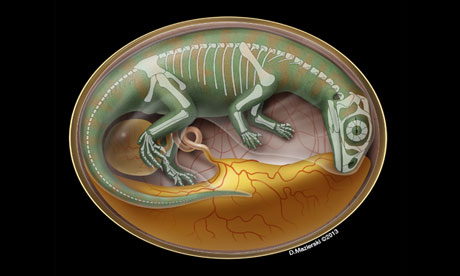
Illustration of a dinosaur embryo inside its egg.
A Lufengosaurus dinosaur embryo inside its egg. Illustration: D. Mazierski
 
Dinosaur embryos moved around inside their eggs and grew in much the same way as those of modern animals such as birds, say scientists who have examined more than 200 fossilised bones from 190m-year-old embryos found in China.

The bones came from the genus known as Lufengosaurus, a long-necked dinosaur that could grow up to eight metres long, and were found among fragments of egg shells at a site near the city of Lufeng in Yunnan, south west China. They are the oldest dinosaur embryos ever found and seem to have come from several nests and from eggs at various stages of development. "Most of the time you get single glimpses of embryonic life in a dinosaur because they are preserved as a nest and all the eggs are in the same developmental stage," said Robert Reisz, a palaeontologist at the University of Toronto Mississauga, who led the team that analysed the bones. "Here we have a growth series of embryos, which allowed us to track how these animals grew."

The team's results are published in the journal Nature. Reisz's team focused their analysis on the largest bone, the femur. They found that, inside the eggs, these bones seemed to be growing very quickly, implying that their incubation period might have been relatively short.

Inside the bones is a honeycomb structure of "primary spaces". The larger these are, said Reisz, the faster the embryo would have grown. In addition, the scientists found that the bones were shaped inside the eggs, as they grew, as attached muscles pulled on them. "This suggests that dinosaurs, like modern birds, moved around inside their eggs," said Reisz. "It represents the first evidence of such movement in a dinosaur.

source

Tuesday, April 9, 2013

Free download - Excellent Adélie Penguin research paper

    
Research Article

Climate Change Winners: Receding Ice Fields Facilitate Colony Expansion and Altered Dynamics in an Adélie Penguin Metapopulation

Authors:

  • Michelle A. LaRue mail,
  • David G. Ainley,
  • Matt Swanson,
  • Katie M. Dugger,
  • Phil O′B. Lyver,
  • Kerry Barton,
  • Grant Ballard    
  •  
    Download

  • PDF
  • Citation
  • XM
  • Friday, April 5, 2013

    Climate Change Winners: Adélie Penguin Population Expands as Ice Fields Recede

     Adélie penguin. The population size of an Adélie penguin colony on Antarctica’s Beaufort Island increased 84 percent as the ice fields retreated between 1958-2010, with the biggest change in the last three decades. (Credit: University of Minnesota)

    Apr. 3, 2013 — Adélie penguins may actually benefit from warmer global temperatures, the opposite of other polar species, according to a breakthrough study by an international team led by University of Minnesota Polar Geospatial Center researchers. The study provides key information affirming hypothetical projections about the continuing impact of environmental change.

    Researchers from the United States and New Zealand used a mix of old and new technology studying a combination of aerial photography beginning in 1958 and modern satellite imagery from the 2000s. They found that the population size of an Adélie penguin colony on Antarctica's Beaufort Island near the southern Ross Sea increased 84 percent (from 35,000 breeding pairs to 64,000 breeding pairs) as the ice fields retreated between 1958-2010, with the biggest change in the last three decades. The average summer temperature in that area increased about a half a degree Celsius per decade since the mid-1980s.

    The first-of-its-kind study was published today in PLOS ONE, a leading peer-reviewed scientific journal. The research affirms models published in 2010 projecting how south polar penguins will respond to changed habitat as Earth's atmosphere reaches 2 degrees Celsius above pre-industrial levels, a point that is rapidly approaching.

    The study showed that available habitat for Adélie penguins on the main portion of the Beaufort colony, on the south coast, increased 71 percent since 1958, with a 20 percent increase from 1983-2010. The extent of the snow and ice field to the north of the main colony did not change from 1958-1983, but then retreated 543 meters from 1983-2010.

    In addition to the overall population growth, researchers saw an increase in population density within the colony as it filled in what used to be unsuitable habitat covered in snow and ice. They also found that the emigration rates of birds banded as chicks on Beaufort Island to colonies on nearby Ross Island decreased after 2005 as available habitat on Beaufort increased, leading to altered dynamics of the population studied. "This research raises new questions about how Antarctic species are impacted by a changing environment," said Michelle LaRue, the paper's co-author and research fellow at the Polar Geospatial Center in the University of Minnesota's College of Science and Engineering. "This paper encourages all of us to take a second look at what we're seeing and find out if this type of habitat expansion is happening elsewhere to other populations of Adélie penguins or other species."

    Penguin expert and study co-author David Ainley, a lead author of an earlier study, agreed that this study gives researchers important new information. "We learned in previous research from 2001-2005 that it is a myth that penguins never move to a new colony in large numbers. When conditions are tough, they do," said Ainley, a senior marine wildlife ecologist with H.T. Harvey and Associates, an environmental consulting company in California. "This study at Beaufort and Ross Islands provides empirical evidence about how this penguin attribute will contribute to their response to climate change."

    Adélie penguins are common along the southern Antarctic coast. They are smaller than their Emperor penguin counterparts standing about 46 to 75 cm (18 to 30 inches) when upright and weighing about 4.5-5.4 kg (10-12 pounds). The Adélie penguin lives only where there is sea ice but needs the ice-free land to breed. Breeding pairs produce on average one chick per year and return to the same area to breed if conditions haven't changed.

    To determine changes in available nesting habitat in this study, researchers gathered aerial photos during the penguin incubation period in 1958, 1983 and 1993 and high-resolution satellite images from 2005 and 2010. Researchers overlaid the images exactly, lining up rocks and other geographical landmarks. They studied guano (penguin feces and urine) stains to determine the available habitat.
    In the future, researchers plan to use additional satellite imagery to look at other Adélie penguin populations to help understand the dynamics and environmental factors that influence regional populations. "This study brought together researchers from different academic disciplines who all contributed their expertise," LaRue said. "We had people who study climate change, spatial analysis, and wildlife population dynamics. This is how good science leads to results."

    In addition to LaRue and Ainley, other researchers involved in the study included Matt Swanson, a graduate student researcher at the University of Minnesota Polar Geospatial Center; Katie M. Dugger from Oregon State University; Phil O'B. Lyver from Landcare Research in New Zealand; Kerry Barton from Bartonk Solutions in New Zealand; and Grant Ballard from PRBO Conservation Science in California.

    The study was primarily funded by the National Science Foundation (NSF).


    Story Source:
    The above story is reprinted from materials provided by University of Minnesota.
    Note: Materials may be edited for content and length. For further information, please contact the source cited above.

    Journal Reference:
    1. Michelle A. LaRue, David G. Ainley, Matt Swanson, Katie M. Dugger, Phil O′B. Lyver, Kerry Barton, Grant Ballard. Climate Change Winners: Receding Ice Fields Facilitate Colony Expansion and Altered Dynamics in an Adélie Penguin Metapopulation. PLoS ONE, 2013; 8 (4): e60568 DOI: 10.1371/journal.pone.0060568

    University of Minnesota (2013, April 3). Climate change winners: Adélie penguin population expands as ice fields recede. ScienceDaily. Retrieved April 5, 2013, from http://www.sciencedaily.com­ /releases/2013/04/130404092827.htm

    Tuesday, March 26, 2013

    Uncovering Africa's Oldest Known Penguins

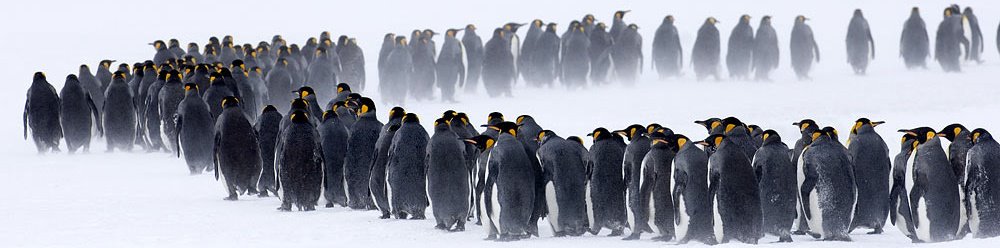
    Only one penguin species lives in Africa today -- the endangered black-footed penguin, or Spheniscus demersus. But newly found fossils confirm that as many as four penguin species coexisted on the continent in the past. (Credit: Photo by Daniel Thomas)


    Mar. 26, 2013 — Africa isn't the kind of place you might expect to find penguins. But one species lives along Africa's southern coast today, and newly found fossils confirm that as many as four penguin species coexisted on the continent in the past. Exactly why African penguin diversity plummeted to the one species that lives there today is still a mystery, but changing sea levels may be to blame, the researchers say.

    The fossil findings, described in the March 26 issue of the Zoological Journal of the Linnean Society, represent the oldest evidence of these iconic tuxedo-clad seabirds in Africa, predating previously described fossils by 5 to 7 million years.

    Co-authors Daniel Thomas of the National Museum of Natural History and Dan Ksepka of the National Evolutionary Synthesis Center happened upon the 10-12 million year old specimens in late 2010, while sifting through rock and sediment excavated from an industrial steel plant near Cape Town, South Africa.

    Jumbled together with shark teeth and other fossils were 17 bone fragments that the researchers recognized as pieces of backbones, breastbones, wings and legs from several extinct species of penguins.

    Based on their bones, these species spanned nearly the full size spectrum for penguins living today, ranging from a runty pint-sized penguin that stood just about a foot tall (0.3 m), to a towering species closer to three feet (0.9 m).

    Only one penguin species lives in Africa today -- the black-footed penguin, or Spheniscus demersus, also known as the jackass penguin for its loud donkey-like braying call. Exactly when penguin diversity in Africa started to plummet, and why, is still unclear.

    Gaps in the fossil record make it difficult to determine whether the extinctions were sudden or gradual. "[Because we have fossils from only two time periods,] it's like seeing two frames of a movie," said co-author Daniel Ksepka. "We have a frame at five million years ago, and a frame at 10-12 million years ago, but there's missing footage in between."

    Humans probably aren't to blame, the researchers say, because by the time early modern humans arrived in South Africa, all but one of the continent's penguins had already died out.
    A more likely possibility is that rising and falling sea levels did them in by wiping out safe nesting sites.

    Although penguins spend most of their lives swimming in the ocean, they rely on offshore islands near the coast to build their nests and raise their young. Land surface reconstructions suggest that five million years ago -- when at least four penguin species still called Africa home -- sea level on the South African coast was as much as 90 meters higher than it is today, swamping low-lying areas and turning the region into a network of islands. More islands meant more beaches where penguins could breed while staying safe from mainland predators.

    But sea levels in the region are lower today. Once-isolated islands have been reconnected to the continent by newly exposed land bridges, which may have wiped out beach nesting sites and provided access to predators.

    Although humans didn't do previous penguins in Africa in, we'll play a key role in shaping the fate of the one species that remains, the researchers add.

    Numbers of black-footed penguins have declined by 80% in the last 50 years, and in 2010 the species was classified as endangered. The drop is largely due to oil spills and overfishing of sardines and anchovies -- the black-footed penguin's favorite food.

    "There's only one species left today, and it's up to us to keep it safe," Thomas said.

    Story Source:
    The above story is reprinted from materials provided by National Evolutionary Synthesis Center (NESCent), via EurekAlert!, a service of AAAS.
    Note: Materials may be edited for content and length. For further information, please contact the source cited above.

    Journal Reference:
    1. Daniel B. Thomas, Daniel T. Ksepka. A history of shifting fortunes for African penguins. Zoological Journal of the Linnean Society, 2013; DOI: 10.1111/zoj.12024

    National Evolutionary Synthesis Center (NESCent) (2013, March 26). Uncovering Africa's oldest known penguins. ScienceDaily. Retrieved March 26, 2013, from http://www.sciencedaily.com­ /releases/2013/03/130326101606.htm

    Monday, March 18, 2013

    The Early Bird Loses an Ovary


    ScienceNOW - Up to the minute news from Science
    on 17 March 2013,
    Sunny side up. The follicles (close-up, inset) preserved in the fossilized ovary of this 125-million-year-old bird (main image), provide insights into the reproductive biology of these early birds and into bird evolution. 
     
    Credit: Aijuan Shi; Zhonghe Zhou (inset)
     
    The dinosaurs most closely related to today's birds were super egg producers. Known as maniraptorans, these bipedal creatures had two functional ovaries and produced a large number of eggs per clutch. Living species of birds, on the other hand, have only one functional ovary, typically on the left side of the body, and most produce only a few eggs at a time. When and why did today's flyers ditch a reproductive organ? Newly described fossils of early birds may hold the answer.

    All the fossils in this study come from rocks laid down as sediments about 125 million years ago in northeastern China. Despite the poor bone preservation in two of the fossils, all include the well-preserved remains of ovaries and mature or nearly mature follicles, structures within the ovaries that contain developing eggs—the first such fossils of early birds known to do so, says Zhonghe Zhou, a paleontologist with the Institute of Vertebrate Paleontology and Paleoanthropology in Beijing. One set of remains represents Jeholornis, a long-tailed bird about the size of a pigeon.

    Neither of the other fossils is preserved well enough to identify its species, Zhou notes, but each represents a bird somewhat larger than a sparrow. Each of the fossils included only one ovary—which, as in modern birds, appears to be located on the left side of the body.

    Analyses by Zhou and his colleagues showed that the structures assumed to be follicles weren't seeds, because they weren't located in parts of the body where stomach contents would typically be found. The structures also weren't gastroliths, or stomach stones, because such stones typically retain their three-dimensional shape, whereas these structures appeared to have been soft tissue because they had been somewhat flattened before they were preserved.

    "These are really incredible fossils," says Stephen Brusatte, a vertebrate paleontologist at the University of Edinburgh in the United Kingdom who wasn't involved in the study. Preservation of soft tissues is exceedingly rare, he notes, but "to have ovarian follicles preserved is just amazing."
    The fossils furnish information about the reproductive habits of these animals. In one of the birds, some of the bones in the creature's wing weren't fully fused, Zhou says. That suggests that the creature wasn't an adult, hinting that females of its species became sexually mature before they were fully grown, he and his colleagues report online today in Nature.

    One of the fossilized ovaries includes at least 20 mature or near-mature follicles. That's a sign that unlike modern birds, early birds probably laid a large number of relatively small eggs in a single clutch, Brusatte says. "We don't have any fossil nests of early birds, but this tells us that the reproductive biology of early birds was quite different than modern birds."

    Some scientists have assumed that the evolutionary loss of one functional ovary—a weight-saving change that might have proved beneficial to flying birds—took place early in avian evolution. Until the new study, paleontologists hadn't unearthed any evidence for the notion that early birds, like their modern-day kin, had only one ovary.

    The findings even provide hints about how early birds cared for their young, says Richard Prum, an evolutionary ornithologist at Yale University. Previous analyses of fossil dinosaur nests have suggested that in birds' closest dinosaur relatives, which laid large clutches of eggs, males sat on the nests and presumably cared for the hatchlings. That's also true of some of today's birds—including ratites, a group that includes ostriches and emus—which typically lay eggs in several nests and then leave the childcare to males. "So, large clutch size in early birds is strong evidence for male care," Prum contends.

    The new findings "are very exciting," says Frankie Jackson, a vertebrate paleontologist at Montana State University, Bozeman. Besides revealing that even early birds had reproductive biology significantly different from that of their closest dinosaur kin, they provide a new approach to estimate the brood size and the onset of sexual maturity in adults. These reproductive traits—including the loss of one of the ovaries, which probably would have rendered egg-laden females significantly lighter—likely had a substantial impact on the evolution of flight, she notes. That development may even have helped some bird lineages survive the mass extinctions in the wake of an asteroid impact that claimed the dinosaurs 66 million years ago.

    source

    Saturday, March 16, 2013

    Penguin Ancestor swimming with the predators

    From the Eocene -
    Icadyptes salasi, an unnamed protocetid, Ocucajea picklingi, and Supayacetus muizoni

    The Rise and Fall of Four-Winged Birds


    Look at the leg of almost any bird and you’ll see feathers covering the thigh but scales covering everything from the ‘knee’ downwards. There are a couple of exceptions—some birds of prey look like they’re wearing baggy trousers and golden eagles have fluffy foot feathers for insulation. But for the most part, living birds have naked lower legs.

    It wasn’t always this way. We know that birds evolved from small two-legged, meat-eating dinosaurs that were covered in simple fuzzy feathers. Those on their arms eventually became longer and flatter, evolving from hollow tubes into flat asymmetrical vanes. They transformed from “dino-fuzz” into flight feathers, and their arms transformed into wings.

    Meanwhile, it’s tempting to think that the feathers on their hind legs gradually became smaller and gave way to scales. But that’s not how it happened. For a start, we know that some small dinosaurs had long feathers on their legs as well as their arms. And now, 11 newly analysed fossils tell us that some early birds shared the same feature. These specimens suggest that some of our feathered friends had four wings.

    It was an ornithologist called William Beebe who first suggested that early birds might have passed through a four-winged gliding stage on their way to evolving true flapping flight. That was in 1915 and though Beebe’s idea was fanciful, there wasn’t much strong evidence behind it.

    Then, in 2003, the prolific Chinese dinosaur-hunter Xing Xu found an actual four-winged dinosaur. He called it Microraptor gui. Xu saw the outlines of feathers clearly splaying from the creature’s legs as well as its arms. These were clearly traces of long, flat and asymmetric plumes, much like those that keep today’s flying birds aloft. While it lived, Microraptor probably looked like a starling wearing flares. Xu suggested that it may have used its leg wings to help it glide, while others later suggested that it could have flown like a biplane.

    Xu went on to find other dinosaurs with long leg feathers, such as Anchiornis, Pedopenna and Xiaotingia. For a time, it looked like these feathers disappeared before true birds arrived on the scene, but Xu is now back with 11 new fossils that discount that idea.

    Confuciusornis. From Zheng et al, 2013. Science/AAAS
    Confuciusornis. From Zheng et al, 2013. Science/AAAS

    The specimens include species like Sapeornis, Confuciusornis, Cathayornis, and Yanornis. All of them are early birds, perched on primitive branches of the group’s family tree. All of them lived in China during the Cretaceous period. And all of them had four wings, with long feathers on their legs.
    You can see them in the images throughout this post—dark shadows protruding from the bones of the lower leg. In some of the specimens, the leg feathers show a stiff, curved central rod (or “rachis”) with symmetrical vanes sticking out from either side. They protrude from the bones at right angles and seem to form a large flat surface.

    Xu thinks that these feathers might have helped the owners to fly. They could have produced extra lift or maybe helped the birds to turn more easily. But other scientists who work on the evolution of flight are not convinced. “[Xu] has basically just taken a punt that because the feathers were stiff, they were probably aerodynamic in function,” says Michael Habib from the University of Southern California. “It is a bit of a weak argument.”

    Habib thinks that the long asymmetric leg feathers of Microraptor probably did play some role in gliding or flying, but the smaller plumes of other baggy-legged species “might have merely been there because of a developmental quirk”. If some genes are producing large feathers on the front limbs, “it might not take much to tweak a set onto the hind limbs too,” he says.

    Kevin Padian from the University of California, Berkeley agrees. He points out that no one has actually done any proper tests to show if the leg feathers were involved in flight. They would certainly have created drag, but they could only have provided lift if they sat in a flat sheet like the wings of modern birds. Xu claims that they were, but Padian says that the feathers could just have been flattened into a plane as they became fossilised.  “It hasn’t been shown that this is really an aerodynamically competent wing,” he says.

    Nonetheless, both Habib and Padian praise Xu’s work. “It’s a great study because it establishes that leg feathers were widely distributed,” says Padian. From beginnings as small outgrowths, leg feathers became dramatically bigger in some of the dinosaur groups on the evolutionary line leading to birds. They eventually shrank away again before disappearing entirely and being replaced by scales.
    Scenario for the evolution of leg feathers. From Zheng et al, 2013. Science/AAAS
    Scenario for the evolution of leg feathers. From Zheng et al, 2013. Science/AAAS

    Of course, like any evolutionary story, this one could be falsified or complicated by the next cool discovery. Xu says that if he discovered early birds or feathered dinosaurs with extensive scales on their feet, that would spell trouble for his hypothesis. “But personally, I am quite confident with our scenario,” he says.

    Why did the leg feathers, having first become large, eventually disappear? Xu thinks that it was because the birds set their two pairs of limbs towards different ends—the front pair for flying and the hind pair for walking or running. At the same time, they might have moved from life in the trees to life on the ground, or near water. Under all these scenarios, long leg feathers would have just got in the way, and were soon lost.

    Something similar may have happened in other flying animals. For example, the earliest flying insects tend to have four wings, while some of the most competent flyers like, well, flies, only have two. The second pair has evolved into a pair of gyroscopes called halteres. “In the early evolution of flight, different animal groups always try to use as much surface as possible,” says Xu. “Once the major flight organ is well developed, the animal just fires the other organs.”

    Xu’s 11 specimens all came from private collectors and had been housed at the Shandong Tianyu Museum of Nature for roughly a decade. The museum contains over 2,000 specimens of early birds, many of which preserve beautiful traces of feathers, skin and more. In fact, the museum’s treasure trove of riches is so huge that it has turned into a backlog. There’s simply too much good stuff there to go through. “It took a while for me to realize how important these specimens are,” says Xu. “These days, we are working hard to extract new information from these wonderful specimens and hopefully can produce more interesting results in future.”

    Reference: Zheng, Zhou, Wang, Zhang, Zhang, Wang, Wei, Wang & Xu. 2013. Hind Wings in Basal Birds and the Evolution of Leg Feathers. Science http://dx.doi.org/10.1126/science.1228753


    source

    Saturday, March 9, 2013

    Penguin Hookers. Really. (Your Humorous Science of the Day)

    Posted by Alex Falcone on Thu, Mar 7, 2013 

    Very important information has recently come to my attention. Some penguins are prostitutes.
     We all know humans do it. Some people will even show their boobs to a prison guard for a chocolate chip cookie, but penguins?! Those adorable animals dressed like banquet waiters who engage in Morgan Freeman-narrated lifelong monogomy? Yes. They're prostitutes.

    It's not exactly new news but an alert reader Jake H. pointed me towards a 1998 study that somehow didn't make it to my daily reading habits because it's too amazing. Apparently when the small rocks they use to make nests get scarce, some penguins will exchange sexual favors for them. Not only do they prostitute themselves, they do it for pebbles!

    According to this excellent Wikipedia article, prostitution has also been observed in chimpanzees, Capuchin monkeys, and the crab-eating macaque. That's not super surprising: chimpanzees and Capuchins are gross. And of course something called a "crab-eating macaque" would sell its body (am I right ladies?). But penguins? PENGUINS? I feel let down.

    Read some more about the behavior (and make sure to hear Morgan Freeman's voice in your head):
    The female penguins observed under the study were coupled with males. The females will go outside alone to collect pebbles, but the males did not suspect their female partners. According to the observations and analysis made by Hunter, the prostitute penguins targeted single males, because if instead they picked a male penguin with a partner, the male penguin's current partner will come in conflict with the prostitute female.
    All that stuff about sitting on the egg waiting for their partners to come back is less romantic when you know they're being cuckolded. You're not a faithful husband penguin, you're a fool. While you're making dinner for your unborn chick, your woman is out Roxanning it up for building materials, perhaps sucking a macaque or two.

    Today is a sad, sad day. Well, some day in 1998 was a sad day, but I've fallen behind on my penguin sex Wikipedia reading.

    source 

    Thursday, March 7, 2013

    Researchers find emperor penguins outer feathers colder than surrounding air

    March 7, 2013 by Bob Yirka report
    Emperor penguin body surfaces cool below air temperature
    Thermal image of penguin. Credit: Université de Strasbourg and Centre National de la Recherche Scientifique (CNRS), Strasbourg, France
    (Phys.org) —A research team made up of members from France and the U.K. has discovered that when in cold temperatures, the outer feathers of the emperor penguin are actually colder than the surrounding air. As the team describes in their paper published in the journal Biology Letters, they discovered the unusual thermal properties of the penguin's feathers while studying the birds in their natural environment using infrared imaging.
     
    To gain a better understanding of how emperor are able to withstand extremely low temperatures for months at a time, the research team ventured down to Terre Adélie, Antarctica, during June 2008. There they took hundreds of infrared of penguins that had moved slightly apart from the others—that allowed for full body images to be taken and minimized the collective warming that occurs as the animals huddle together.

    Upon examining the multicolored images, the researchers were surprised to discover that the outer feathers that cover most of the penguins' body, were actually four to six degrees Celsius colder than the surrounding air. With most other birds, and animals, the air around their bodies is warmer. The researchers explain that the apparent anomaly appears to be due to what they describe as "extreme radiative cooling." It's similar to frost building up on surfaces on a cold morning. It happens with the penguins when their protective coat radiates more heat into the colder sky than is absorbed from the surrounding air—this causes the temperature at the surface of their feathers to fall below that of the surrounding air. The end result, the researchers report, is that the penguins are able to draw very tiny amounts of heat back to their feathers from the surrounding air, helping them to conserve energy. It's not much, the researchers conclude, but when trying to survive in a very for very long periods of time, every little bit helps.

    In looking at the thermal images, the researchers also noted that the birds do have a few "hot" spots—eyes, beak and feet, where heat escapes. The eyes in particular, bright red in the photos, suggest that penguins must take care to protect such vulnerable areas from bitter wind. They note that earlier studies have found that the more at-risk areas of the penguins' body have special blood vessels that help to conserve heat.

    More information: Emperor penguin body surfaces cool below air temperature, Published online Biology Letters, March 6, 2013. doi: 10.1098/rsbl.2012.1192

    Abstract
    Emperor penguins Aptenodytes forsteri are able to survive the harsh Antarctic climate because of specialized anatomical, physiological and behavioural adaptations for minimizing heat loss. Heat transfer theory predicts that metabolic heat loss in this species will mostly depend on radiative and convective cooling. To examine this, thermal imaging of emperor penguins was undertaken at the breeding colony of Pointe Géologie in Terre Adélie (66°40′ S 140° 01′ E), Antarctica in June 2008. During clear sky conditions, most outer surfaces of the body were colder than surrounding sub-zero air owing to radiative cooling. In these conditions, the feather surface will paradoxically gain heat by convection from surrounding air. However, owing to the low thermal conductivity of plumage any heat transfer to the skin surface will be negligible. Future thermal imaging studies are likely to yield further insights into the adaptations of this species to the Antarctic climate.

    Press release

    source