Saturday, September 20, 2008

Friday, September 19, 2008

Thursday, September 18, 2008

Image of the Day


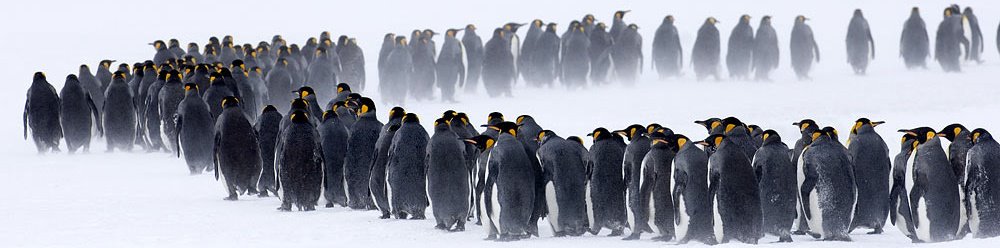
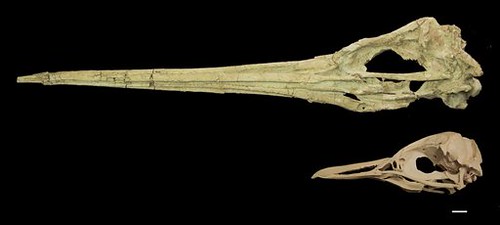
Prodigious Penguins, originally uploaded by pwallroth.

I don't think we'd have so many touristas in Antarctica with a beak like that. :)

Tuesday, September 16, 2008

Image of the Day


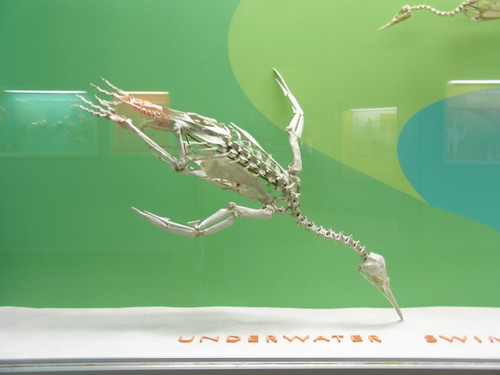
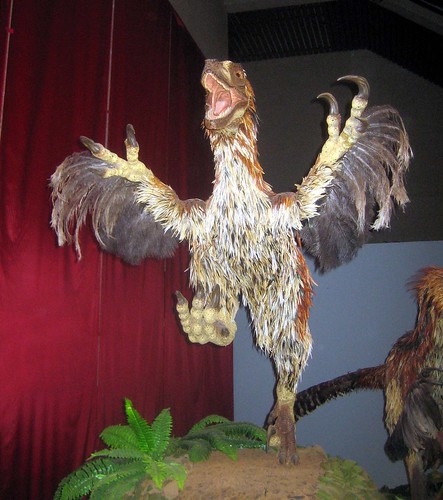
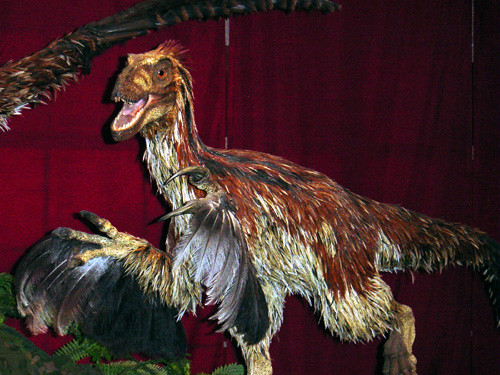
Feathered Dinosaurs 1, originally uploaded by Aaron Gustafson.

Something old-something new. :)

Check out these videos!

Dino Birds: Relating birds and dinosaurs:

http://videos.howstuffworks.com/hsw/21401-dinobirds-relating-birds-and-dinosaurs-video.htm

and also:


Wednesday, September 10, 2008

A Press Release from the Center for Biological Diversity


For Immediate Release, Monday, September 8, 2008

Contact: Shaye Wolf, Center for Biological Diversity, (415) 436-9682 x 301, cell (415) 385-5746

Penguins Marching Toward Endangered Species Act Protection;
Court Deadline Set For 10 Penguin Species Threatened By Global Warming

SAN FRANCISCO— A federal judge today approved a settlement between the Center for Biological Diversity and the U.S. Fish and Wildlife Service over the fate of 10 penguin species imperiled by global warming. Under the settlement, the Service must by December 19th complete its overdue finding on whether the penguins should be protected under the Endangered Species Act.

The finding is due on the emperor, southern rockhopper, northern rockhopper, Fiordland crested, erect-crested, macaroni, white-flippered, yellow-eyed, African, and Humboldt penguins.
“Right now penguins are marching towards extinction due to the impacts of global warming,” said Shaye Wolf, a seabird biologist with the Center for Biological Diversity. “Protecting penguins under the Endangered Species Act is an essential step toward saving them.”

Abnormally warm ocean temperatures and diminished sea ice have wreaked havoc on the penguins’ foods supply. Less food has led to population declines in penguin species ranging from the southern rockhopper and Humboldt penguins of the islands off South America, and the African penguin in southern Africa, to the emperor penguin in Antarctica. The ocean conditions causing these declines have been linked by scientists to global warming and are projected to intensify in the coming decades.

Krill, an essential food source not just for penguins but also for whales and seals, has declined by as much as 80 percent since the 1970s over large areas of the Southern Ocean. Scientists have linked the ocean conditions causing these declines to global warming and loss of sea ice. The emperor penguin colony at Pointe Geologie, featured in the film “ March of the Penguins,” has declined by more than 50 percent due to global warming.

Many penguin species also are harmed by industrial fisheries, either directly, such as when individual penguins are caught and killed in trawls, nets and longlines; or indirectly through the depletion of essential prey species such as anchovy and krill. Overfishing by industrial fishing fleets plays a prominent role in the hit movie “Happy Feet,” which features two of the petitioned species, the emperor and rockhopper penguins.

Listing under the Endangered Species Act will provide broad protection to these penguins, including a requirement that federal agencies ensure that any action carried out, authorized, or funded by the U.S. government will not “jeopardize the continued existence” of the penguin species. For example, if penguins are listed, future approval of fishing permits for U.S.-flagged vessels operating on the high seas would require analysis and minimization of impacts on the listed penguins. The Act also has an important role to play in reducing greenhouse gas pollution by compelling federal agencies to look at the impact of the emissions generated by their activities on listed species and to adopt solutions to reduce them.

The Center for Biological Diversity filed a petition in November 2006 to list 12 penguin species as threatened or endangered. The filing of the listing petition triggered a three-stage process for the Fish and Wildlife Service, with a strict timeline for each step. The agency is required to first decide within three months whether to conduct a status review of the penguins based on the concerns raised in the petition. The Service initiated status reviews of 10 of 12 penguin species, but it did not do so until July 2007, taking more than twice the time allowed under the law.

In the second stage of the listing process, the Service must decide whether the species should be listed for protection under the Endangered Species Act. This decision is required within 12 months of receiving the petition. In response to ongoing delays by the Service, the Center filed a lawsuit in February to set a court-ordered timeline for the listing decisions. Today’s court settlement ensures that the Service must make the listing determination by December 19th. A positive decision will then trigger the third stage, during which the agency has another 12 months to finalize the listing of the penguins. Until this process is completed, the penguins do not receive any protection under the Endangered Species Act.

“Penguin populations are in jeopardy and we can’t afford to delay protections,” Wolf said. “It is not too late to save them, but they need the lifeline provided by the Endangered Species Act and immediate reductions in greenhouse gas pollution.”

For more information on penguins and a link to the federal petition, please see:

http://www.biologicaldiversity.org/species/birds/penguins/index.html

The Center for Biological Diversity is a national nonprofit conservation organization with more than 180,000 members and online activists dedicated to the protection of endangered species and wild places.
# # #


________________________________________

Tuesday, September 9, 2008

Live from the Poles: Focus on Penguins

Safeguarding Fragile Antarctic Ecosystems

Although not directly related to Penguin Science, there are some very interesting proposals raised that are important enough to warrant a mention here. Those proposals deal with the conservation and survival of penguins through safeguarding measures. This is a lengthy article, but a necessary one for all who seek to preserve the lives of these birds.


New Rules Needed To Govern World's Fragile Polar Regions

ScienceDaily (Sep. 8, 2008) — A new co-ordinated international set of rules to govern commercial and research activities in both of Earth's polar regions is urgently needed to reflect new environmental realities and to temper pressure building on these highly fragile ecosystems, according to several of the experts convening in Iceland for a UN-affiliated conference marking the International Polar Year.

Please go here to read the rest of the article:

http://www.sciencedaily.com/releases/2008/09/080907123702.htm


Monday, September 8, 2008

Theory of Evolution of Flightless Birds Challenged


Long-held Assumptions Of Flightless Bird Evolution Challenged By New Research

ScienceDaily (Sep. 7, 2008) — Large flightless birds of the southern continents – African ostriches, Australian emus and cassowaries, South American rheas and the New Zealand kiwi – do not share a common flightless ancestor as once believed.

Instead, each species individually lost its flight after diverging from ancestors that did have the ability to fly, according to new research conducted in part by University of Florida zoology professor Edward Braun.

The new research, which appears this week in the online edition of the Proceedings of the National Academy of Sciences, has several important implications.

First, it means some ratites, like the emus, are much more closely related to their airborne cousins, the tinamous, than they are to other ratites, Braun said.

Second, it means the ratites are products of parallel evolution – different species in significantly different environments following the exact same evolutionary course.

Braun and his fellow researchers began closely studying this group of flightless birds, known collectively as ratites, after a discovery made while working on a larger-scale effort to better understand the evolution of birds and their genomes by analyzing corresponding genetic material sampled from the tissue of many different bird species and determining how they relate to one another.

As they analyzed the genetic material, they noticed that the ratites did not form a natural group based on their genetic makeup. Rather, they belonged to multiple related but distinct groups that contained another group of birds, the tinamous, with the ability to fly.

Previously, the ratites were used as a textbook example of vicariance, a term that describes the geographical division of a single species, resulting in two or more very similar sub-groups that can then undergo further evolutionary change and eventually become very distinct from one another.

Scientists assumed that a single flightless common ancestor of the ratites lived on the supercontinent of Gondwana, which slowly broke up into Africa, South America, Australia and New Zealand; once divided, the ancestor species evolved slightly in each new location to produce the differences among the present-day ratites, Braun said.

But in light of this new information, he said it's more likely that the ratites' ancestors distributed themselves among the southern continents after the breakup of Gondwana, which began about 167 million years ago, in a much more obvious way.

They flew.

Although these new revelations teach evolutionary scientists a great deal, they also pose a great many new questions. For example, why did these birds evolve into such similar organisms in such different environments?

"To know for sure, we'll have to go into the lab and really study the genetics underlying the ratites' developmental pathway," Braun said. "But nobody would have asked that question without the type of data we've collected, which raises the question in the first place."

The scientists' effort to analyze such a tremendous amount of genetic material collected from birds across the globe is in turn just a single part of a program called Assembling the Tree of Life, funded and organized by the National Science Foundation, which aims to assemble a body of similar research for every group of organisms on the planet, including animals, plants, fungi, algae and bacteria.


University of Florida. "Long-held Assumptions Of Flightless Bird Evolution Challenged By New Research." ScienceDaily 7 September 2008. 8 September 2008 /releases/2008/09/080903172152.htm>.


Tuesday, September 2, 2008

Timing is Everything for Krill Reproduction

From the Australian Antarctic Division:

Sea ice algae put spring in krill growth

Researchers have found that spring-time growth of sea ice algae is critical to krill growth and reproductive potential.

A krill larva at the final larval stage - Fucilia VI - just before moulting to become a juvenile krill
Photo: So Kawaguchi
The annual formation and retreat of sea ice around Antarctica is one of the largest physical changes on Earth. Besides its substantial impact on both regional and global climate, the ice cover plays a pivotal role in the biogeochemical cycles of the Southern Ocean and is an important structural element of Antarctic marine ecosystems. Forming a centimetre- to metre-thick skin on the ocean's surface, sea ice provides a platform for marine birds and mammals and a substrate for microalgae. It is also a habitat for Antarctic krill – a key species in the Southern Ocean food chain - that feed on ice algae during winter and spring, when food in the water column is scarce.

The importance of sea ice for marine ecological and biogeochemical processes is still poorly understood and information on the physical, chemical and biological properties of sea ice during winter and early spring is scarce. Classical ice sampling methods – often based on ice corers with small diameters – provide insufficient data to understand large-scale processes. New methods and technologies are needed to answer two important and pressing questions: how does the winter sea-ice extent affect biological productivity off East Antarctica and; how sensitive are krill populations to potential future changes in sea ice extent?

During the Sea Ice Physics and Ecosystem eXperiment (SIPEX) we used newly developed sampling and observing systems and technologies to address these questions. These included an instrumented Remotely Operated Vehicle (ROV) equipped with a sonar, light sensors and camera system, to observe and film krill under sea ice, and a custom-built Surface and Under Ice Trawl (SUIT) and Rectangular Midwater Trawl to collect animals for physiological experiments.

Scientists deploy the Remotely Operated Vehicle
Photo: Klaus Meiners
The ROV was piloted from a control stand within a laboratory container on board the Aurora Australis, while a small crew operated its 350 m-long tether at a drill-hole out on the ice floe. Using online sonar data, the ROV could be 'flown' at a known distance to the subsurface of the ice, and while video observations were performed, measurements of the under-ice light field were taken. These optical measurements are used to estimate the algal biomass within the sea ice. The method allows the quantification of ice algal biomass along transects and is approximately 20 times faster than classical ice coring methods, saving valuable ship time.

The SUIT – developed by the Dutch research team of Dr. Jan van Franeker at Wageningen Institute for Marine Resources and Ecosystem Studies – floats directly under the ice and catches krill that are feeding at the subsurface of the ice floes. The deployment of this truck-sized trawl requires the coordination of ship officers on the bridge, winch operators, and gear officers and crew on the trawl deck. After demanding trials both in open water and thin ice, the trawl was successfully used in the inner pack, allowing us to catch krill from directly under the ice. Captured krill were then assessed for their feeding conditions. Experiments on krill growth rates and their demographic measurements were also conducted.

The Surface and Under Ice Trawl is equipped with a high-resolution video system to film the subsurface of the sea ice
Photo: Patti Virtue
We found that adult krill were just about to start boosting their maturity in preparation for summer reproduction, by utilising ice algae under ice floes as a food source, as well as phytoplankton blooms in areas where the ice had started to retreat. During the voyage krill larvae were also found to be on the verge of accelerating their growth rates, in preparation for summer.

Undoubtedly, the amount and timing of algae associated with sea ice, and in open water at retreating ice edges, are very important determinants for krill population dynamics. Preliminary analysis of the data suggests that SIPEX was carried out at the very moment when biological activities were taking off in our survey area off East Antarctica. New methods were successfully deployed and tested and will allow time- and cost-effective sampling and monitoring of the sea ice habitat in the future.

The collected information on the physical, chemical and biological parameters of sea ice, in combination with our work on krill, will allow us to relate the performance of krill with various sea ice conditions and habitats during spring, and to help forecast what might happen to krill populations given possible future changes in sea ice extent.


http://www.aad.gov.au/default.asp?casid=35225

KLAUS MEINERS1 and SO KAWAGUCHI2
1Antarctic Marine Ecosystems program, ACE CRC
2Southern Ocean Ecosystems program, AAD