Friday, October 31, 2008

Image of the Day


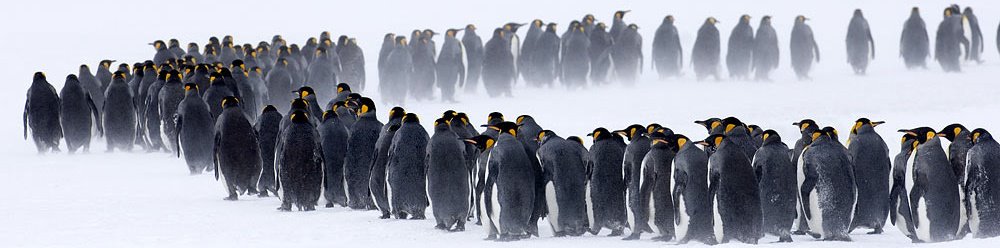
Penguin, originally uploaded by akseabird.

Current Penguin Bone Structure

Thursday, October 30, 2008

Dino's Sense of Smell Opens New Discussion on Bird Evolution


Science News

Dinosaur Smelling Skills Open New Angle On Bird Evolution


ScienceDaily (Oct. 29, 2008) — Although we know quite a bit about the lifestyle of dinosaur; where they lived, what they ate, how they walked, not much was known about their sense of smell, until now.

Scientists at the University of Calgary and the Royal Tyrrell Museum are providing new insight into the sense of smell of carnivorous dinosaurs and primitive birds in a research paper published in the British journal Proceedings of the Royal Society B.

The study, by U of C paleontologist Darla Zelenitsky and Royal Tyrrell Museum curator of dinosaur palaeoecology François Therrien, is the first time that the sense of smell has been evaluated in prehistoric meat-eating dinosaurs. They found that Tyrannosaurus rex had the best nose of all meat-eating dinosaurs, and their results tone down the reputation of T. rex as a scavenger.

The researchers looked at the importance of the sense of smell among various meat-eating dinosaurs, also called theropods, based on the size of their olfactory bulbs, the part of the brain associated with the sense of smell. Although the brains of dinosaurs are not preserved, the impressions they left on skull bones or the space they occupied in the skull reveals the size and shape of the different parts of the brain. Zelenitsky and Therrien CT-scanned and measured the skulls of a wide variety of theropod dinosaurs, including raptors and ostrich-like dinosaurs, as well as the primitive bird Archaeopteryx.

"T. rex has previously been accused of being a scavenger due to its keen sniffer, although its nose may point to alternative lifestyles based on what we see in living animals" says Zelenitsky, the lead investigator on the study. "Large olfactory bulbs are found in living birds and mammals that rely heavily on smell to find meat, in animals that are active at night, and in those animals that patrol large areas. Although the king of carnivorous dinosaurs wouldn't have passed on scavenging a free dead meal, it may have used its sense of smell to strike at night or to navigate through large territories to find its next victim."

In addition to providing clues about the biology and behavior of the ancient predators, the study also reveals some surprising information about the sense of smell in the ancestors of modern birds.

Therrien and Zelenitsky found that the extinct bird Archaeopteryx, known to have evolved from small meat-eating dinosaurs, had an olfactory bulb size comparable to most theropod dinosaurs. Although sight is very good in most birds today, their sense of smell is usually poor, a pattern that does not hold true in the ancestry of living birds.

"Our results tell us that the sense of smell in early birds was not inferior to that of meat-eating dinosaurs," says Therrien. "Although it had been previously suggested that smell had become less important than eye sight in the ancestors of birds, we have shown that this wasn't so. The primitive bird Archaeopteryx had a sense of smell comparable to meat-eating dinosaurs, while at the same time it had very good eye sight. The sense of smell must have become less important at some point during the evolution of those birds more advanced than Archaeopteryx."

Adapted from materials provided by University of Calgary.
Need to cite this story in your essay, paper, or report?

MLA
University of Calgary. "Dinosaur Smelling Skills Open New Angle On Bird Evolution." ScienceDaily 29 October 2008. 30 October 2008 .

Image of the Day


Seven primitive-looking feathers found in amber date back a hundred million years and could fill a key gap in the puzzle of how dinosaurs gave rise to birds, a new study says.

The feathers share features of feather-like fibers from two-legged dinosaurs known as theropods and of modern bird feathers, researchers say.

Photograph courtesy Didier Néraudeau and National Geographic @

http://news.nationalgeographic.com/news/bigphotos/56427251.html

Wednesday, October 29, 2008

Image of the Day


Late Cretaceous map

Excellent work from Dr. Ron Blakely @
http://jan.ucc.nau.edu/~rcb7/RCB.html

I highly recommend his site for the best ever paleo maps.

Tuesday, October 28, 2008

Image of the Day

Image of the Day


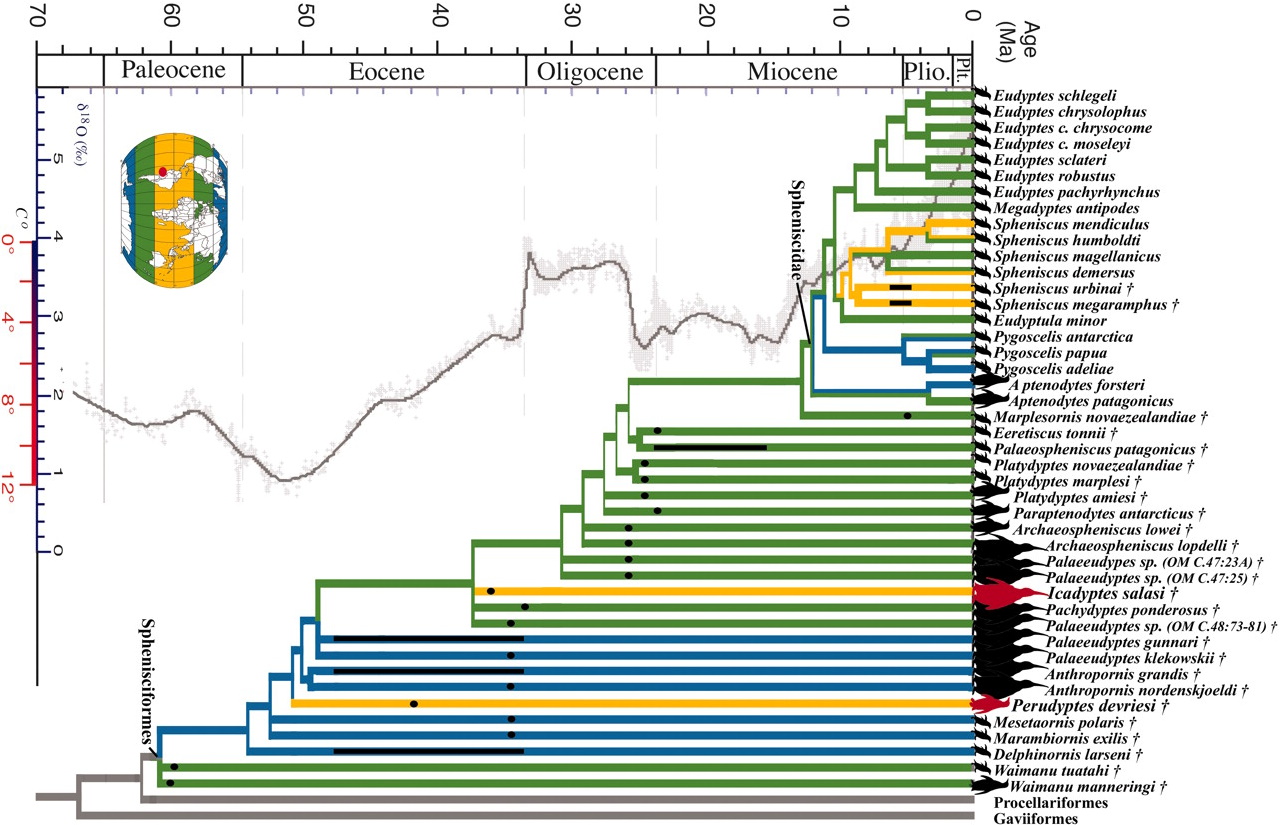
The genus Spheniscus

Image of the Day


Fossil penguin, originally uploaded by coolislandsong24.

Sphenicus, a penguin from the late Miocene/early Pliocene of Peru-extinct, but ancestors still live on the coast of Peru.

Sunday, October 26, 2008

Image of the Day


Natural History painting courtesy of:
http://amykane.typepad.com/photos/uncategorized/2007/07/17/bluepenguin_2.jpg

Saturday, October 25, 2008

Some Dinos Breathed Like Penguins


Dinosaurs Like Velociraptor Breathed Like Penguins

10 September 2008

Dinosaurs like Velociraptors owe their fearsome reputation to the way they breathed, according to a UK study.

They had one of the most efficient respiratory systems of all animals, similar to that of modern diving birds like penguins, fossil evidence shows.

It fuelled their bodies with oxygen for the task of sprinting after prey, say researchers at Manchester University.

The bipedal meat-eaters, the therapods, had air sacs ventilated by tiny bones that moved the ribcage up and down.

“Finding these structures in modern birds and their extinct dinosaur ancestors suggests that these running dinosaurs had an efficient respiratory system and supports the theory that they were highly active animals that could run relatively quickly when pursuing their prey,” said Dr Jonathan Codd, who led the research.

“It provides a mechanism for facilitating avian-like breathing in non-avian dinosaurs and it was there long before the evolution of flight occurred,” he told BBC News.

Bony projections

Modern-day birds have a highly specialised respiratory system, made up of a small rigid lung and around nine air sacs.

The bellows-like movement of the sternum and ribs moves air through the system.

Bony projections on the ribcage known as uncinate processes play an important role in both respiration and locomotion.

The small bones act as levers to move the ribs and sternum during breathing. They have become adapted in different types of birds to deal with different ways of getting around.

The bones are shortest in runners like emus that don’t need large breast muscles for flight, intermediate in flying birds and longest in divers such as the penguin.

The Manchester team studied a wealth of fossil remains of dinosaurs and extinct birds such as Archaeopteryx, and compared these with skeletons of living birds.

They found that uncinate processes are also found both in the extinct ancestors of birds, the theropod dinosaurs, and in modern species.

Dinosaurs are most like diving birds in their morphology.

“The dinosaurs we studied from the fossil record had long uncinate processes similar in structure to those of diving birds,” said Dr Codd.

“This suggests both dinosaurs and diving birds need longer lever arms to help them breathe,” he added.

The data, published in the Proceedings of the Royal Society B: Biological Sciences, may provide clues to how dinosaurs evolved and how they might have lived.

Article courtesy of BBC News: Helen Briggs

Image of the Day


Comparison of neurocranium of Archaeospheniscus wimani or Palaeeudyptes gunnari (specimen IB/P/B-0346) with a modern skull (Pygoscelis papua); dorsal view (see also Jadwiszczak 2006a).

Image courtesy of University of Bialystok @
http://biol-chem.uwb.edu.pl/IP/ENG/biologia/bones.htm

Thursday, October 23, 2008

Image of the Day--Epidexipteryx


The original paper that describes the newly discovered fossilized remains of Epidexipteryx is HERE