Thursday, August 22, 2013

Penguins Thrived in Antarctica During Little Ice Age


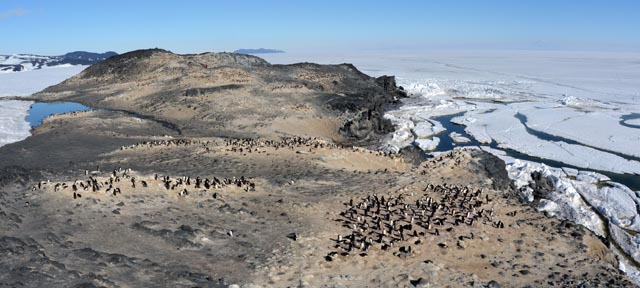
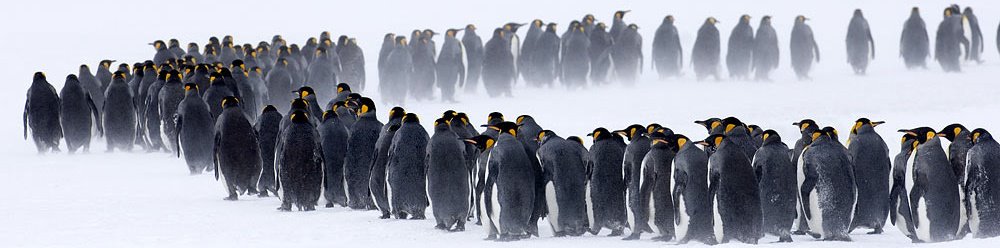
Here a colony of penguins on the Fildes Peninsula, which is located off the coast of Antarctica on King George Island, the largest of the South Shetland Islands.
Credit: Zhouqing Xie
Penguin populations in the Ross Sea of Antarctica spiked during the short cold period called the Little Ice Age, which occurred between A.D.1500 and 1800, new research shows.

The results run contrary to previous studies that found increases in Antarctic penguin populations during warmer climates and decreases during colder climates, suggesting penguin populations living at different latitudes in the Antarctic may respond to climate change differently, scientists said.

"How ecological systems adapt to climate change is a very important and hot topic," said study researchers Liguang Sun and Zhouqing Xie, who are both environmental scientists at the University of Science and Technology of China in Hefei, China. "Our study suggests that it is not simple to answer this question," they told LiveScience in an email.


Determining penguin populations

The researchers and their colleagues have been studying the historical changes in penguin populations in the maritime Antarctic for more than a decade. Previous work had suggested the birds actually thrive when the climate is relatively warm, because cold climates increase sea-ice extent, which makes it difficult for penguins to access their beach colonies and waters that are rich in food (krill).

For the new study, the researchers decided to take a look at how the populations of Adélie penguins (Pygoscelis adeliae) changed over the past 700 years in the Ross Sea
, a region in Antarctica that is at a higher latitude than previous study sites. They analyzed sediment samples from multiple depths for cholesterol and cholestanol, which are biomarkers indicating soil contamination by animal feces (either from seals or penguins in Antarctica). They also analyzed the samples for two organic compounds related to algae and lichens, respectively.

Based on the variation in the markers, the team divided up the timeline into four periods. Seals dominated the study site during Period I, which occurred between A.D. 1280 and 1490 — the researchers determined the biomarkers came from seals rather than penguins because of the presence of seal hairs in the layers of sediment. After A.D. 1490, seal hairs disappeared from the samples, suggesting the animals left the area and never returned, though the researchers aren't sure why.

According to the biomarkers, penguin populations boomed during Period II (1490 to 1670), declined significantly during Period III (1670 to1950) and increased steadily since then in Period IV (1950 to present).

The amounts of vegetation corroborated the penguin data. Antarctic algae require a lot of nutrients from penguin droppings to thrive, whereas penguin trampling endangers lichens: The evidence shows that algae abundances increased and decreased along with the penguin populations, but lichen abundances showed the opposite trend.

On the rise

The researchers note a number of factors affect penguin populations, including temperatures, sea-ice extent, food, wind and snow cover. The summer temperatures during the Little Ice Age were about 2 degrees C (3.6 degrees F) colder than the previous 200 years — this chilly climate promoted more sea-ice extent, which would normally be detrimental to penguins.

However, ice core samples suggest that strong winds broke up the sea ice during Period II, allowing the birds to access their beach colonies. These winds also likely affected snow precipitation, resulting in low snow accumulation that allowed the penguins to build their nests.

Additionally, the penguins could dive into the pockets in the sea ice to eat krill, which were likely abundant because of all the algae growing under the sea ice (krill feed on algae).

Adélie penguin populationsare on the rise again now, because the climate is getting warmer and the Antarctic is experiencing a reduction in sea-ice extent, the researchers said.

The team is currently trying to track the long-term changes in krill populations by measuring nitrogen isotopes, or atoms of nitrogen with a different number of neutrons, in the feathers and bones of penguin remains. They are also interested in seeing if there are any differences in how other penguin species, including Emperor penguins 
 (Aptenodytes forsteri) and Gentoo penguins (Pygoscelis papua), respond to climate change.

"There are many unanswered and interesting questions, which we are expecting to further investigate," the researchers said.

The team detailed their work today (Aug. 22) in the journal (and you can download the paper here) Scientific Reports.

source

Wednesday, August 14, 2013

Shortening Tails Gave Early Birds a Leg Up

 
This image shows fossil birds from the time of dinosaurs [left image: Eoenatiornis, right image: Hongshanornis] showing they had diverse types of legs. (Credit: Roger Close)
 
Aug. 13, 2013 — A radical shortening of their bony tails over 100 million years ago enabled the earliest birds to develop versatile legs that gave them an evolutionary edge, a new study shows.

A team led by Oxford University scientists examined fossils of the earliest birds from the Cretaceous Period, 145-66 million years ago, when early birds, such as Confuciusornis, Eoenantiornis, and Hongshanornis, lived alongside their dinosaur kin. At this point birds had already evolved powered flight, necessitating changes to their forelimbs, and the team investigated how this new lifestyle related to changes in their hind limbs (legs).

The team made detailed measurements of early bird fossils from all over the world including China, North America, and South America. An analysis of this data showed that the loss of their long bony tails, which occurred after flight had evolved, led to an explosion of diversity in the hind limbs of early birds, prefiguring the amazing variety of talons, stilts, and other specialised hind limbs that have helped to make modern birds so successful.

A report of the research is published this week in Proceedings of the Royal Society B.
'These early birds were not as sophisticated as the birds we know today -- if modern birds have evolved to be like stealth bombers then these were more like biplanes,' said Dr Roger Benson of Oxford University's Department of Earth Sciences, who led the research. 'Yet what surprised us was that despite some still having primitive traits, such as teeth, these early birds display an incredibly diverse array of versatile legs.'

By comparing measurements of the main parts of the legs of early birds -- upper leg, shin, and foot -- to those of their dinosaur relatives Dr Benson and co-author Dr Jonah Choiniere of the University of the Witwatersrand, South Africa, were able to determine whether bird leg evolution was exceptional compared to leg evolution in dinosaurs.

'Our work shows that, whilst they may have started off as just another type of dinosaur, birds quickly made a rather special evolutionary breakthrough that gave them abilities and advantages that their dinosaur cousins didn't have,' said Dr Rogers. 'Key to this special 'birdness' was losing the long bony dinosaur tail -- as soon as this happened it freed up their legs to evolve to become highly versatile and adaptable tools that opened up new ecological niches.'

It was developing these highly versatile legs, rather than powered flight, that saw the evolutionary diversification of early birds proceed faster than was generally true of other dinosaurs.


Story Source:
The above story is based on materials provided by University of Oxford, via EurekAlert!, a service of AAAS.
Note: Materials may be edited for content and length. For further information, please contact the source cited above.


University of Oxford (2013, August 13). Shortening tails gave early birds a leg up. ScienceDaily. Retrieved August 14, 2013, from http://www.sciencedaily.com­ /releases/2013/08/130813201426.htm

Tuesday, August 13, 2013

Protected area -- New ASPA site at Cape Washington conserves penguins, silverfish

Penguins jump out of the water.
Photo Credit: Dr. Paul Ponganis/Antarctic Photo Library
Emperor penguins leap out of the water near their colony at Cape Washington. The colony and a nearby silverfish nursery received special protection under the Antarctic Treaty earlier this year.

One of the world’s largest emperor penguin colonies and the first documented Antarctic silverfish nursery have been given special protection under the Antarctic Treaty System External Non-U.S. government site that governs the international management of the southernmost continent and surrounding region.

A 286-square-kilometer swath in the Ross Sea External U.S. government site, designated as Cape Washington and Silverfish Bay, became the 73rd Antarctic Specially Protected Area (ASPA) External Non-U.S. government site. The designation is given to sites with special environmental, scientific, historic, aesthetic and/or wilderness values. An ASPA requires a special permit to enter.

In the case of Cape Washington and Silverfish Bay, the ASPA encompasses an emperor colony that boasts as many as 20,000 breeding pairs, as well as a nursery and hatchery for silverfish, a herring-sized fish that is a key species in the Ross Sea food web. All but two percent of ASPA No. 173 is marine territory.

“I think it was important to create an ASPA for Cape Washington because it has the second, if not the largest, emperor penguin colony in the world,” said Dr. Paul Ponganis External Non-U.S. government site, “and also because an adjoining section of Terra Nova Bay is the only known nursery site of the Antarctic silverfish.
Map of a region in Antarctica.
Photo Credit: ERA
A map shows the Cape Washington and Silverfish Bay ASPA.
Snowy area punctuated by a few rocky areas.
Photo Credit: Dr. Paul Ponganis/Antarctic Photo Library
What appears to be dirty snow in this aerial photo of Cape Washington is actually the emperor penguin colony.
“Both are valuable biological sites worth preserving and protecting,” he added.

An anesthesiologist and marine biologist, Ponganis has studied Antarctica’s largest penguin species for more than 20 years, research first pioneered in the 1960s by his colleague at the University of California-San Diego’s Scripps Institution of Oceanography, Gerry Kooyman External Non-U.S. government site. [See previous article — A big breath; Study tackles emperor penguin diving physiology, population dynamics and even leopard seals.]

Both Ponganis and Kooyman provided advice and data for the proposed ASPA, which was officially adopted at the 36th Antarctic Treaty Consultative Meeting (ATCM) External Non-U.S. government site in Brussels, Belgium, in May of this year.

The Cape Washington colony competes with Coulman Island, also in the Ross Sea, as the largest emperor penguin colony in the world. The former represents about eight percent of the global emperor population and accounts for roughly a fifth of the Ross Sea population.

Emperor penguins, Aptenodytes forsteri, are the largest of 17 species. They are unique in their breeding habits, incubating a single egg throughout the Antarctic winter. The fat reserves of the male, in combination with a huddle strategy, help protect the males and their eggs through the winter when coastal temperatures can drop below minus 30 degrees Celsius.

No colony is more successful at breeding than the one at Cape Washington, which averages about 95 percent of chicks successfully fledged, according to one six-year study. Colonies in East Antarctica average around a 60 to 70 percent success rate.

About 20 kilometers west of Cape Washington is Silverfish Bay, where the first documented nursery and hatching area for Antarctic silverfish (Pleuragramma antarcticum) is located.

According to the ASPA description, recent research has shown that the concentration of spawning can extend all the way across the embayment to Cape Washington, with the first “ground-breaking” studies on the life history of this species taking place at the site.

One of the biggest challenges in designing the Cape Washington and Silverfish Bay ASPA involved protecting the site while still allowing access for tourists and personnel from nearby research stations, according to Colin Harris, director of Environmental Research & Assessment (ERA) External Non-U.S. government site. ERA helps prepare environmental documents and assessments on behalf of the National Science Foundation (NSF) External U.S. government site, which manages the U.S. Antarctic Program (USAP) External U.S. government site.

“Initially, we encountered considerable opposition to the proposal for this reason,” Harris explained by e-mail. “The boundaries needed to be designed in accordance with the environmental and scientific values, although this meant that visitors without a permit would be excluded from the breeding locality of the emperors.”

The compromise involved establishing a boundary that allows visitors to access sea ice in the vicinity of the main colony to view penguins but does not grant access to the core of the breeding area, which is usually centered about one kilometer northwest of the cape.

There are two research stations within the immediate vicinity. One is Mario Zucchelli External Non-U.S. government site, an Italian station that operates only during the summer months, from October to February. Nearby is also a summer-only German research station, Gondwana.

Silverfish
Photo Credit: Joel Bellucci
Antarctic silverfish
South Korea is currently building a year-round facility in the region that will house up to 60 in the summer after construction is complete next year. The Chinese have announced plans to establish a station on nearby Inexpressible Island.

In addition, the emperor colony has drawn a modest number of tourists for the last 20 years. Over the last decades, the site has averaged about 200 people each year. Nearly 35,000 tourists visited Antarctica in 2012-13, most visiting the Antarctic Peninsula, on the others side of the continent.

The size of the Cape Washington and Silverfish Bay ASPA is relatively modest compared to other specially protected areas, according to Harris.

“It was recognized that the emperors forage far beyond this limit, extending right across the Ross Sea, so it was decided to focus on the breeding area of the emperors, as well as the ‘nursery’ area of the silverfish in the context of the concentration of human activities in the vicinity,” he explained.
The Cape Washington ASPA also affords protection to a number of species that nest or forage within the ASPA.

A south polar skua colony of about 50 pairs of birds is located on the ice-free slopes of Cape Washington, overlooking the emperor colony. Snow petrels have been recorded as breeding in niches in the Cape Washington cliffs.

Leopard seal head pokes out of the water.
Photo Credit: Dr. Paul Ponganis/Antarctic Photo Library
A leopard seal prowls for prey near Cape Washington.
Adélie penguins have also been observed along the ice edge and within the emperor colony during summer months, while Wilson’s storm petrels are frequently observed along the ice edge from mid- to late-November. Southern giant petrels have been seen flying overhead.

Large pods of killer whales, with groups of up to 100 individuals, are regularly observed foraging around Cape Washington. Other whales spotted in the area include minke whales and Arnoux’s beaked whales.
Three species of seal — Weddell, leopard and crabeater — are also commonly seen in the area.

The United States has put forth 15 ASPAs over the years. Last year, the Antarctic Treaty nations adopted the first sub-aerial ASPA, Lower Taylor Glacier and Blood Falls ASPA 172 Link to PDF file, also proposed by the United States. [See previous article — Environmental precedent: Blood Falls becomes first subglacial ASPA to protect scientific values.]

Blood Falls External U.S. government site hosts a subglacial ecosystem that is home to a unique microbial community, which scientists believe has evolved over hundreds of thousands of years to subsist on a chemical soup of sulfur and iron compounds in the absence of oxygen and light. It’s the sort of conditions that might exist on another planet or moon, making it a valuable natural laboratory to study exobiology.
ASPA No. 173 will protect yet another natural laboratory where scientists can continue to study Antarctica’s unique ecosystem.

“I think the value of the Cape Washington ASPA is the recognition of the biological value of its larger emperor penguin colony and  the silverfish nursery, and, consequently, the value of ensuring preservation and protection of the region in the future,” Ponganis said.

source

Wednesday, July 17, 2013

The worst egg hunt in the world

Name: Cherry's eggs
Species: Emperor penguin (
Aptenodytes forsteri)
Date: 1911
Claim to fame: A reminder of the worst journey in the world

Emperor penguin eggs collected in Antarctic
 
The three emperor penguin eggs collected at Cape Crozier have survived more than 100 years and travelled more than 25,000km. Photograph: Natural History Museum
 
There are three eggs, each about the size of a mango. They are not any old eggs. They are emperor penguin eggs, a fragile reminder of an audacious egg hunt that became known as "the worst journey in the world,"

The date is 27 June 1911 and the setting is Cape Evans in the Antarctic during Robert Falcon Scott's Terra Nova expedition. Three men - Edward Wilson, Henry "Birdie" Bowers and Apsley Cherry-Garrard (aka Cherry) - leave the expedition base behind and head out into the pitch-black of the Antarctic winter. Their destination is an emperor penguin rookery at Cape Crozier, more than 100km away. The purpose of the trip is to collect some eggs with a view to taking a look at their embryonic contents.

Why go to such lengths for a few scrawny penguin chicks with bulbous, unseeing eyes? At a time when the molecule of heredity - DNA - had yet to be identified, the theory of recapitulation (essentially that an embryo takes the various forms of its evolutionary anc
+/1   estors in sequence as it develops) still had its followers. Wilson, the Terra Nova's chief zoologist, was among them. He bought into the idea that the emperor penguin was one of the most primitive birds alive, and believed that an embryonic emperor might provide evidence for a link between dinosaurs and birds. "The earliest bird, the Archaeopteryx, had teeth," Wilson told his fellow explorers before he left the hut at Cape Evans (see his Lecture on Penguins). "One hopes to find real teeth in the embryo of the emperor penguin, though none are present in the adult bird."

If Wilson was to get his mittens on this coveted prize, he would need to strike out in the depths of the Antarctic winter when the eggs were being incubated. This was dangerous in the extreme and Scott had his reservations. "This winter travel is a new and bold venture," he wrote, "but the right men have gone to attempt it." Wilson was certainly tough enough to undertake a round trip of more than 200km in temperatures that frequently fell below -70C with little more than moonlight to guide them, but even he cannot have anticipated just how hard it would be
.
Terra Nova Expedition: Explorers before trek to Cape Crozier`o

Henry Bowers, Edward Wilson and Apsley Cherry-Garrard (from left to right) on 5 July 1911 before leaving for Cape Crozier. Photograph: Popperfoto/Getty Images 
 
At times they were unable to haul both sledges together. They had to uncouple them and drag them one at a time, which meant trudging back and forth; thee miles travelled for one mile gained. Their sweat froze inside their clothes; their breath iced their balaclavas to their heads; over and over they fell into crevasses. So horrific was the outward leg that by the time they reached Cape Crozier 19 days later, Cherry was ready to give up. "I for one had come to that point of suffering at which I did not really care if only I could die without much pain," he wrote in The Worst Journey in the World.

Looking down from the foothills of Mount Terror on the eastern edge of Ross Island, Cherry described the frozen Ross Sea as "white and peaceful as though such things as blizzards were unknown … God! What a place!" Somewhere out there, the embryonic penguins were waiting. When they finally reached the colony the light (such as it was) was fading fast. "The disturbed Emperors made a tremendous row, trumpeting with their curious metallic voices," wrote Cherry. Keen to avoid being caught out on the sea ice at night, they had to rush, collecting five eggs, skinning three adults for their blubber and legging it back to a half-finished igloo they'd made as a camp. Cherry's pickings – two eggs – cracked en route.

The blizzard that came that night raged for several days: "The indescribable fury and roar of it all cannot be imagined," wrote Cherry. It was a miracle they made it back alive. "Good God! Here is the Crozier Party," was the stunned reaction when Wilson, Bowers and Cherry staggered back to base after an absence of five weeks.

Map of 'The Worst Journey in the World' 
 Apsley Cherry-Garrard’s map of the Winter Journey, as it appears in The Worst Journey In the World. Photograph: Internet Archive 
 
The three remaining eggs were intact but frozen solid, the shells "of a bluish white shade, much discoloured by stains". Wilson thawed them out, cut little windows in each shell and was thrilled to find the penguins (which he pickled) in an advanced stage of development.

The following year, in March 1913, Wilson and Bowers perished along with the rest of Scott's party on the return journey from the South Pole, leaving Cherry the guardian of the three precious eggs. He took the responsibility seriously, taking them to the Natural History Museum in South Kensington in person.

In Cherry's retelling – in the third person as the "Heroic Explorer" – he received anything but a hero's welcome. "What do you want? This ain't an egg-shop," spat one custodian. A more senior colleague took the eggs but brushed off Cherry's demands for a receipt. "It is not necessary: it is all right. You needn't wait." But after what he'd endured to get the eggs, Cherry was going nowhere without one. When the receipt finally materialised, he imagined the Heroic Explorer accosting the custodian "(mostly with his boots) by way of teaching him manners ."

With Cherry's persistence, the eggs ended up in the hands of Richard Assheton, an embryologist at Cambridge University. His assistant Dorothy Thursby-Pelham (who would go on to become "England's first female sea-going fisheries scientist") produced a series of beautiful pencil sketches of the intact emperors before Assheton sliced up two of the specimens, mounting sections onto some 800 slides.

Terra Nova Expedition: three explorer after return from Cape Crozier  
Wilson, Bowers and Cherry-Garrard (from left to right) back at the expedition base after their return from Cape Crozier. Photograph: Popperfoto/Getty Images 
 
Unfortunately, Assheton turned up his toes before he could complete his report and the eggs and their diced contents went north again, this time to zoologist James Cossar Ewart at the University of Edinburgh. Following a careful study of the emerging feathers on the embryos, he found evidence that scales and feathers do not have a common origin (as some had supposed). Instead, he envisaged a protobird covered with both scales and feathers that would eventually give rise to true birds in all their feathered glory. Ewart's conclusion: "the worst journey in the world in the interest of science was not made in vain."

Sadly, it probably was. This was certainly the opinion of anatomist Charles Parsons, who wrote a monograph on penguin embryos in 1934, concluding that the Terra Nova specimens "have not contributed much to the understanding of the embryology of penguins". With this frank admission, however, the eggs were suddenly transformed from scientific objects with little future to historical objects of immense power.

The shells, the single intact embryo and the series of microscope slides have survived for more than 100 years and travelled by sled, by ship, by train and by car a distance of more than 25,000km into the care of Douglas Russell, a curator in the Bird Group at the Natural History Museum's country home in Tring, Hertfordshire.

Most of the time, the empty eggs are kept behind the scenes, bedded down on a nest of cotton and foam in a navy blue coffin-like box. Occasionally, however, Russell will lift the lid and give the public a glimpse of these impossibly poignant eggs. One of them is currently on display in the Treasures Cadogan Gallery at the Natural History Museum in South Kensington.

source

Wednesday, July 3, 2013

Surviving Fasting in the Cold--King Chicks

 
King penguin biology is characterized by an exceptionally long breeding cycle during which the chicks exhibit a terrestrial growing phase of longer than one year. During the austral winter, king penguin chicks are infrequently fed by their parents and usually undergo severe food deprivation. (Credit: Pierre-Axel Monternier)
 
 
July 2, 2013 — King penguin chicks survive harsh winters with almost no food by minimising the cost of energy production. A new study, to be presented at the Society for Experimental Biology meeting in Valencia on the 3rd July, shows that the efficiency of the mitochondria, the power house of the cell, is increased in fasted king penguin chicks.

King penguin chicks are socially and morphologically well adapted to harsh environmental conditions, however, they experience a severe energy challenge during the cold sub-Antarctic winter, when food is not readily available. Research headed by Pierre-Axel Monternier and Prof Damien Roussel at the Ecology of Natural and Man-impacted Hydrosystems laboratory in France looked, for the first time, at how the king penguin chicks' mitochondria in skeletal muscle, the main heat producing tissue in birds, function during fasting in the winter.

Pierre-Axel Monternier said: "We found that the efficiency of mitochondrial functioning increased in fasted winter-acclimatized king penguin chicks. This indicates that less substrate/oxygen was consumed to produce the same amount of energy in the form of ATP, showing that mitochondria from fasted chicks adjust its functioning to minimize the cost of energy production."

This study shows how king penguins are able to produce heat to survive the cold without depleting their energy stores, an essential mechanism to survive the cold when food is scarce. Their biological adjustments increase survival of chicks, which, among birds, have an unrivalled fasting endurance (up to 5 months).

Fasting in the cold represents a bioenergetics trade-off between sparing energy for body maintenance and dissipating energy for heat production and endothermy maintenance. In this challenging context, chicks develop a whole range of energy sparing mechanisms (social huddling behaviour, reduction in muscle activity and basal metabolic rate, short period of hypothermia and high thermal insulation) that lead to reduce the energy allocated to heat production and growth.


Story Source:
The above story is reprinted from materials provided by Society for Experimental Biology, via EurekAlert!, a service of AAAS.
Note: Materials may be edited for content and length. For further information, please contact the source cited above.


Society for Experimental Biology (2013, July 2). Surviving fasting in the cold. ScienceDaily. Retrieved July 3, 2013, from http://www.sciencedaily.com­ /releases/2013/07/130702202903.htm

Saturday, June 29, 2013

How 'Parrot Dinosaur' Switched from Four Feet to Two as It Grew

A Psittacosaurus skeleton cast in the permanent collection of The Children’s Museum of Indianapolis. (Credit: Photo by Michelle Pemberton, via Wikimedia Commons (Creative Commons license))

June 28, 2013 — Tracking the growth of dinosaurs and how they changed as they grew is difficult. Using a combination of biomechanical analysis and bone histology, palaeontologists from Beijing, Bristol, and Bonn have shown how one of the best-known dinosaurs switched from four feet to two as it grew.

Psittacosaurus, the 'parrot dinosaur' is known from more than 1000 specimens from the Cretaceous, 100 million years ago, of China and other parts of east Asia. As part of his PhD thesis at the University of Bristol, Qi Zhao, now on the staff of the Institute for Vertebrate Paleontology in Beijing, carried out the intricate study on bones of babies, juveniles and adults.

Dr Zhao said: "Some of the bones from baby Psittacosaurus were only a few millimetres across, so I had to handle them extremely carefully to be able to make useful bone sections. I also had to be sure to cause as little damage to these valuable specimens as possible."

With special permission from the Beijing Institute, Zhao sectioned two arm and two leg bones from 16 individual dinosaurs, ranging in age from less than one year to 10 years old, or fully-grown. He did the intricate sectioning work in a special palaeohistology laboratory in Bonn, Germany,
The one-year-olds had long arms and short legs, and scuttled about on all fours soon after hatching. The bone sections showed that the arm bones were growing fastest when the animals were ages one to three years. Then, from four to six years, arm growth slowed down, and the leg bones showed a massive growth spurt, meaning they ended up twice as long as the arms, necessary for an animal that stood up on its hind legs as an adult.

Professor Xing Xu of the Beijing Institute, one of Dr Zhao's thesis supervisors, said: "This remarkable study, the first of its kind, shows how much information is locked in the bones of dinosaurs. We are delighted the study worked so well, and see many ways to use the new methods to understand even more about the astonishing lives of the dinosaurs."

Professor Mike Benton of the University of Bristol, Dr Zhao's other PhD supervisor, said: "These kinds of studies can also throw light on the evolution of a dinosaur like Psittacosaurus. Having four-legged babies and juveniles suggests that at some time in their ancestry, both juveniles and adults were also four-legged, and Psittacosaurus and dinosaurs in general became secondarily bipedal."

The paper is published in Nature Communications.


Story Source:
The above story is reprinted from materials provided by University of Bristol.
Note: Materials may be edited for content and length. For further information, please contact the source cited above.

Journal Reference:
  1. Qi Zhao, Michael J. Benton, Corwin Sullivan, P. Martin Sander, Xing Xu. Histology and postural change during the growth of the ceratopsian dinosaur Psittacosaurus lujiatunensis. Nature Communications, 2013; 4 DOI: 10.1038/ncomms3079

University of Bristol (2013, June 28). How 'parrot dinosaur' switched from four feet to two as it grew. ScienceDaily. Retrieved June 29, 2013, from http://www.sciencedaily.com­ /releases/2013/06/130628092147.htm

Thursday, June 13, 2013

X-Rays Reveal New Picture of 'Dinobird' Plumage Patterns

Artist's illustration of how Archaeopteryx may have looked sporting its new pigmentation. (Credit: Image courtesy of Manchester University) 
 
June 11, 2013 — The first complete chemical analysis of feathers from Archaeopteryx, a famous fossil linking dinosaurs and birds, reveals that the feathers of this early bird were patterned - light in colour, with a dark edge and tip to the feather ­­- rather than all black, as previously thought.

The findings came from X-ray experiments undertaken by a team from the University of Manchester, working with colleagues at the US Department of Energy's (DOE) SLAC National Accelerator Laboratory. The scientists were able to find chemical traces of the original 'dinobird' and dilute traces of plumage pigments in the 150 million-year-old fossil.

"This is a big leap forward in our understanding of the evolution of plumage and also the preservation of feathers," said Dr Phil Manning, a palaeontologist at The University of Manchester and lead author of the report in the June 13 issue of the Journal of Analytical Atomic Spectrometry (Royal Society of Chemistry).

Only 11 specimens of Archaeopteryx have been found, the first one consisting of a single feather. Until a few years ago, researchers thought minerals would have replaced all the bones and tissues of the original animal during fossilisation, leaving no chemical traces behind, but two recently developed methods have turned up more information about the dinobird and its plumage.

The first is the discovery of melanosomes - microscopic 'biological paint pot' structures in which pigment was once made, but are still visible in some rare fossil feathers. A team led by researchers at Brown University announced last year that an analysis of melanosomes in the single Archaeopteryx feather indicated it was black. They identified the feather as a covert - a type of feather that covers the primary and secondary wing feathers - and said its heavy pigmentation may have strengthened it against the wear and tear of flight, as it does in modern birds.

However, that study examined melanosomes from just a few locations in the fossilised feather, explained SLAC's Dr Uwe Bergmann: "It's actually quite a beautiful paper," he said, "but they took just tiny samples of the feather, not the whole thing."

The second is a method that Drs Bergmann, Manning and Roy Wogelius have developed for rapidly scanning entire fossils and analysing their chemistry with an X-ray beam at SLAC's Stanford Synchrotron Radiation Lightsource (SSRL) in the USA.

Over the past three years, the team used this method to discover chemical traces locked in the dinobird's bones, feathers and in the surrounding rock, as well as pigments from the fossilised feathers of two specimens of another species of early bird. This allowed the team to recreate the plumage pattern of an extinct bird for the very first time.

In the latest study, the team scanned the entire fossil of the first Archaeopteryx feather with the SSRL X-ray beam. They found trace-metals that have been shown to be associated with pigment and organic sulphur compounds that could only have come from the animal's original feathers.
"The fact that these compounds have been preserved in-place for 150 million years is extraordinary," said Dr Manning said. "Together, these chemical traces show that the feather was light in colour with areas of darker pigment along one edge and on the tip.

"Scans of a second fossilised Archaeopteryx, known as the Berlin counterpart, also show that the trace-metal inventory supported the same plumage pigmentation pattern."

Co-author Dr Roy Wogelius, also based in Manchester's School of Earth, Atmospheric and Environmental Sciences, said: "This work refines our understanding of pigment patterning in perhaps the most important known fossil. Our technique shows that complex patterns were present even at the very earliest steps in the evolution of birds."

The team's results show that the chemical analysis provided by synchrotron X-ray sources, such as SSRL, is crucial when studying the fossil remains of such pivotal species. The plumage patterns can begin to help scientists review their possible role in the courtship, reproduction and evolution of birds and possibly shed new light on their health, eating habits and environment.

Dr Manning added: "It is remarkable that x-rays brighter than a million suns can shed new light on our understanding of the processes that have locked elements in place for such vast periods of time. Ultimately, this research might help inform scientists on the mechanisms acting during long-term burial, from animal remains to hazardous waste. The fossil record has potential to provide the experimental hindsight required in such studies."

The research team included scientists from The University of Manchester (UK); SLAC (USA); the Black Hills Institute of Geological Research in South Dakota (USA); and the Museum für Naturkunde in Berlin (Germany), which provided the stunning Archaeopteryx fossils for analysis.


Story Source:
The above story is reprinted from materials provided by Manchester University.
Note: Materials may be edited for content and length. For further information, please contact the source cited above.

Journal Reference:
  1. Phillip. L. Manning, Nicholas P. Edwards, Roy A. Wogelius, Uwe Bergmann, Holly E. Barden, Peter L. Larson, Daniela Schwarz-Wings, Victoria M. Egerton, Dimosthenis Sokaras, Roberto A. Mori, William I. Sellers. Synchrotron-based chemical imaging reveals plumage patterns in a 150 million year old early bird. Journal of Analytical Atomic Spectrometry, 2013; DOI: 10.1039/C3JA50077B

Manchester University (2013, June 11). X-rays reveal new picture of 'dinobird' plumage patterns. ScienceDaily. Retrieved June 13, 2013, from http://www.sciencedaily.com­ /releases/2013/06/130611204530.htm

Monday, June 3, 2013

Return to boom times? Cape Royds penguin colony shows signs of bouncing back


Photo Credit: Peter Rejcek
The Adélie penguin colony at Cape Royds once numbered 4,200 breeding pairs. It dropped during the 2000s but there are signs the population may be bouncing back.

The Adélie penguin boomtown known as Cape Royds went bust in the 2000s. Now there are signs that a recovery is under way.
The volcanic rocky headland on Ross Island has always been a sleepy place compared to the other Adélie penguin colonies in the region. It represents the farthest south Adélies have dared to set up breeding grounds.

By the turn of the century, about 4,200 breeding pairs made nests at Cape Royds. Then came the march of the icebergs, big tabular slabs of ice that blocked McMurdo Sound from the rest of the Ross Sea External Non-U.S. government site. Sea ice increased dramatically in the region. Royds became even more isolated, and life untenable except for the most hardy of the flightless seabirds.

“It’s starting to recover,” said David Ainley External Non-U.S. government site, senior ecologist at San Francisco Bay Area ecological consulting firm, H.T. Harvey and Associates External Non-U.S. government site.

Photo Credit: Peter Rejcek
Scientist David Ainley surveys the Adélie colony at Cape Royds.
Ainley is the principal investigator for a long-term project External Non-U.S. government site trying to understand factors behind the population dynamics and trends at Royds and other colonies in the Ross Sea region.

Every day or two he leaves his field camp — a semi-permanent structure that serves as kitchen, lounge and office, along with a few expedition tents — and walks among the squawking birds. Binoculars and yellow-covered notebook in hand, he records his observations, looking for birds that he, and others of his team have banded over the years.

Ainley’s research into penguin ecology and population dynamics goes back to the 1970s. Yet Antarctica’s iconic bird still surprises him.

“They’re kind of perplexing,” he said, a wisp of a grin under his white mustache.
Take the penguin diaspora and recent homecoming of the young adults that had been out to sea in recent years.

Ainley had expected it would take time before the colony could recover its numbers, which had dropped to about 1,400 breeding pairs by the summer of 2010-11. Even then, young birds around age 4 were starting to trickle back. [See previous article — Population pressures: Changes in Ross Sea environment, fishery cause demographic shift in species.]

This season, the number of known-age birds banded by the scientists doubled, from 35 to 72 nests. In the worst years, barely 20 nests could be found amongst the crowd. Still, many didn’t breed, though they showed up at their usual guano-stained spots, going through the motion of playing house.
“As they get older, they spend more and more time at the colony,” Ainley said.

Photo Credit: Peter Rejcek
Adult Adélie penguins care for a chick, while a second begins to break free of an egg.
One significant change that appears to be at play: The average breeding age of the Ross Island penguins has crept up from between ages 4 and 5 to ages 6 and 7.

Ainley and co-principal investigators Katie Dugger and Grant Ballard External Non-U.S. government site believe that may be due to the increasing sea ice in the region. While the icebergs may be long gone, change in climate is increasing the extent and duration of sea ice in the Ross Sea sector of the Southern Ocean.

That takes the penguins farther and farther away in winter as they ride a huge sea ice merry-go-round. The researchers learned this by attaching geo-locator tags to birds that had just fledged chicks in several seasons. Being farther away in spring means later arrival — especially for young birds that act like tardy teenagers anyway — to the extent that many don’t arrive in time to lay eggs.

However, the populations at most of the other Ross Sea colonies under study are increasing — a puzzle that Ainley blames on a commercial fishery that is removing a primary competitor from the ocean: the Antarctic toothfish.

Photo Credit: Peter Rejcek
Adelie penguins on their nests at Cape Royds. Mount Erebus, an active volcano, is in the background.
A long-lived species that can weigh in excess of 100 kilograms, the Antarctic toothfish is sold as Chilean sea bass at restaurants and supermarkets. One of its primary prey is Antarctic silverfish, Pleuragramma antarcticum. The penguins also favor this herring-sized fish, which may be more plentiful with fewer top predators around thanks to the dozen fishing vessels that ply the Ross Sea every summer.

“That’s why we think the penguin population is increasing. …Things are changing, and it doesn’t appear to be because of climate,” said Ainley, who has advocated creating a marine protected area for the Ross Sea. Previous analyses showed that colony sizes drop when there is very extensive winter sea ice.

Proposals among the international community have fallen short of what Ainley would like to see happen. A New Zealand-based documentary called The Last Ocean External Non-U.S. government site follows his and others’ efforts to conserve the Ross Sea ecosystem.

“It’s not too late if they stop or seriously slow the fishing right now,” he said. “It would still be less impacted than anywhere else. It would take 20 years to recover, if it did recover, given that the environment is changing.”

NSF-funded research in this story: David Ainley, H.T. Harvey and Associates, Award No. 0944411 External U.S. government site; Grant Ballard, PRBO, Award No. 0944141 External U.S. government site; and Katie Dugger, Oregon State University, Award No. 0944358 External U.S. government site.

Source 

Tuesday, May 21, 2013

Why Did Penguins Stop Flying? The Answer Is Evolutionary

Adelie penguin, Pygoscelis adeliae, flapping wings.
An Adélie penguin flaps its wings, which help the bird to swim.
Photograph by John Eastcott and Yva Momatiuk, National Geographic
Brian Handwerk
for National Geographic
Published May 20, 2013

Penguins lost the ability to fly eons ago, and scientists may have finally figured out why. A new study suggests that getting off the ground eventually just took too much effort for birds that were becoming expert swimmers.

Flight might make some aspects of penguins' Antarctic life much easier. The grueling march of the emperor penguins, for example, might take only a few easy hours rather than many deadly days. Escaping predators like leopard seals at the water's edge would also be easier if penguins could take flight-so scientists have often wondered why and how the birds lost that ability.

A popular theory of biomechanics suggests that the birds' once-flight-adapted wings simply became more and more efficient for swimming and eventually lost their ability to get penguins off the ground.
More efficient diving, on the other hand, increased the opportunities to forage for food at depth. A modern emperor penguin can hold its breath for more than 20 minutes and quickly dive to 1,500 feet (450 meters) to feast.

The new study of energy costs in living birds that both fly and dive provides critical evidence to back up this theory.

"Clearly, form constrains function in wild animals, and movement in one medium creates tradeoffs with movement in a second medium," study co-author Kyle Elliott, of the University of Manitoba, said in a statement.
"Bottom line is that good flippers don't fly very well."

Sit, Swim, and Fly

The thick-billed murre or Brünnich's guillemot (Uria lomvia) uses its wings for diving much like penguins, but it also flies. Scientists theorized that its physiology and energy use may closely resemble those of the last flying penguin ancestors.

Other swimming birds, pelagic cormorants (Phalacrocorax pelagicus), propel themselves through the water with their feet. Elliott and colleagues assert that these birds can be considered biomechanical models for the lifestyle energy use of an ancient penguin ancestor that was the last of its line to take flight.

The thorough technical and isotope analysis of how guillemots burn energy reveals why today's penguins are grounded. Guillemots dive more efficiently than any other flying bird and are bested in diving only by penguins themselves, according to the study.

Flight, however, costs them more energy than any other known bird or vertebrate and has become difficult to maintain.

The team examined thick-billed murres at a colony in Nunavut, Canada, and pelagic cormorants at Middleton Island, Alaska. They injected the birds with stable isotopes of oxygen and hydrogen to serve as tracers to mark the physical costs of their activities. The team also fitted them with time-budget devices that track those activities—recording movements, speeds, and other data much like pedometers do.

"Basically the birds do only three things: sit, swim, and fly. So by measuring lots of birds and combining their time budgets with the total costs of living from the isotope measures, it is possible to calculate how much each component of the budget costs," explained study co-author John Speakman, who leads the Energetics Research Group at the University of Aberdeen, Scotland.

"The assumption is that [penguins] evolved from an auk-like ancestor," Speakman continued.
"This would involve a progressive reduction in wing size, which makes diving more efficient and flying less so. Penguin bones also thickened over the ages, as lighter bones that make it easier for birds to fly gave way to more dense bones, which may have helped make them less buoyant for diving." But Speakman believes the wing changes were the primary adaptation.

Elegant Explanation

"These results make a lot of sense," said University of Texas at Austin's Julia Clarke, who studies bird evolution and how the flight stroke was co-opted for underwater diving.

"There have been different scenarios explored for the origin of penguins but little relevant data. These new findings from other diving birds like murres provide an elegant explanation of a key step in the wing-to-flipper transition."

Katsufumi Sato, a behavioral ecologist at the University of Tokyo's Ocean Research Institute and a National Geographic Society Emerging Explorer, added that the work indicates an important reason why penguins stopped flying and evolved larger body sizes—they needed an edge in the water.

"An interesting example is the little penguin, which is smaller than some Alcidae [a family of penguins]," and weighs only about two pounds (one kilogram), said Sato. "[The] dive cost of the murre is similar to that of the little penguin, which means little penguins cannot survive against the murre, which can dive and fly."

Bigger bodies boost dive efficiency and allow for longer dives, which may be why rapid evolution produced so many bigger-bodied penguins soon after the animals lost the ability to fly.

Penguins Grounded by Taste for Fish?

Comparing multiple species, in the way this study does, points to a compelling pattern, said Chris Thaxter, a seabird ecologist with the British Trust for Ornithology.

"When wings are used both above and below water, there may be an evolutionary tipping point beyond which flight is too costly and unsustainable." Clarke, Sato, and Thaxter were not involved in the study, which was published in the May 20 edition of the journal Proceedings of the National Academy of Sciences.

Scientists don't have fossils of flighted penguin ancestors, and the earliest known penguin dates to just after the Cretaceous-Tertiary boundary (58 to 60 million years ago).

"It is tempting to speculate that the evolution of penguins happened in that explosive radiation [of mammal species] that happened just after the K-T event," when many species went extinct, Speakman said. "However, there is no direct evidence to support this, and it could have happened any time during the late Cretaceous."

In nature such adaptations happen for good reason, typically related to survival and reproduction. So a convincing case might be made for why penguins would have given up flight while taking to the seas.

"What we do know is that in the radiation of the mammals after the K-T event, there suddenly [in geological terms] appear a whole load of mammals that would have been serious competitors for aquatic resources [like] cetaceans and pinnipeds," Speakman said.

"So this new competitive environment may have placed a greater benefit on being more efficient swimmers and divers for aquatic seabirds. That push toward being more efficient in the aquatic environment may have been enough to tip them over the edge into flightlessness."

source

Thursday, May 16, 2013

Mum and Dad Dinosaurs Shared the Work--Just Like Modern Penguins

Oviraptorid skeleton and eggs in the Senckenberg Museum in Frankfurt am Main. (Credit: EvaK via Wikimedia Commons, Creative Commons license)
 
 
May 15, 2013 — A study into the brooding behaviour of birds has revealed their dinosaur ancestors shared the load when it came to incubation of eggs.

Research into the incubation behaviour of birds suggests the type of parental care carried out by their long extinct ancestors.

The study aimed to test the hypothesis that data from extant birds could be used to predict the incubation behaviour of Theropods, the group of carnivorous dinosaurs from which birds descended.
The paper, out today in Biology Letters, was co-authored by Dr Charles Deeming and Dr Marcello Ruta from the University of Lincoln's School of Life Sciences and Dr Geoff Birchard from George Mason University, Virginia.

By taking into account factors known to affect egg and clutch size in living bird species, the authors -- who started their investigation last summer at the University of Lincoln's Riseholme campus -- found that shared incubation was the ancestral incubation behaviour. Previously it had been claimed that only male Theropod dinosaurs incubated the eggs.

Dr Deeming said: "In 2009 a study in the journal Science suggested that it was males of the small carnivorous dinosaurs Troodon and Oviraptor that incubated their eggs. Irrespective of whether you accept the idea of Theropod dinosaurs sitting on eggs like birds or not, the analysis raised some concerns that we wanted to address. We decided to repeat the study with a larger data set and a better understanding of bird biology because other palaeontologists were starting to use the original results in Science in order to predict the incubation behaviour of other dinosaur species. Our analysis of the relationship between female body mass and clutch mass was interesting in its own right but also showed that it was not possible to conclude anything about incubation in extinct distant relatives of the birds."

Palaeobiologist Dr Ruta was involved in mapping the parental behaviour in modern birds on to an evolutionary tree.

Dr Ruta said: "As always in any study involving fossils, knowledge of extant organisms helps us make inferences about fossils. Fossils have a unique role in shaping our knowledge of the Tree of Life and the dynamics of evolutionary processes. However, as is the case with our study, data from living organisms may augment and refine the potential of fossil studies and may shift existing notions of the biology and behaviour of long extinct creatures."

Dr Birchard added: "The previous study was carried out to infer the type of parental care in dinosaurs that are closely related to birds. That study proposed that paternal care was present in these dinosaurs and this form of care was the ancestral condition for birds. Our new analysis based on three times as many species as in the previous study indicates that parental care cannot be inferred from simple analyses of the relationship of body size to shape, anatomy, physiologyand behaviour. Such analyses ought to take into account factors such as shared evolutionary history and maturity at hatching. However, our data does suggest that the dinosaurs used in the previous study were likely to be quite mature at birth."

The project has helped in understanding the factors affecting the evolution of incubation in birds. More importantly it is hoped that the new analysis will assist palaeontologists in their interpretation of future finds of dinosaur reproduction in the fossil record.


Story Source:
The above story is reprinted from materials provided by University of Lincoln.
Note: Materials may be edited for content and length. For further information, please contact the source cited above.

Journal Reference:
  1. G. F. Birchard, M. Ruta, D. C. Deeming. Evolution of parental incubation behaviour in dinosaurs cannot be inferred from clutch mass in birds. Biology Letters, 2013; 9 (4): 20130036 DOI: 10.1098/rsbl.2013.0036

University of Lincoln (2013, May 15). Mum and dad dinosaurs shared the work. ScienceDaily. Retrieved May 16, 2013, from http://www.sciencedaily.com­ /releases/2013/05/130514213109.htm

How did feathers evolve? - A Video by Carl Zimmer


Wednesday, May 15, 2013

Did Mom or Dad Incubate Dinosaur Eggs?

 
Date: 
14 May2013
About 15 feet tall and 40 feet long, Tyrannosaurus rex, whose name means “king of the tyrant lizards,” is one of the largest known land predators to ever roam the Earth.
CREDIT: Photograph © Julius T. Csotonyi (csotonyi.com). Image used with permission.


Male and female dinosaurs may have shared the responsibility of incubating their offspring, but how to determine which parent was involved remains a mystery, according to a new study that re-examines the idea that the brooding behavior of modern birds may predict similar behavior in their dinosaur ancestors.

Modern birds are thought to have evolved from theropods, a group of carnivorous dinosaurs that include such recognizable predators as the Velociraptor and Tyrannosaurus rex.

In research published in the journal Science in 2009, scientists examined the way existing birds incubate their eggs, claiming that only male theropods took part in incubation. But the study, which compared the size of male and female birds with the size and number of eggs that were laid, omits some important factors, said Geoff Birchard, a professor in the department of environmental science and policy at George Mason University in Fairfax, Va., and co-author of the new study. [Image Gallery: Dinosaur Daycare]


"They looked at the number of eggs and how big they were, and said they could figure out whether mommy incubated, daddy incubated, or both did," Birchard told LiveScience. "The problem is, the biology behind it is a little bit off."

Birchard and his colleagues repeated the 2009 study using more data from living bird species. They determined that comparing the size of the birds with the clutch size — which is determined by multiplying the number of eggs laid in a nest by the volume or mass of the eggs — could not effectively determine whether it was the male or female guarding the eggs.

"Our analysis of the relationship between female body mass and clutch mass was interesting in its own right, but also showed that it was not possible to conclude anything about incubation in extinct distant relatives of the birds," study co-author Charles Deeming, a researcher at the University of Lincoln in the United Kingdom, said in a statement.

Part of the problem is that birds do not all exhibit the same brooding behavior.
"There's a huge amount of variation with birds," Birchard said. "With certain bird types, two parents are always involved, but with some bigger birds, only the daddy is incubating the eggs. With dinosaurs, overall, there's a huge amount of variety, too."

And whether the actions of modern birds can be used to predict the behavior of dinosaurs is also a source of debate.

"There are great differences of opinion about it," Birchard said. "There's a long time gap between dinosaurs and the origin of birds, so it's an awful long time for us to say what's being done with birds was also being done with dinosaurs. We use this kind of inference sometimes, but birds are also a very unique group."

The findings of the new study were published online Tuesday (May 14) in the journal Biology Letters.

source