Tuesday, April 12, 2011

Penguins That Shun Ice Still Lose Big from a Warming Climate


Chinstrap penguin. Although chinstrap penguins avoid feeding in icy habitats, sea ice provides the necessary environment for krill to reproduce. Increasing temperatures and reductions in sea ice have made conditions unfavorable to sustain ample populations of this food source. (Credit: © Rich Lindie / Fotolia)
ScienceDaily (Apr. 11, 2011) — Fluctuations in penguin populations in the Antarctic are linked more strongly to the availability of their primary food source than to changes in their habitats, according to a new study published online on April 11 in the Proceedings of the National Academy of Sciences. Funded in part by the Lenfest Ocean Program, this research indicates that species often considered likely "winners" of changing conditions, such as large-scale ice melting, may actually end up as the most vulnerable to the impacts of climate change.

The two penguin species of focus in the study rely on small shrimp-like creatures known as krill for their survival. A previous assessment in Nature of krill in the Southern Ocean suggests that their abundance has declined as much as 80 percent since the 1970s.

"For penguins and other species, krill is the linchpin in the food web. Regardless of their environmental preferences, we see a connection between climate change and penguin populations through the loss of habitat for their main food source," said Dr. Wayne Trivelpiece, lead author and seabird researcher of the National Oceanic and Atmospheric Administration's Antarctic Ecosystem Research Division. "As warming continues, the loss of krill will have a profound effect throughout the Antarctic ecosystem."

A 30-year field study of Adélie (ice-loving) and chinstrap (ice-avoiding) penguins shows that populations of both species in the West Antarctic Peninsula and Scotia Sea have declined by respective averages of 2.9 and 4.3 percent per year for at least the last 10 years. Some colonies have decreased by more than 50 percent. Lack of an abundant supply of krill has been particularly hard on fledgling penguins that must learn where to locate and how to catch the prey on their own, having never been at sea before. Data from the study suggest that fewer young penguins are surviving this transition to independence today than in previous years when these crustaceans were much more abundant.

Although chinstrap penguins avoid feeding in icy habitats, sea ice provides the necessary environment for krill to reproduce. Increasing temperatures and reductions in sea ice have made conditions unfavorable to sustain ample populations of this food source. The authors suggest that fishing for krill and increased competition among other predators also have made them less available to penguins.

"Penguins are excellent indicators of changes to the biological and environmental health of the broader ecosystem because they are easily accessible while breeding on land, yet they depend entirely on food resources from the sea. In addition, unlike many other krill-eating top predators in the Antarctic, such as whales and fur seals, they were not hunted by humans," said Dr. Trivelpiece. "When we see steep declines in populations, as we have been documenting with both chinstrap and Adélie penguins, we know there's a much larger ecological problem."

Adélie penguins, which feed in icy habitats, are also declining due to food shortages and shrinking habitat. They differ from chinstrap penguins, however, in that they have breeding populations outside of the western Antarctic, which makes them less vulnerable to the rapid warming in the Antarctic Peninsula region by comparison.
 
Story Source:
The above story is reprinted (with editorial adaptations by ScienceDaily staff) from materials provided by Pew Environment Group, via EurekAlert!, a service of AAAS.

Journal Reference:
  1. Wayne Z. Trivelpiece, Jefferson T. Hinke, Aileen K. Miller, Christian S. Reiss, Susan G. Trivelpiece and George M. Watters. Variability in krill biomass links harvesting and climate warming to penguin population changes in Antarctica. Proceedings of the National Academy of Sciences, April 11, 2011 DOI: 10.1073/pnas.1016560108

Pew Environment Group (2011, April 11). Penguins that shun ice still lose big from a warming climate. ScienceDaily. Retrieved April 12, 2011, from http://www.sciencedaily.com­ /releases/2011/04/110411152535.htm

Sunday, April 10, 2011

'Naked' Penguins Baffle Experts

A researcher holds a featherless Magellanic penguin chick. (Credit: Jeffrey Smith)


ScienceDaily (Apr. 9, 2011) — Researchers from the Wildlife Conservation Society, the University of Washington, and other groups are grappling with a wildlife mystery: Why are some penguin chicks losing their feathers?

The appearance of "naked" penguins -- afflicted with what is known as feather-loss disorder -- in penguin colonies on both sides of the South Atlantic in recent years has scientists puzzled as to what could be causing the condition.

A study on the disorder appears in a recent edition of the journal Waterbirds. The authors of the paper are: Olivia J. Kane, Jeffrey R. Smith, and P. Dee Boersma of the Wildlife Conservation Society and the University of Washington; Nola J. Parsons and Vanessa Strauss of the South African Foundation for the Conservation of Coastal Birds; and Pablo Garcia-Borboroglu and Cecilia Villanueva of Centro Nacional Patagónico.
"Feather-loss disorders are uncommon in most bird species, and we need to conduct further study to determine the cause of the disorder and if this is in fact spreading to other penguin species," said Boersma, who has conducted studies on Magellanic penguins for more than three decades.

The feather-loss disorder first emerged in Cape Town, South Africa in 2006, when researchers for the South African Foundation for the Conservation of Coastal Birds (SANCCOB) first observed the disorder in African (or black-footed) penguins in a rehabilitation center. During that year, approximately 59 percent of the penguin chicks at the facility lost their feathers, followed by 97 percent of the chicks at the facility in 2007, and 20 percent of the chicks in 2008. Chicks with feather-loss disorder, it was discovered, took longer to grow to a size deemed suitable for release into the wild. The chicks eventually began growing new feathers.
One the other side of the South Atlantic, researchers from WCS and the University of Washington observed feather-loss disorder in the chicks of wild Magellanic penguins (closely related to African penguins) for the first time in 2007 in four different study sites along Argentina's coastline. Researchers also noted that while feathered chicks sought out shade in the hot midday sun, featherless chicks remained in the sun's glare. Several of the chicks with feather-loss disorder died during the study.

In both instances, penguin chicks with feather-loss disorder grew more slowly than feathered chicks. Featherless chicks were also smaller in size and weight than feathered chicks; both disparities were due to the increased energy spent in thermoregulation in the absence of an insulating coat of feathers and/or down. So far, the possible causes include pathogens, thyroid disorders, nutrient imbalances, or genetics.

"The recent emergence of feather-loss disorder in wild bird populations suggests that the disorder is something new," said Mariana Varese, Acting Director of WCS's Latin America and Caribbean Program. "More study of this malady can help identify the root cause, which in turn will help illuminate possible solutions."
"We need to learn how to stop the spread of feather-loss disorder, as penguins already have problems with oil pollution and climate variation," said Boersma. "It's important to keep disease from being added to the list of threats they face."

Story Source:
The above story is reprinted (with editorial adaptations by ScienceDaily staff) from materials provided by Wildlife Conservation Society, via EurekAlert!, a service of AAAS.


Wildlife Conservation Society (2011, April 9). 'Naked' penguins baffle experts. ScienceDaily. Retrieved April 10, 2011, from http://www.sciencedaily.com­ /releases/2011/04/110408140924.htm

Monday, March 14, 2011

Abundance of Feathered Dinosaurs During Temperate Climate With Harsh Winters


Fragment of a jaw bone of a ceratopsian dinosaur, Archaeoceratops, from the Lower Cretaceous (Gansu province, China). (Credit: Copyright Romain Amiot)

Chilly Times for Chinese Dinosaurs: Abundance of Feathered Dinosaurs During Temperate Climate With Harsh Winters

ScienceDaily (Mar. 13, 2011) — Dinosaurs did not always enjoy mild climates. New findings show that during part of the Early Cretaceous, north-east China had a temperate climate with harsh winters. They explain the abundance of feathered dinosaurs in fossil deposits of that period.

The discovery was made by an international collaboration coordinated by Romain Amiot of the Laboratoire de géologie de Lyon: terre, planètes et environnement (CNRS/ENS de Lyon/Université Lyon 1).

Their work is published in the Proceedings of the National Academy of Sciences.

It has long been thought that the climate of the Mesozoic, the age of the dinosaurs, was generally warm across the planet. However, a recent study challenges this theory. The work focuses on a region of north-east China where the Jehol fauna developed during part of the Early Cretaceous (between 125 and 110 million years ago). The fossils found in this deposit include many dinosaurs covered with filamentous structures similar to bird feathers (such structures can take on various forms, ranging from filaments, down and 'protofeathers' to true feathers). But is this feature due simply to excellent conditions of preservation or to the adaptation of such species to environmental conditions? Since these dinosaurs were unable to fly, several scientists have suggested that their feathers acted as thermal insulation.

A team of paleontologists from France, China, Japan and Thailand examined the issue and tried to determine the temperatures at that time. Teeth and bones from dinosaurs, mammalian reptiles, crocodiles, turtles and freshwater fish from fossil deposits containing the Jehol fauna were collected. This selection of samples was then completed by fossil remains from contemporary deposits in other regions of China, Japan and Thailand. The scientists analyzed the oxygen isotopic composition of each sample. They based their analysis on the principle that the average local air temperature determines the relative quantity of oxygen isotopes contained in the rainwater drunk by the animals. This isotope record is passed on and stored within the bones and teeth of animals as they grow. Since the oxygen contained in the mineralized tissue is preserved during fossilization, the researchers were able to reconstruct the prevailing air temperatures in the environment of Asian dinosaurs during the Early Cretaceous.

The results show that average temperatures in this period of the Early Cretaceous were very similar to those of today at equivalent latitudes (such as the climate in Beijing today). The Jehol fauna therefore lived in a cool temperate climate characterized by harsh winters during which cold-blooded reptiles (turtles and lizards) had to hibernate, whereas the down, feathers and fur of warm-blooded animals (mammals, birds and dinosaurs) enabled them to maintain sustained activity in winter. "These results do not prove in any way that feathers appeared because of their insulating characteristics. They show that feathers would have given the dinosaurs of the Jehol fauna a physiological advantage over their fellow animals with scales," points out Amiot, lead author of the paper and currently a CNRS researcher at the Laboratoire de géologie de Lyon (ENS de Lyon/Université de Lyon 1/CNRS).

This work helps us to better understand the Early Cretaceous period, of which there are few geological records, and sheds new light on existing theories about Earth at the time of the dinosaurs.
The laboratories involved are: Laboratoire de géologie de Lyon: terre, planètes et environnement (CNRS/Université Lyon 1/ENS de Lyon); Laboratoire de géologie de l'École normale supérieure (CNRS/ENS Paris); Institut de physique du globe de Paris (CNRS/UPMC/Université Paris Diderot); and the Institute of Vertebrate Paleontology and Paleoanthropology , Beijing, China.

Story Source:
The above story is reprinted (with editorial adaptations by ScienceDaily staff) from materials provided by CNRS (Délégation Paris Michel-Ange).

Journal Reference:
  1. R. Amiot, X. Wang, Z. Zhou, X. Wang, E. Buffetaut, C. Lecuyer, Z. Ding, F. Fluteau, T. Hibino, N. Kusuhashi, J. Mo, V. Suteethorn, Y. Wang, X. Xu, F. Zhang. Oxygen isotopes of East Asian dinosaurs reveal exceptionally cold Early Cretaceous climates. Proceedings of the National Academy of Sciences, 2011; DOI: 10.1073/pnas.1011369108

CNRS (Délégation Paris Michel-Ange). "Chilly times for Chinese dinosaurs: Abundance of feathered dinosaurs during temperate climate with harsh winters." ScienceDaily 13 March 2011. 14 March 2011 <http://www.sciencedaily.com­ /releases/2011/03/110311173104.htm>.
 

Thursday, March 10, 2011

Fossil Bird Study Describes Ripple Effect of Extinction in Animal Kingdom


Jessica Oswald, an NSF predoctoral fellow at the Florida Museum of Natural History on the UF campus, holds the mandible, or beak, of an extinct species of cowbird, Pandanaris convexa, recently discovered for the first time in Mexico. The bird has previously only been found at the Rancho La Brea fossil site in California and a site in Reddick, between Gainesville and Ocala in North Central Florida. Oswald is lead author of a new study in the March 8, 2011, print edition of the journal Palaeogeography, Palaeoclimatology, Palaeocology. The research shows the ripple effect throughout the animal kingdom caused by the extinction of large mammals 20,000 years ago, including the disappearance of a cowbird species. (Credit: Florida Museum of Natural History/UF photo by Kristen Grace)
ScienceDaily (Mar. 9, 2011) — A University of Florida study demonstrates extinction's ripple effect through the animal kingdom, including how the demise of large mammals 20,000 years ago led to the disappearance of one species of cowbird.


The study shows the trickle-down effect the loss of large mammals has on other species, and researchers say it is a lesson from the past that should be remembered when making conservation, game and land-use decisions today.

"There's nothing worse for a terrestrial ecosystem than the loss of large mammals -- and the loss of apex predators like sharks, tuna and other large fish will have the same negative impact on the oceans," said study co-author David Steadman, ornithology curator at the Florida Museum of Natural History on the UF campus. "We're seeing it with the loss of lions and elephants in parts of Africa, as well as in Florida with the decline of panthers. There's no question these losses will have a negative domino effect on our ecosystems."

The fossil study of eight songbird species from northern Mexico by Florida Museum ornithologists is currently available online and will appear in the March 8th print edition of the journal Palaeogeography, Palaeoclimatology, Palaeocology.

An extinct cowbird, Pandanaris convexa, is the most common bird found at the fossil site called Térapa, in Sonora, Mexico, about 150 miles south of Arizona. This is the first time fossils of the large bird, a member of the blackbird family, have been found in Mexico.

Finding the extinct cowbird at the fossil site was unpredictable and unexpected, according to Jim Mead, chair of the department of geosciences at East Tennessee State University, who has collected a variety of fossils at the site, including the birds used in the study. Mead described the findings at Térapa as "bizarre and exciting."
"The tropical environment is unusual because the site is so far from the coast," Mead said. "The fossil record also provides evidence animals migrated from north to south and, unexpectedly, from south to north."

The cowbird has previously only been found at the Rancho La Brea fossil site in California and a site in Reddick, between Gainesville and Ocala in North Central Florida. The study expands the bird's known range and creates new questions about whether it may have lived across the southern U.S.

"The extinct cowbird needed grasslands and these big mammals to survive," said lead author Jessica Oswald, a National Science Foundation predoctoral fellow at the Florida Museum. "Those two things play into each other because mega mammals maintain grasslands. They keep big trees from coming in and colonizing the areas because they graze, stomp and trample little saplings."

Like modern cowbirds, this species probably fed on seeds and insects large mammals exposed, Oswald said. The mammals included extinct species of ground sloth, mammoth, horse, tapir, camel and bison.
About 20,000 years ago, most of these large mammals went extinct, which lead to the extinction of scavengers like condors and vultures, as well as cowbirds, Steadman said. Extinctions, especially mass extinctions, can cause radical species loss and changes in species distribution.

"Big species can't exist in a vacuum, nor can smaller species," Steadman said. "When one piece of the puzzle goes extinct, there is no good way of predicting what sort of trickle-down effect, what kind of cascade effect that will have."

The study also confirms the area was once marshy grassland, possibly surrounded by a savanna near a river. Fossils of plants, reptiles and mammals of all sizes, and 31 species of birds other than songbirds have been recovered from the Térapa site over the past 10 years. Most of these species are found today in grasslands or wetlands, Steadman said.

Steadman and Oswald used the Florida Museum's more than 24,000 skeletal specimens of birds to identify the Mexican fossils.

Songbirds make up more than 50 percent of the world's living bird species, but the fossil record is poorly developed, especially in Central and South America. Oswald said this study helps build the fossil record of songbirds in Mexico.

Finding bird fossils, as well as bones of other small animals, is a time-consuming and labor-intensive process. Sediment is placed in a fine mesh sieve and water is used to remove dirt and debris from the bones.

Story Source:
The above story is reprinted (with editorial adaptations by ScienceDaily staff) from materials provided by University of Florida. The original article was written by Leeann Bright.

Journal Reference:
  1. Jessica A. Oswald, David W. Steadman. Late pleistocene passerine birds from Sonora, Mexico. Palaeogeography, Palaeoclimatology, Palaeoecology, 2011; 301 (1-4): 56 DOI: 10.1016/j.palaeo.2010.12.020

University of Florida. "Fossil bird study describes ripple effect of extinction in animal kingdom." ScienceDaily 9 March 2011. 10 March 2011 /releases/2011/03/110307124959.htm>.

Saturday, March 5, 2011

Fittest Adélie penguins appear to sustain colony populations

Penguins fighting each other.
Photo Credit: Jean Pennycook
Adélie penguins squabble at the Cape Royds colony on Ross Island. Scientists studying the population dynamics of these seabirds for the last 15 years have noted some "super breeders" seem to be consistently successful in producing chicks that reach adulthood.

Super breeders

For 15 years, U.S. researchers in Antarctica have watched the ebb and flow of Adélie penguin colony populations around the Ross Sea, recording the births and deaths, and the lives in between, of the continent’s iconic seabird in order to understand the patterns.

They’ve observed the large-scale changes over the summer seasons that have seen some colonies balloon to historic numbers, while at least one has plummeted to a near-record low. [See previous article: After the icebergs.] Now the scientists are focusing on why some individuals within the colonies are more successful than others in terms of foraging and breeding success.

Understanding the factors that determine which birds are better suited for the Darwinian dance of life can help the researchers predict how the penguins may fare in the future as climate change re-writes the script for survival.

“We’re getting a much better feeling with how individuals can cope with different scenarios,” said Grant Ballard , his face burnished nearly scarlet from the sun and wind of an Antarctic summer at Cape Crozier on Ross Island, home to one of the largest Adélie penguin colonies in the world.

Ballard and his co-principal investigators, David Ainley , an ecologist with H.T. Harvey and Associates  in California, and Katie Dugger at Oregon State University , are at the start of a new five-year grant from the National Science Foundation  that takes a bottom-up approach, focusing on individual capability, to learn how large populations will evolve and adapt over time.

Ainley said only about 20 percent of a given colony sustains the population consistently. More birds will breed successfully in “easy” years — when the journey across the sea ice from the rocky islands where the penguins nest to the open ocean where they forage is short.

But in tougher years, when the sea ice extends so far that the energy required to forage and feed their young causes many to fail, a special “breed” of penguin somehow manages to fledge their chicks to adulthood.
Fat Penguin Chick
Photo Credit: Jean Pennycook
A healthy, fat penguin chick.
An adult penguin guards its nest.
Photo Credit: Jean Pennycook
A penguin guards its nest.
“We found these super-breeders are much better foragers. They dive deeper; they have a shorter recovery period at the surface between dives. They bring back more food,” said Ainley, who first worked with the Ross Sea penguins in the 1970s as a PhD student.

Is it just a matter of genetics — a matter of being faster and stronger? Or does age and experience have anything to do with success?

It’s probably both, according to Ballard. The pattern the researchers have detected so far suggests that age and experience count, but older doesn’t necessarily equate to breeding success.

“There does seem to be variability at the individual level,” said Ballard, a staff scientist at PRBO Conservation Science  in California.

For each of the last 15 summers at Cape Crozier, the penguin team has banded 1,000 new adults, so the researchers have a large pool of known-age birds that they track. Most nest at a site called Area M, home to about 20,000 of the estimated 230,000 breeding pairs spread across about 5 kilometers of the moraines on the lower slopes of Mount Terror.
Still, not all the birds cooperate, so Ballard and his colleagues hike the length and breadth of the colony at least once a week to locate the stragglers. They randomly select “super-breeders” and their ordinary cohorts for putting on time-depth recorders.

The compact instruments, painlessly taped on the lower back of the animal, provide data on how deep and how long a penguin dives on a foraging trip. A simple V-shape dive means the critter likely came up with an empty stomach. A distinctive wiggle at the bottom of the dive signals success.

“There are some individuals that always have the biggest chicks, and they’re always in the colony,” Ballard said. In other words, the super-breeders get in, get out and get back to the colony more efficiently. That means not only more food, more often for its chicks, but more protection against predatorial skuas because super-breeders spend less time away from the nest.

Eventually, the team wants to determine to what extent the abilities of super-breeders are passed on to succeeding generations. Is it hereditary? Or are there enough “easy” years when the gene pool becomes flooded, diluted by the genes of the other 80 percent?

“There’s still a huge amount of mystery when it comes down to it,” Ballard said.

Dugger noted that one can’t be into instant gratification in this business of demographic research. “We get one data point each year with a huge amount of effort,” she said.

NSF-funded research in this story: David Ainley, H.T. Harvey and Associates, Award No. 0944411 ; Grant Ballard, PRBO, Award No. 0944141 ; and Katie Dugger, Oregon State University, Award No. 0944358 . 

Source 

Changes in Ross Sea environment, fishery cause demographic shift in species

Penguins float on iceberg.
Photo Credit: Nate Biletnikoff/Antarctic Photo Library
Adélie penguins float on an iceberg near Cape Crozier on Ross Island. Cape Crozier is home to one of the largest colonies of Adélies in the world. Scientists hypothesize its growth may, in part, be to shifts in the number of marine species in the Ross Sea due to pressures caused by a fishery that captures commercially available Chilean sea bass.

Population pressures

The penguin colony at Cape Royds on Ross Island in Antarctica is the southernmost breeding ground for any penguin in the world — seen by humans as an extreme place to raise chicks.

Still, the colony had grown to about 4,200 breeding pairs before 2001, one of the highest populations for that location in historic records dating back to 1907, according to David Ainley , senior ecologist at a SF Bay Area ecological consulting firm, H.T. Harvey and Associates . Ainley is the principal investigator for a long-term project trying to understand factors behind the population dynamics and trends at Royds and other colonies in the Ross Sea region. 

But then giant icebergs calved off the Ross Ice Shelf in 2000, locking in hundreds of additional square kilometers of sea ice beginning in 2001. That meant a long trek for the Adélies from Cape Royds to the open ocean to get food for their chicks.

The population crashed. In 2006, the dam of ice broke and open water appeared again farther south. Two years later, when The Antarctic Sun checked in with Ainley, the Royds colony was just “treading water,” though enjoying good reproductive success. He thought the young adults would start returning to the colony in the foreseeable future.

And, indeed, for the second straight year, there was a large influx of young birds (three to four years old) at the end of the breeding season. Ainley said that while last year’s “invasion” of young adults did contribute to the breeding population this year, the colony was further diluted in 2010 by the late arrival of former breeders.
That left the breeding population at Royds at about 1,400 pairs, its lowest total since 1970, when it started to recover from uncontrolled tourism in the 1960s. Since then, the location of the colony has been an Antarctic Specially Protected Area , a designation under the Antarctic Treaty system that controls access to the site.

One factor in the decline may be the lack of younger birds returning to the colony to try breeding, according to Ainley. Young adults will often set up nests around the exterior of the colony as they “practice” breeding skills.

Person weighs big fish.
Photo Credit: Melanie Connor/Antarctic Photo Library
Scientist Art DeVries weighs an Antarctic toothfish in November 2002, four years before the Ross Sea fishery began.
Person watches whale dorsal fins.
Photo Credit: Donald LeRoi/Antarctic Photo Library
A scientist observes killer whales in the Ross Sea. Researchers have reported that occurrence frequency of orcas has dropped since a fishery moved into the region.
Those nests serve as a sort of shield for the successful breeders against predatorial skuas, a clever species of seabird that uses all manner of trickery to steal chicks and eggs. A favored ploy is for the skuas to operate in pairs: One pulls an adult’s tail, while its partner pulls an egg out of the nest while the penguin is distracted.

“The skuas are just having a field day. They’re like people: They don’t manage their resources very well; they don’t believe in rainy days,” Ainley said. “There’s actually large areas of Royds now that are totally vacant of penguin nests where there were nests before the iceberg.”

Fishy business

Meanwhile, other colonies in the region have grown tremendously, buoyed to a limited extent by penguins from Royds that abandoned their colony in the tough iceberg years.

Cape Crozier on Ross Island now boasts an estimated 230,000 breeding pairs, which could place it at the top of the list for the largest Adélie colony in the world. That’s up by nearly 50,000 breeding pairs in the last decade before the icebergs moved in. On nearby Beaufort Island, the colony has expanded from 40,000 to 55,000 breeding pairs.
But immigration from Royds cannot explain the rapid expansion of these other colonies, Ainley said.

Instead, he suspects that the Adélie populations are skyrocketing because they face less competition from another predator in the Ross Sea food web — the Antarctic toothfish (Dissostichus mawsoni), known to seafood consumers as Chilean sea bass. Both prey extensively on the Antarctic silverfish (Pleuragramma antarcticum) in waters over the Ross Sea continental shelf.

Ainley believes a toothfish fishery that operates in the Ross Sea — authorized by the Commission for the Conservation of Antarctic Marine Living Resources (CCAMLR) , which oversees fishing in the Southern Ocean — may be taking too big of a bite out of the D. mawsoni population.

“Just as when thousands of food-competing Antarctic minke whales were removed from the wintering area of Ross Sea penguins during the 1970s, Adélies are exhibiting a spurt of colony growth not easily explained by climate change,” Ainley said.

He and others have argued in the scientific literature that too little is known about the life history of the toothfish, a late-maturing, slow-growing, long-lived species that can grow up two meters long. He said it was unwise to allow the fishery to operate without learning more about what the limits may be to its footprint.
The fishery began in the 1996-97 austral summer. In less than a decade, scientists who had been successfully capturing and releasing Antarctic toothfish in McMurdo Sound for research since the 1970s could no longer find any specimens.

Concurrently, Ross Sea killer whales, which prey on toothfish, have decreased in occurrence frequency, according to a paper in 2009 in the journal Aquatic Mammals by Ainley, Grant Ballard and Silvia Olmastroni. A staff scientist at PRBO Conservation Science , Ballard is a co-principal investigator on the Ross Sea penguin population dynamics study with Ainley and Katie Dugger at Oregon State University  (and collaborators Phil Lyver and Melanie Massaro of Landcare Research New Zealand).

Ainley noted that silverfish-eating emperor penguins (Aptenodytes forsteri) have also increased their presence in McMurdo Sound. “[It’s] the only part of the Ross Sea where these sorts of systematic observations are possible owing to the logistics available from the U.S. Antarctic Program ,” Ainley said.
Is the Ross Sea fishery to blame for the apparent shift in populations of whales, penguins and Antarctic toothfish?

“You can’t discount it, even though there are a lot of people who want to,” said Ainley, who is concerned that the fishery may skew data collected by researchers such as himself studying the effects of climate change on the marine ecosystem.

“You’re either studying climate change or you’re studying fish depletion, so what are you going to study?” he asked.

NSF-funded research in this story: David Ainley, H.T. Harvey and Associates, Award No. 0944411 ; Grant Ballard, PRBO, Award No. 0944141 ; and Katie Dugger, Oregon State University, Award No. 0944358 . 

Source 

Thursday, February 24, 2011

S. Rockhopper Gains Protection from Salazar

Southern rockhopper penguins
Photo: mbz1 GNU Free lic.
  • February 23rd, 2011 8:58 pm ET
  • Jean Williams
  • Environmental Policy Examiner
As a result of pressure from the environmental organizations, Center for Biological Diversity and Turtle Island Restoration Network, the Interior Department announced on Tuesday that New Zealand-Australia populations of southern rockhopper penguin would finally get listed as a “threatened” species for protection under the Endangered Species Act. The listing followed a legal settlement with the two organizations. Although it is not an “endangered” listing, it will increase funding for research and conservation and additional oversight to federal activities that could result in harm to the existing rockhopper population.
“These hardy penguins survive on remote, stormy, sub-Antarctic islands in the Southern Ocean, practically at the edge of the world, and yet they may not survive climate change,” said Catherine Kilduff, an attorney at the Center, which first petitioned to protect the rockhoppers and 11 other penguin species in 2006. “Endangered Species Act protections can begin to address this threat.”
According to the Center for Biological Diversity press release, Rockhopper penguins, named for the way they hop from boulder to boulder, are widespread — breeding on islands off South America, Africa, Australia and New Zealand — but the penguins listed today have declined by more than 90 percent since the early 1940s. Changes to the marine environment, such as increases in sea-surface temperatures and reduced prey availability, are the primary threat to these colonies.
“These penguins have adapted to an inhospitable environment over hundreds of years, but the combination of ocean warming and commercial fishing may prove to be too much,” said Todd Steiner, biologist and executive director of TIRN. “Through this listing, the government is acknowledging that our oceans are sick and taking a first step to protect penguins and their watery world.”
The Center predicts that by mid-century, if greenhouse gas emissions remain on their current trajectory, climate change will commit one-third of the world’s animal and plant species to extinction. The threatened southern rockhopper penguin joins six other recently protected penguins: the African penguin, the Humboldt penguin of Chile and Peru and four other New Zealand penguins (the yellow-eyed, white-flippered, Fiordland crested and erect-crested). Interior Department Secretary Ken Salazar has a dismal record on listing species for ESA protection and rarely does so, without pressure from conservation groups. More information on the plight of the penguins

Wednesday, February 23, 2011

Southern Rockhopper Penguins Listed as Threatened Species; Climate Change Protections Needed


For Immediate Release, February 22, 2011

Contacts:  Catherine Kilduff, Center for Biological Diversity, (415) 644-8580
Todd Steiner/Teri Shore, Turtle Island Restoration Network, (415) 663-8590 x 103/104
   

Southern Rockhopper Penguins Listed as Threatened Species; Climate Change Protections Needed

Rockhopper penguin
Southern rockhopper penguin photo © Larry Master/ MasterImages.org. More images are available here.
SAN FRANCISCO— The Interior Department announced today that the New Zealand-Australia populations of the southern rockhopper penguin, among the world’s smallest penguins, will be listed as threatened under the U.S. Endangered Species Act. The listing will raise awareness of the rockhoppers’ plight, increase research and conservation funds, and offer added oversight of U.S.-government-approved activities that could hurt the birds. It follows a legal settlement with the Center for Biological Diversity and Turtle Island Restoration Network (TIRN) over delays in protecting the penguin.

“These hardy penguins survive on remote, stormy, sub-Antarctic islands in the Southern Ocean, practically at the edge of the world, and yet they may not survive climate change,” said Catherine Kilduff, an attorney at the Center, which first petitioned to protect the rockhoppers and 11 other penguin species in 2006. “Endangered Species Act protections can begin to address this threat.”

“These penguins have adapted to an inhospitable environment over hundreds of years, but the combination of ocean warming and commercial fishing may prove to be too much,” said Todd Steiner, biologist and executive director of TIRN. “Through this listing, the government is acknowledging that our oceans are sick and taking a first step to protect penguins and their watery world.”

By mid-century, if greenhouse gas emissions remain on their current trajectory, climate change will commit one-third of the world’s animal and plant species to extinction. The threatened southern rockhopper penguin joins six other recently protected penguins: the African penguin, the Humboldt penguin of Chile and Peru and four other New Zealand penguins (the yellow-eyed, white-flippered, Fiordland crested and erect-crested).
Rockhopper penguins, named for the way they hop from boulder to boulder, are widespread — breeding on islands off South America, Africa, Australia and New Zealand — but the penguins listed today have declined by more than 90 percent since the early 1940s. Changes to the marine environment, such as increases in sea-surface temperatures and reduced prey availability, are the primary threat to these colonies.

The threatened penguins breed on Macquarie, Campbell, Auckland and Antipodes islands, which are ecologically and geographically unique as well as historically high-quality habitat. The Campbell Island southern rockhopper population was once one of the largest in the world, but has experienced the most severe declines.

For more information on penguins, please see: http://www.biologicaldiversity.org/species/birds/penguins/index.html.

The Center for Biological Diversity is a national, nonprofit conservation organization with more than 320,000 members and online activists dedicated to the protection of endangered species and wild places.
Turtle Island Restoration Network (TIRN) is an environmental organization working to protect and restore endangered marine species and the marine environment on which we all depend. Headquartered in California, with offices in Texas and Costa Rica, TIRN is dedicated to swift and decisive action to protect and restore marine species and their habitats and to inspire people in communities all over the world to join us as active and vocal marine species advocates. For more information, visit www.SeaTurtles.org and www.TIRN.net.

Penguins: The luckiest birds alive

Penguins' extraordinary ability to survive in the Antarctic is down to an accident of evolution - the heating system in their wings. Roger Dobson explains

Wednesday, 23 February 2011
A heat retaining adaptation in the birds' wings has ensured their
survival
REX FEATURES
A heat retaining adaptation in the birds' wings has ensured their survival


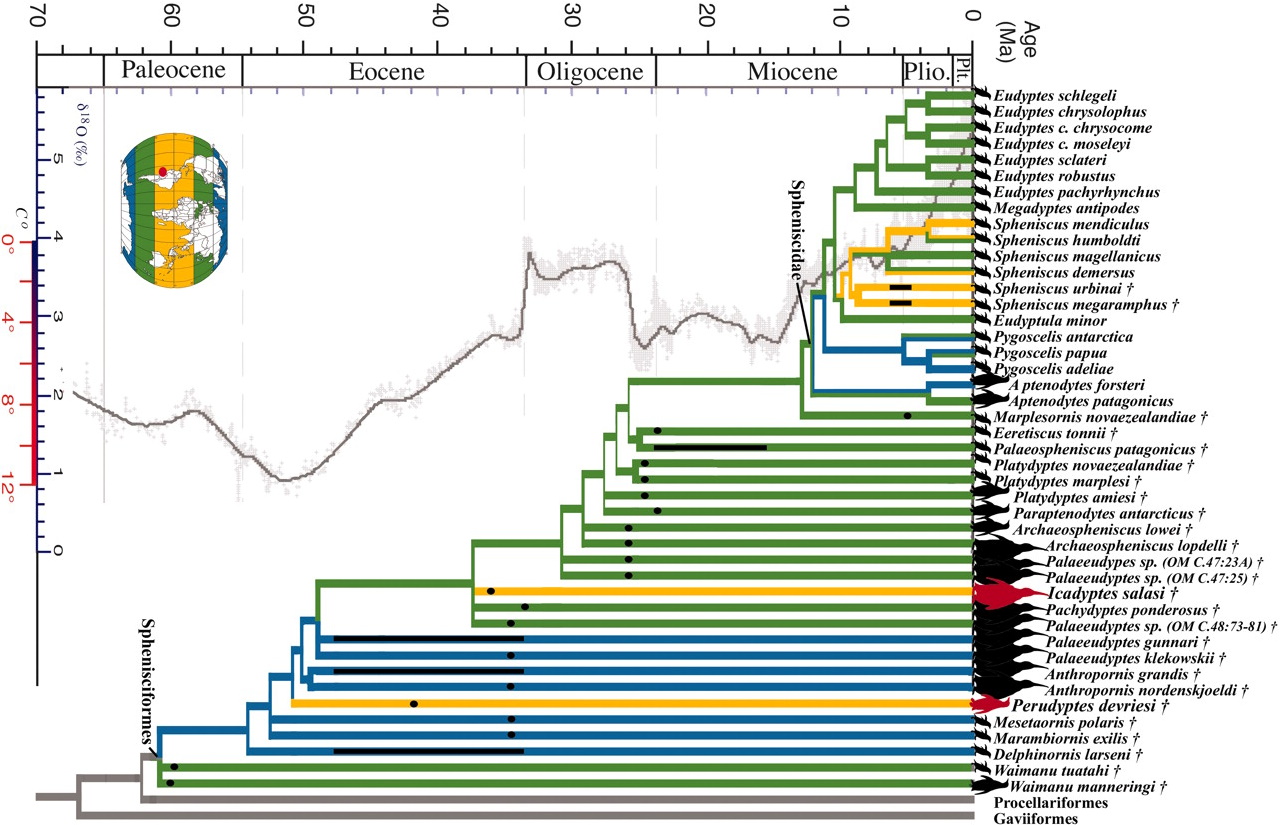
Penguins may owe their survival in the coldest and most inhospitable place on earth to evolutionary chance during a period of global warming millions of years ago. Far from adapting to the cold in Antarctica, where temperatures can plunge below minus 60C and wind speeds reach in excess of 200mph, they have been able to thrive because of a form of central heating of the wings they evolved when the climate on Earth was hot.
New research shows that when the earth warmed up nearly 50 millions years ago, penguins evolved a wing heating system, a highly efficient heat exchanger. 

The mechanism, which is so effective that the birds have to cool down after vigorous swimming in sub-zero waters, evolved to help the birds keep warm while foraging in ever deeper, ever cooler waters. "Penguins had a lucky break with the evolution of heat retention 49 million years ago, as it allowed them to survive the coming cold," says Dr Daniel Thomas of the University of Otago, New Zealand, who led the study. "The fossil evidence reveals that it evolved during a Greenhouse Earth interval. 

"Its evolution is therefore unrelated to global cooling or development of polar ice sheets, but probably represents an adaptation to foraging beneath the surface in waters at temperate latitudes. As global climate cooled, the heat exchanger was key to the invasion of the much more demanding environments associated with Antarctic ice sheets. The climate has never been so hot as it was back then, nor has it been so cold as in recent millennia, and penguins have weathered it all. We are seeing a dramatic shift in climate, however, and it will be a true test for the thermal tolerances of penguins." 

Penguins probably evolved from flying birds between 50 and 60 million years ago. Exactly why they lost the ability to fly is not known, but the dominant theory is that it was the survival trade-off for perfecting flight beneath the surface of the sea. It became more important to be able to dive and swim for food than to fly, so over time the birds lost the ability to fly, and wings became flippers. 

The first penguins came some time after the Cretaceous-Tertiary or KT mass extinction event, around 65 million years ago when almost all the large vertebrates on Earth – dinosaurs, plesiosaurs, mosasaurs, and pterosaurs – suddenly became extinct for reasons that are still hotly debated. 

After KT, climates warmed with temperatures peaking in the Eocene epoch, around 49 million years ago. Geochemical signals, telltale signs of how the earth once was, suggest that it was much warmer. Sea temperatures were around 25C, and the area around what is now Seymour Island in Antarctica, a major penguin habitat, was a balmy 15C, while parts of the now ice-covered region were subtropical. It has long been believed that penguins gradually adapted to increasingly cold conditions after the area became glaciated about 34 million years ago. 

But the new research, by scientists from New Zealand, America and South Africa, based on analysis of modern penguins and of fossils dating back more than 60 million years, shows that the key anatomical change that was to become pivotal to survival in the extreme cold many years later occurred when global warming reached its peak, 49 millions years ago. In the study, the researchers examined the remains of several types of modern penguins, including the little penguin, yellow-eyed penguin, king penguin, and Humboldt penguin, all of which had died naturally. 

Dissection of the birds showed that each had a major adaptation that allows penguins to forage in cold water, the humeral arterial plexus, a counter current vascular heat exchanger, or CCHE, that limits heat loss through the wing. The core body temperature of a penguin is around 38C. Although blubber and feathers offer some protection to the body, the large wings, with tightly attached skin and little insulation, have a huge surface area. Without protection, heat in the wing or flipper would be rapidly lost to the surrounding colder water or air with the threat of hypothermia and death. Heat is lost 20-30 times faster in water than in air. 

The CCHE is an ingenious web of arteries and veins that stops this happening. Blood is pumped to the wings of birds through a single major artery, but in penguins there are up to five arteries, each of which runs alongside two or more veins. Blood in the arteries being pumped into the wing from the heart is much warmer than that in the veins which is returning from the wing extremities exposed to the cold. Heat from the arterial blood is given to the venous blood, and redirected back to the body instead of being lost to the ocean. It is so effective that penguins emerging from the sea often stick their wings out to the sides in order to cool them down.

But when did it evolve? The results of the dissections show that the presence of this heat exchanger mechanism requires grooves in the bones of the wings to carry the arteries, which should be detectable in fossils. The researchers looked at penguin fossils dating from 62 million years ago for signs of these grooves. In the early period birds there were none, but from around 49 million years ago they are present. At around the same time, other changes and adaptations were taking place that improved buoyancy in the water and reduced drag. Body size increased too, and a hydrofoil wing evolved.

But while all of these changes improved the penguins' abilities for long distance swimming and deep diving, there was a snag. While much of the land was now tropical or subtropical, temperatures in the sea had not increased as much and it was still very cold, and significantly cooler than penguin body temperature.
According to the researchers, it was these longer feeding excursions far from the shore, and spending long periods of time in cold waters, that led to the evolution of the heat exchanger. 

Once equipped with the CCHE, the now flightless penguins were able to travel vast distances, and colonise new areas. And millions of years later, when the earth began to cool, the onboard heat exchanger meant the penguin was uniquely equipped for a successful invasion of icy Antarctic, an environment where it has walked, or waddled tall, ever since.

Ironically, there have been warnings that the penguin is at risk from the effects of global warming, including rising temperatures and a loss of sea ice, with a consequent reduction in nesting and breeding grounds, as well as a drop in food availability. "This is very interesting research and it suggests the heat exchanger is an adaptation to allow longer to be spent in the water," says Dr Jonathan Green, lecturer in marine biology at the University of Liverpool. "It is an adaptation which developed to promote foraging in warmer water and by coincidence proved to be helpful in cold waters and air temperatures. The same mechanism is employed in other parts of the penguin body, including the feet, which stops them freezing when they are in contact with ice. 

"Our own research has shown that global warming is a threat. Only two of the 17 species of penguin breed on the Antarctic continent. The others live in the sub-Antarctic and temperature regions in South America, South Africa and Australasia. Our research in Australia has shown that temperature rises can cause problems for the penguins. A danger from global warming is that this overheating may lead them to abandoning breeding attempts, resulting in declining population numbers." 

Huddling: The emperor's other way of warming up
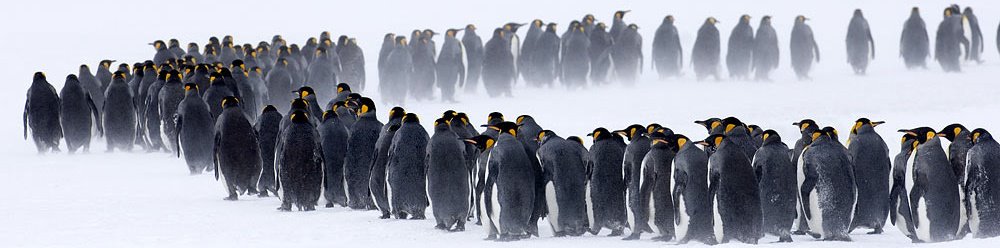
Penguins keep warm on land by huddling.
 
Scientists have found that it is highly effective for keeping warm on land and can generate a tropical environment in one of the coldest environments on earth. 

The emperor penguin breeds during the severe Antarctic winter, and the males have the job of incubation, which involves them being deprived of food for around 65 days. 
 
But successful breeding requires a temperature of around 35C, and so to keep warm, the males huddle.
Researchers from the Scott Institute of Polar Research, who investigated what exactly happens inside huddles for the first time, showed that the birds spend an average of 38 per cent of breeding time huddling, with huddles lasting around 90 minutes. The birds moved around in the huddle so they all had access to the inner warmth. 
 
Temperatures during tight huddling increased from 20C to 37.5C in less than two hours. "This complex social behaviour enables all breeders to get a regular and equal access to an environment which allows them to save energy and successfully incubate their eggs. Huddling behaviour of emperor penguins is a far more complex behaviour than previously described," say the researchers. 

Sunday, February 13, 2011

How Dinosaurs Handed Down Their Fingers to Birds

Wynne Parry  LiveScience Senior Writer

Birds are believed to be descended from dinosaurs, but some significant changes must have happened as they evolved from their ancestors. A new study involving baby chicks may help clear up a mystery of how one of those changes occurred -- how birds got their wing "fingers."
All four-limbed creatures, including dinosaurs, evolved from an ancestor that had five digits at the end of its limbs. These became flippers, wings, hands or paws, and some or all of the digits disappeared altogether in some cases.
Scientists think birds evolved from a group of meat-eating dinosaurs called maniraptors some 150 million years ago, during the Jurassic period. Modern birds have three digits in each of their wings, which means two digits in the forelimbs of these dinosaurs would have had to be lost during evolution.

A question of numbering

But which three digits survived? Paleontologists and developmental biologists have disagreed heartily on this. A proposal made in 1999, called the “frame shift” hypothesis, explained a discrepancy in the evidence, but not everyone accepted it.
The new study, conducted by researchers who transplanted cells from one part of a chick’s body to another, adds to the support for the hypothesis. The results of their study appear today (Feb. 10) in the journal Science.
If you number the digits so that digit 1 corresponds with our thumbs, digit 2 with our index fingers and so on, the fossil record shows that birds' wings evolved using digits 1, 2 and 3 of the dinosaur’s forelimbs.
However, in a bird embryo, the digits arise from the places on the limb bud associated with digits 2, 3 and 4. This conflict supported those who challenged whether birds were directly descended from dinosaurs.
In 1999, Günter Wagner and Jacques Gauthier of Yale University bridged the two factions by proposing that during development, digit 1 actually arose from the second position (where digit 2 should have arisen), and so on -- a frame shift.
"The great thing about the frame shift theory is it makes both things correct," said Ann Burke, an evolutionary morphologist at Wesleyan University in Connecticut, who was not involved in the current study. "Birds are dinosaurs, but developmentally the digits are 2, 3 and 4."

The new evidence

In the new study, Japanese researchers led by Koji Tamura of Tohoku University transplanted certain cells from the feet to the wings and vice versa of developing chicks. These cells are implicated in the growth of digit 4. The researchers found evidence that the last digit of the wing does not correspond to the last digit of the foot. This supports the theory that the wing, unlike the foot, does not have a digit 4, they said.Then the team mapped out digit development using cell-labeling techniques (enabling them to know where a certain cell ended up once it matured). They found that by 3.5 days of embryonic development, a shift occurs, causing cells in the progenitor region for digit 4 to move forward and grow into digit 3. The same shift occurs for the digits that become 1 and 2.
"I cannot tell you ‘why’ we have five digits and chickens have three digits, although I will be able to correctly tell you ‘how’ they have three digits whereas we have five digits," Tamura told LiveScience in an e-mail.
The findings accomplish two things, according to Tim Rowe, a professor of paleontology at the University of Texas at Austin who was not involved in the study.
First, "it pertains directly to this seeming conflict between paleontological records and developmental records. It shows in fact there is no inconsistency," said Rowe.
And second, it provides an excellent example of a shift in which one body part is transformed into another during embryonic development, he said.
"We are discovering part of the Holy Grail, which is the evolution of development, how the development of the limb changed during evolution of birds from their theropod ancestor," Rowe said.
This is not the first research to support the frame shift hypothesis, according to Wagner . "I think there is now enough data that shows that the frame shift actually happened," Wagner told LiveScience. "This is going a step further; it shows us the developmental mechanism."


Persistent skepticism
 
To determine the identity of the last digit in the chicks' "hands," the study used the development of the last digits in a five-digit mouse limb as a guiding model. This leaves Alan Feduccia, an evolutionary biologist at the University of North Carolina at Chapel Hill, skeptical of the results.
Feduccia, who wasn't involved in the study, is an opponent of the predominant scientific view that birds are descended from theropod dinosaurs (which include maniraptors). Rather, he believes birds and theropod dinosaurs share a common, earlier ancestor. This new study gives him no reason to change his mind.
"The experimental results seem to be very equivocal," Feduccia said, "because the bird hand is so highly modified that we don't know that same genetic mechanisms apply to digit identity."
The shift in digits just doesn't make sense, he said. "There is no imaginable selective advantage for such a shift -- in other words, why would it occur?"
But he is in the minority.
Wesleyan’s Burke has another issue with the frame shift theory; she believes renumbering the digits of the growing chicks is potentially misleading.
"The dinosaur ancestry of birds is absolutely sound and so well-supported that nobody disagrees with that, so just trying to change the digit numbers in living birds to conform to fossilized ancestry is unnecessary and eclipses important evolutionary change," she said.

Source

Wednesday, February 9, 2011

Little Blue Penguin Shows Its Colors


>Little blue penguins are the world's smallest penguins, and are found on Australia and New Zealand. While they are not considered endangered, they are losing some habitat due to urban encroachment. Credit: Dreamstime.

Dapper Blue Penguin: Tux Is a Feathery First

By Jennifer Welsh, LiveScience Staff Writer
08 February 2011
If these penguins look blue to you, it's not because they are down in the dumps. They have a special protein structure in their feathers that generates the blue color by reflecting light in a way that has never been seen in feathers before.

Lead author Matthew Shawkey of the University of Akron was surprised to find the new structures, which "shatter current dogma," Shawkey told LiveScience. "We found a previously undescribed way that birds make a non-iridescent blue color in feathers."

Shawkey found the structure in feathers of the blue penguin, a bird commonly found in Australia and New Zealand and also called the little, or fairy, penguin, awkwardly stands about a foot tall (30 cm) and weighs a little more than 2 pounds (about 1 kg). They have the traditional tuxedo look of penguins, though their feathers are a non-iridescent dark blue.

For the last 30 years only two ways of making a non-iridescent blue feathers were known, both which depend on holes in a spongy-like matrix of a protein called beta-keratin. The pores in the matrix trap and reflect light in the blue color range. "When I first looked at them [the feathers] I expected them to be one of these other two mechanisms," Shawkey said to LiveScience.

In the blue penguin feathers, the beta-keratin is aligned into parallel fibers, like a row of hairs. The alignment and size of the fibers scatters the light and reflects those in the blue pigment range. This is the first time this organizational structure has been seen to produce color in feathers.

"The mechanisms that produce structural coloration in animals is so little studied that I am not surprised at all that a new mechanism was found in penguins," Geoffrey Hill at Auburn University in Auburn, Ala., who was not involved in the study. "Shawkey and Prum are like the first Europeans who came ashore in North America and had a vast uncharted realm to explore."

Ancient pigments

The discovery was not only a surprise in itself but an unexpected find to Shawkey, who stumbled upon the odd structure during the course of another project. After some recent work reconstructing the color of ancient dinosaur feathers, Shawkey moved on to analyzing the color of some 35 million-year-old penguin feathers, which required his team to analyze the color-producing pigments and proteins in living penguins.

When his team took a look at what made the blue penguin's feathers blue, he was shocked. "These fibers were unexpected, they look totally different than anything we ever seen before," he told LiveScience.

The team looked at how these filaments scattered light and X-rays to determine what the structures look like and figure out how they were producing the blue color. They saw that the structure was highly organized; It looked a lot different than the spongy, disordered keratin structures that have been observed to create colors in feathers before.

The 160-nanometer keratin filaments lined up in an array that Shawkey describes as "a handful of uncooked spaghetti." They also saw that how the filaments were lined up would create a blue color reflection. Hundreds of the fibers line up side by side in the cells that make up the feather's barbs — the silky fibers that branch off of the quill.

"The significance lies in the realization that there are many ways to use nanostructures to produce blue color," Hill told LiveScience in an e-mail. "The research underscores that we should keep investigating structural coloration in diverse animals to see what other ingenious mechanisms natural selection has produced."

Evolving technologies

Beta-keratin is known to self-assemble fibers and Shawkey said that this parallel arrangement might have evolved from that ability of beta-keratin. If the structure does assemble itself, instead of needing a cellular scaffold, it could be easily manufactured. "There might be some interest in mimicking these for applications from things like cosmetics to fiber-optic cables," Shawkey told LiveScience. "If they are self- assembled it would be interesting because it would be cheap to manufacture them."

Shawkey also wonders if this organization somehow gives the penguin feathers special benefits, like additional strength or rigidity to withstand flying through the water, which is 1,000 times more viscous than the air birds normally fly through.

While this is the first time this sort of structural formation of blue color has been seen in feathers, a similar method of color production has been seen in blue skin of birds, though in that case the fibers are made up of collagen.

"Both beta-keratin and collagen have an innate tendency to self-assemble into fibers, so it makes sense that you would find these nanofibers made from both beta-keratin and collagen." The two structures seem to be an example of convergent evolution, when two structures evolve separately but use the same mechanism, he said.

Source

Tuesday, February 1, 2011

Paleontologist after more evidence that relatives of modern birds co-existed with dinosaurs

A woman works on a rock.
Photo Credit: N. Adam Smith
Julia Clarke exposes a wing feature on a fossilized penguin specimen recovered from Peru. She and colleagues found evidence from fossils collected in Antarctica in the 1990s that at least one species related to modern birds lived at the same time as dinosaurs. She and a science team are headed to the Antarctic Peninsula in February 2011 in hopes of finding more fossils.

Winging it

The theory that close relatives of modern birds once co-existed with non-avian dinosaurs before a mass extinction 65 million years ago had trouble flying with many paleontologists until about five years ago.

That was when a team of scientists announced that new data from fossils discovered in Antarctica in the 1990s by Argentine researchers offered evidence that at least one species related to modern birds shared the same space and time with dinosaurs. [See previous article: Antarctic bird nest?]

Julia Clarke External Non-U.S. government site was the lead author of that Nature paper, with the bold title “First definitive fossil evidence for the extant avian radiation in the Cretaceous.” Now Clarke, an associate professor of paleontology at the Jackson School of Geosciences at the University of Texas in Austin External Non-U.S. government site, hopes to get her hands on additional material from Antarctica that will fill in more of the story about the early spread of all living birds.

Toward that purpose she’ll join a team of paleontologists headed to a group of islands off the Antarctic Peninsula early next year led by Ross MacPhee External Non-U.S. government site, with the American Museum of Natural History in New York External Non-U.S. government site. [See related article: Reverse course.]

The fossil hunters include dinosaur and mammal experts. “It’s a group of vertebrate paleontologists that want to ask questions that only Antarctic fossils can answer,” Clarke said.

It will be Clarke’s first trip to the Antarctic, though her fieldwork has often taken her to the Southern Hemisphere and locations from Argentina to Peru to New Zealand. Her work in South America, in particular, has shed new light on penguin evolution. [See related article: Penguins of a feather.]

But it’s in Antarctica where she believes more evidence is waiting to be found to show that the ancestors of modern birds lived more than 65 million years ago. Most scientists believe an asteroid hit the Earth and caused a cataclysmic extinction. Non-avian dinosaurs disappeared, along with an estimated three-quarters of all species.

“For parts of and close relatives of the crown clade — relatives of living bird lineages — Antarctica is the place to go. And Vega, specifically, is the place to go — globally,” Clarke said.

Vega Island, a small island off the Antarctic Peninsula, has proven to be relatively rich with fossils from the Late Cretaceous, about 80 million to 65 million years ago. The asteroid impact, which marks the so-called K-T Boundary, is estimated to have occurred around 64 million years ago.

It was on Vega where the Argentine scientists found the specimen that Clarke and colleagues would later call Vegavis iaai, which falls within the order Anseriformes, which includes ducks, geese and swans.

Bird bones stuck in a rock.
Photo Courtesy: Julia Clarke

Vegavis iaai concretion, left, and the CT scan of the rock and bird fossils.
The rock specimen from Vega contained avian vertebrae and pelvic bones among other bits of skeleton. Clarke used a high-resolution X-ray CT scanner to see the fossils without breaking the rock and possibly damaging the material.
In spite of the Vega evidence, there is still contention among paleontologists of what lineages are present in the Cretaceous prior to the K-T boundary, according to Clarke.

In 2008, she and co-principal investigator Judd Case at Eastern Washington University External Non-U.S. government site received a Small Grant for Exploratory Research (SGER) from the National Science Foundation (NSF) External U.S. government site to pull together data and experts on Antarctic fossils from the last 20 years to see if more evidence existed to support the theory of a robust modern radiation from Antarctica.

It’s a good start, Clarke said, but added, “What we really need are new specimens because some of the important material that Case and the Argentine teams collected during their field seasons can just hint at the bird species present.

“It is just the tantalizing beginning of what we need to know; we need to get better specimens. … There’s arguably no better material in the world than what’s come out of Vega so far. There’s a lot more work that can be done there.”

Hence the expedition to the islands of the Antarctic Peninsula, which requires a trip aboard a research vessel toward the end of the Southern Hemisphere summer in February. The scientists will make day trips to the islands from small inflatable boats, as well as work out of field camps on the islands for days at a time.
The researchers can expect long hours in cold conditions, sifting through rocks and dirt for the small fragments that might offer further clues about the ancient history of birds, mammals and dinosaurs.

For her part, Clarke is hesitant to state that Antarctica was ground zero for modern bird evolution — but she also doesn’t dismiss the possibility. “If we can increase our sampling globally, we can get a better sense of what role Antarctica played in the diversification of birds. We don’t know that it’s the area of origin,” she said.

“Finding bird fossils is always a rare occurrence, but based on what we specimens have been collected from Antarctica to date, work in this region has a high probability of success. In terms of spinning a roulette wheel of fossil discovery, if you will, I think it’s weighted in our favor in this case. I think we’re going to find more complete material if we can spend the time at the sites.”

NSF-funded research in this story: Julia Clarke, University of Texas at Austin, Award Nos. 0927341, 0408308, 0731404 External U.S. government site (with Judd Case, Eastern Washington University). 


Source