Wednesday, February 23, 2011

Southern Rockhopper Penguins Listed as Threatened Species; Climate Change Protections Needed


For Immediate Release, February 22, 2011

Contacts:  Catherine Kilduff, Center for Biological Diversity, (415) 644-8580
Todd Steiner/Teri Shore, Turtle Island Restoration Network, (415) 663-8590 x 103/104
   

Southern Rockhopper Penguins Listed as Threatened Species; Climate Change Protections Needed

Rockhopper penguin
Southern rockhopper penguin photo © Larry Master/ MasterImages.org. More images are available here.
SAN FRANCISCO— The Interior Department announced today that the New Zealand-Australia populations of the southern rockhopper penguin, among the world’s smallest penguins, will be listed as threatened under the U.S. Endangered Species Act. The listing will raise awareness of the rockhoppers’ plight, increase research and conservation funds, and offer added oversight of U.S.-government-approved activities that could hurt the birds. It follows a legal settlement with the Center for Biological Diversity and Turtle Island Restoration Network (TIRN) over delays in protecting the penguin.

“These hardy penguins survive on remote, stormy, sub-Antarctic islands in the Southern Ocean, practically at the edge of the world, and yet they may not survive climate change,” said Catherine Kilduff, an attorney at the Center, which first petitioned to protect the rockhoppers and 11 other penguin species in 2006. “Endangered Species Act protections can begin to address this threat.”

“These penguins have adapted to an inhospitable environment over hundreds of years, but the combination of ocean warming and commercial fishing may prove to be too much,” said Todd Steiner, biologist and executive director of TIRN. “Through this listing, the government is acknowledging that our oceans are sick and taking a first step to protect penguins and their watery world.”

By mid-century, if greenhouse gas emissions remain on their current trajectory, climate change will commit one-third of the world’s animal and plant species to extinction. The threatened southern rockhopper penguin joins six other recently protected penguins: the African penguin, the Humboldt penguin of Chile and Peru and four other New Zealand penguins (the yellow-eyed, white-flippered, Fiordland crested and erect-crested).
Rockhopper penguins, named for the way they hop from boulder to boulder, are widespread — breeding on islands off South America, Africa, Australia and New Zealand — but the penguins listed today have declined by more than 90 percent since the early 1940s. Changes to the marine environment, such as increases in sea-surface temperatures and reduced prey availability, are the primary threat to these colonies.

The threatened penguins breed on Macquarie, Campbell, Auckland and Antipodes islands, which are ecologically and geographically unique as well as historically high-quality habitat. The Campbell Island southern rockhopper population was once one of the largest in the world, but has experienced the most severe declines.

For more information on penguins, please see: http://www.biologicaldiversity.org/species/birds/penguins/index.html.

The Center for Biological Diversity is a national, nonprofit conservation organization with more than 320,000 members and online activists dedicated to the protection of endangered species and wild places.
Turtle Island Restoration Network (TIRN) is an environmental organization working to protect and restore endangered marine species and the marine environment on which we all depend. Headquartered in California, with offices in Texas and Costa Rica, TIRN is dedicated to swift and decisive action to protect and restore marine species and their habitats and to inspire people in communities all over the world to join us as active and vocal marine species advocates. For more information, visit www.SeaTurtles.org and www.TIRN.net.

Penguins: The luckiest birds alive

Penguins' extraordinary ability to survive in the Antarctic is down to an accident of evolution - the heating system in their wings. Roger Dobson explains

Wednesday, 23 February 2011
A heat retaining adaptation in the birds' wings has ensured their
survival
REX FEATURES
A heat retaining adaptation in the birds' wings has ensured their survival


Penguins may owe their survival in the coldest and most inhospitable place on earth to evolutionary chance during a period of global warming millions of years ago. Far from adapting to the cold in Antarctica, where temperatures can plunge below minus 60C and wind speeds reach in excess of 200mph, they have been able to thrive because of a form of central heating of the wings they evolved when the climate on Earth was hot.
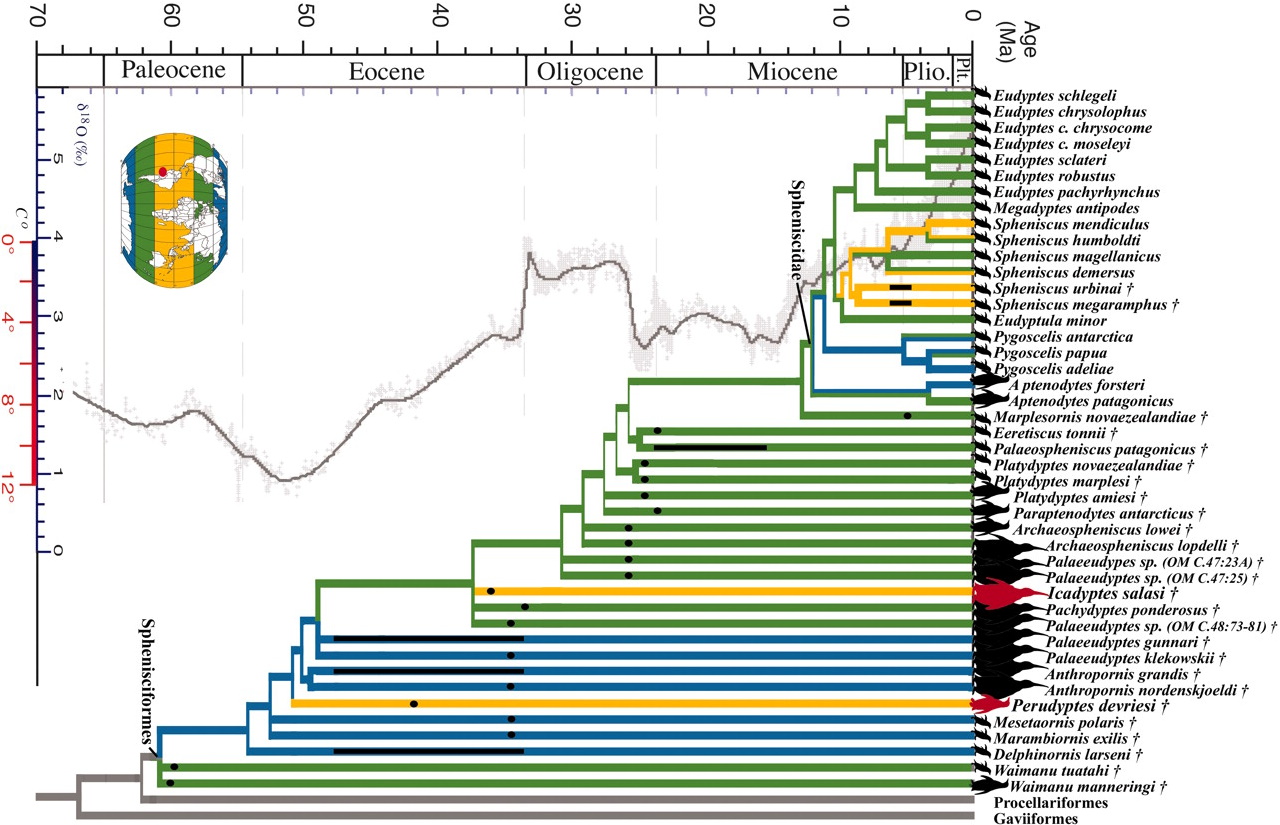
New research shows that when the earth warmed up nearly 50 millions years ago, penguins evolved a wing heating system, a highly efficient heat exchanger. 

The mechanism, which is so effective that the birds have to cool down after vigorous swimming in sub-zero waters, evolved to help the birds keep warm while foraging in ever deeper, ever cooler waters. "Penguins had a lucky break with the evolution of heat retention 49 million years ago, as it allowed them to survive the coming cold," says Dr Daniel Thomas of the University of Otago, New Zealand, who led the study. "The fossil evidence reveals that it evolved during a Greenhouse Earth interval. 

"Its evolution is therefore unrelated to global cooling or development of polar ice sheets, but probably represents an adaptation to foraging beneath the surface in waters at temperate latitudes. As global climate cooled, the heat exchanger was key to the invasion of the much more demanding environments associated with Antarctic ice sheets. The climate has never been so hot as it was back then, nor has it been so cold as in recent millennia, and penguins have weathered it all. We are seeing a dramatic shift in climate, however, and it will be a true test for the thermal tolerances of penguins." 

Penguins probably evolved from flying birds between 50 and 60 million years ago. Exactly why they lost the ability to fly is not known, but the dominant theory is that it was the survival trade-off for perfecting flight beneath the surface of the sea. It became more important to be able to dive and swim for food than to fly, so over time the birds lost the ability to fly, and wings became flippers. 

The first penguins came some time after the Cretaceous-Tertiary or KT mass extinction event, around 65 million years ago when almost all the large vertebrates on Earth – dinosaurs, plesiosaurs, mosasaurs, and pterosaurs – suddenly became extinct for reasons that are still hotly debated. 

After KT, climates warmed with temperatures peaking in the Eocene epoch, around 49 million years ago. Geochemical signals, telltale signs of how the earth once was, suggest that it was much warmer. Sea temperatures were around 25C, and the area around what is now Seymour Island in Antarctica, a major penguin habitat, was a balmy 15C, while parts of the now ice-covered region were subtropical. It has long been believed that penguins gradually adapted to increasingly cold conditions after the area became glaciated about 34 million years ago. 

But the new research, by scientists from New Zealand, America and South Africa, based on analysis of modern penguins and of fossils dating back more than 60 million years, shows that the key anatomical change that was to become pivotal to survival in the extreme cold many years later occurred when global warming reached its peak, 49 millions years ago. In the study, the researchers examined the remains of several types of modern penguins, including the little penguin, yellow-eyed penguin, king penguin, and Humboldt penguin, all of which had died naturally. 

Dissection of the birds showed that each had a major adaptation that allows penguins to forage in cold water, the humeral arterial plexus, a counter current vascular heat exchanger, or CCHE, that limits heat loss through the wing. The core body temperature of a penguin is around 38C. Although blubber and feathers offer some protection to the body, the large wings, with tightly attached skin and little insulation, have a huge surface area. Without protection, heat in the wing or flipper would be rapidly lost to the surrounding colder water or air with the threat of hypothermia and death. Heat is lost 20-30 times faster in water than in air. 

The CCHE is an ingenious web of arteries and veins that stops this happening. Blood is pumped to the wings of birds through a single major artery, but in penguins there are up to five arteries, each of which runs alongside two or more veins. Blood in the arteries being pumped into the wing from the heart is much warmer than that in the veins which is returning from the wing extremities exposed to the cold. Heat from the arterial blood is given to the venous blood, and redirected back to the body instead of being lost to the ocean. It is so effective that penguins emerging from the sea often stick their wings out to the sides in order to cool them down.

But when did it evolve? The results of the dissections show that the presence of this heat exchanger mechanism requires grooves in the bones of the wings to carry the arteries, which should be detectable in fossils. The researchers looked at penguin fossils dating from 62 million years ago for signs of these grooves. In the early period birds there were none, but from around 49 million years ago they are present. At around the same time, other changes and adaptations were taking place that improved buoyancy in the water and reduced drag. Body size increased too, and a hydrofoil wing evolved.

But while all of these changes improved the penguins' abilities for long distance swimming and deep diving, there was a snag. While much of the land was now tropical or subtropical, temperatures in the sea had not increased as much and it was still very cold, and significantly cooler than penguin body temperature.
According to the researchers, it was these longer feeding excursions far from the shore, and spending long periods of time in cold waters, that led to the evolution of the heat exchanger. 

Once equipped with the CCHE, the now flightless penguins were able to travel vast distances, and colonise new areas. And millions of years later, when the earth began to cool, the onboard heat exchanger meant the penguin was uniquely equipped for a successful invasion of icy Antarctic, an environment where it has walked, or waddled tall, ever since.

Ironically, there have been warnings that the penguin is at risk from the effects of global warming, including rising temperatures and a loss of sea ice, with a consequent reduction in nesting and breeding grounds, as well as a drop in food availability. "This is very interesting research and it suggests the heat exchanger is an adaptation to allow longer to be spent in the water," says Dr Jonathan Green, lecturer in marine biology at the University of Liverpool. "It is an adaptation which developed to promote foraging in warmer water and by coincidence proved to be helpful in cold waters and air temperatures. The same mechanism is employed in other parts of the penguin body, including the feet, which stops them freezing when they are in contact with ice. 

"Our own research has shown that global warming is a threat. Only two of the 17 species of penguin breed on the Antarctic continent. The others live in the sub-Antarctic and temperature regions in South America, South Africa and Australasia. Our research in Australia has shown that temperature rises can cause problems for the penguins. A danger from global warming is that this overheating may lead them to abandoning breeding attempts, resulting in declining population numbers." 

Huddling: The emperor's other way of warming up
Penguins keep warm on land by huddling.
 
Scientists have found that it is highly effective for keeping warm on land and can generate a tropical environment in one of the coldest environments on earth. 

The emperor penguin breeds during the severe Antarctic winter, and the males have the job of incubation, which involves them being deprived of food for around 65 days. 
 
But successful breeding requires a temperature of around 35C, and so to keep warm, the males huddle.
Researchers from the Scott Institute of Polar Research, who investigated what exactly happens inside huddles for the first time, showed that the birds spend an average of 38 per cent of breeding time huddling, with huddles lasting around 90 minutes. The birds moved around in the huddle so they all had access to the inner warmth. 
 
Temperatures during tight huddling increased from 20C to 37.5C in less than two hours. "This complex social behaviour enables all breeders to get a regular and equal access to an environment which allows them to save energy and successfully incubate their eggs. Huddling behaviour of emperor penguins is a far more complex behaviour than previously described," say the researchers. 

Sunday, February 13, 2011

How Dinosaurs Handed Down Their Fingers to Birds

Wynne Parry  LiveScience Senior Writer

Birds are believed to be descended from dinosaurs, but some significant changes must have happened as they evolved from their ancestors. A new study involving baby chicks may help clear up a mystery of how one of those changes occurred -- how birds got their wing "fingers."
All four-limbed creatures, including dinosaurs, evolved from an ancestor that had five digits at the end of its limbs. These became flippers, wings, hands or paws, and some or all of the digits disappeared altogether in some cases.
Scientists think birds evolved from a group of meat-eating dinosaurs called maniraptors some 150 million years ago, during the Jurassic period. Modern birds have three digits in each of their wings, which means two digits in the forelimbs of these dinosaurs would have had to be lost during evolution.

A question of numbering

But which three digits survived? Paleontologists and developmental biologists have disagreed heartily on this. A proposal made in 1999, called the “frame shift” hypothesis, explained a discrepancy in the evidence, but not everyone accepted it.
The new study, conducted by researchers who transplanted cells from one part of a chick’s body to another, adds to the support for the hypothesis. The results of their study appear today (Feb. 10) in the journal Science.
If you number the digits so that digit 1 corresponds with our thumbs, digit 2 with our index fingers and so on, the fossil record shows that birds' wings evolved using digits 1, 2 and 3 of the dinosaur’s forelimbs.
However, in a bird embryo, the digits arise from the places on the limb bud associated with digits 2, 3 and 4. This conflict supported those who challenged whether birds were directly descended from dinosaurs.
In 1999, Günter Wagner and Jacques Gauthier of Yale University bridged the two factions by proposing that during development, digit 1 actually arose from the second position (where digit 2 should have arisen), and so on -- a frame shift.
"The great thing about the frame shift theory is it makes both things correct," said Ann Burke, an evolutionary morphologist at Wesleyan University in Connecticut, who was not involved in the current study. "Birds are dinosaurs, but developmentally the digits are 2, 3 and 4."

The new evidence

In the new study, Japanese researchers led by Koji Tamura of Tohoku University transplanted certain cells from the feet to the wings and vice versa of developing chicks. These cells are implicated in the growth of digit 4. The researchers found evidence that the last digit of the wing does not correspond to the last digit of the foot. This supports the theory that the wing, unlike the foot, does not have a digit 4, they said.Then the team mapped out digit development using cell-labeling techniques (enabling them to know where a certain cell ended up once it matured). They found that by 3.5 days of embryonic development, a shift occurs, causing cells in the progenitor region for digit 4 to move forward and grow into digit 3. The same shift occurs for the digits that become 1 and 2.
"I cannot tell you ‘why’ we have five digits and chickens have three digits, although I will be able to correctly tell you ‘how’ they have three digits whereas we have five digits," Tamura told LiveScience in an e-mail.
The findings accomplish two things, according to Tim Rowe, a professor of paleontology at the University of Texas at Austin who was not involved in the study.
First, "it pertains directly to this seeming conflict between paleontological records and developmental records. It shows in fact there is no inconsistency," said Rowe.
And second, it provides an excellent example of a shift in which one body part is transformed into another during embryonic development, he said.
"We are discovering part of the Holy Grail, which is the evolution of development, how the development of the limb changed during evolution of birds from their theropod ancestor," Rowe said.
This is not the first research to support the frame shift hypothesis, according to Wagner . "I think there is now enough data that shows that the frame shift actually happened," Wagner told LiveScience. "This is going a step further; it shows us the developmental mechanism."


Persistent skepticism
 
To determine the identity of the last digit in the chicks' "hands," the study used the development of the last digits in a five-digit mouse limb as a guiding model. This leaves Alan Feduccia, an evolutionary biologist at the University of North Carolina at Chapel Hill, skeptical of the results.
Feduccia, who wasn't involved in the study, is an opponent of the predominant scientific view that birds are descended from theropod dinosaurs (which include maniraptors). Rather, he believes birds and theropod dinosaurs share a common, earlier ancestor. This new study gives him no reason to change his mind.
"The experimental results seem to be very equivocal," Feduccia said, "because the bird hand is so highly modified that we don't know that same genetic mechanisms apply to digit identity."
The shift in digits just doesn't make sense, he said. "There is no imaginable selective advantage for such a shift -- in other words, why would it occur?"
But he is in the minority.
Wesleyan’s Burke has another issue with the frame shift theory; she believes renumbering the digits of the growing chicks is potentially misleading.
"The dinosaur ancestry of birds is absolutely sound and so well-supported that nobody disagrees with that, so just trying to change the digit numbers in living birds to conform to fossilized ancestry is unnecessary and eclipses important evolutionary change," she said.

Source

Wednesday, February 9, 2011

Little Blue Penguin Shows Its Colors


>Little blue penguins are the world's smallest penguins, and are found on Australia and New Zealand. While they are not considered endangered, they are losing some habitat due to urban encroachment. Credit: Dreamstime.

Dapper Blue Penguin: Tux Is a Feathery First

By Jennifer Welsh, LiveScience Staff Writer
08 February 2011
If these penguins look blue to you, it's not because they are down in the dumps. They have a special protein structure in their feathers that generates the blue color by reflecting light in a way that has never been seen in feathers before.

Lead author Matthew Shawkey of the University of Akron was surprised to find the new structures, which "shatter current dogma," Shawkey told LiveScience. "We found a previously undescribed way that birds make a non-iridescent blue color in feathers."

Shawkey found the structure in feathers of the blue penguin, a bird commonly found in Australia and New Zealand and also called the little, or fairy, penguin, awkwardly stands about a foot tall (30 cm) and weighs a little more than 2 pounds (about 1 kg). They have the traditional tuxedo look of penguins, though their feathers are a non-iridescent dark blue.

For the last 30 years only two ways of making a non-iridescent blue feathers were known, both which depend on holes in a spongy-like matrix of a protein called beta-keratin. The pores in the matrix trap and reflect light in the blue color range. "When I first looked at them [the feathers] I expected them to be one of these other two mechanisms," Shawkey said to LiveScience.

In the blue penguin feathers, the beta-keratin is aligned into parallel fibers, like a row of hairs. The alignment and size of the fibers scatters the light and reflects those in the blue pigment range. This is the first time this organizational structure has been seen to produce color in feathers.

"The mechanisms that produce structural coloration in animals is so little studied that I am not surprised at all that a new mechanism was found in penguins," Geoffrey Hill at Auburn University in Auburn, Ala., who was not involved in the study. "Shawkey and Prum are like the first Europeans who came ashore in North America and had a vast uncharted realm to explore."

Ancient pigments

The discovery was not only a surprise in itself but an unexpected find to Shawkey, who stumbled upon the odd structure during the course of another project. After some recent work reconstructing the color of ancient dinosaur feathers, Shawkey moved on to analyzing the color of some 35 million-year-old penguin feathers, which required his team to analyze the color-producing pigments and proteins in living penguins.

When his team took a look at what made the blue penguin's feathers blue, he was shocked. "These fibers were unexpected, they look totally different than anything we ever seen before," he told LiveScience.

The team looked at how these filaments scattered light and X-rays to determine what the structures look like and figure out how they were producing the blue color. They saw that the structure was highly organized; It looked a lot different than the spongy, disordered keratin structures that have been observed to create colors in feathers before.

The 160-nanometer keratin filaments lined up in an array that Shawkey describes as "a handful of uncooked spaghetti." They also saw that how the filaments were lined up would create a blue color reflection. Hundreds of the fibers line up side by side in the cells that make up the feather's barbs — the silky fibers that branch off of the quill.

"The significance lies in the realization that there are many ways to use nanostructures to produce blue color," Hill told LiveScience in an e-mail. "The research underscores that we should keep investigating structural coloration in diverse animals to see what other ingenious mechanisms natural selection has produced."

Evolving technologies

Beta-keratin is known to self-assemble fibers and Shawkey said that this parallel arrangement might have evolved from that ability of beta-keratin. If the structure does assemble itself, instead of needing a cellular scaffold, it could be easily manufactured. "There might be some interest in mimicking these for applications from things like cosmetics to fiber-optic cables," Shawkey told LiveScience. "If they are self- assembled it would be interesting because it would be cheap to manufacture them."

Shawkey also wonders if this organization somehow gives the penguin feathers special benefits, like additional strength or rigidity to withstand flying through the water, which is 1,000 times more viscous than the air birds normally fly through.

While this is the first time this sort of structural formation of blue color has been seen in feathers, a similar method of color production has been seen in blue skin of birds, though in that case the fibers are made up of collagen.

"Both beta-keratin and collagen have an innate tendency to self-assemble into fibers, so it makes sense that you would find these nanofibers made from both beta-keratin and collagen." The two structures seem to be an example of convergent evolution, when two structures evolve separately but use the same mechanism, he said.

Source

Tuesday, February 1, 2011

Paleontologist after more evidence that relatives of modern birds co-existed with dinosaurs

A woman works on a rock.
Photo Credit: N. Adam Smith
Julia Clarke exposes a wing feature on a fossilized penguin specimen recovered from Peru. She and colleagues found evidence from fossils collected in Antarctica in the 1990s that at least one species related to modern birds lived at the same time as dinosaurs. She and a science team are headed to the Antarctic Peninsula in February 2011 in hopes of finding more fossils.

Winging it

The theory that close relatives of modern birds once co-existed with non-avian dinosaurs before a mass extinction 65 million years ago had trouble flying with many paleontologists until about five years ago.

That was when a team of scientists announced that new data from fossils discovered in Antarctica in the 1990s by Argentine researchers offered evidence that at least one species related to modern birds shared the same space and time with dinosaurs. [See previous article: Antarctic bird nest?]

Julia Clarke External Non-U.S. government site was the lead author of that Nature paper, with the bold title “First definitive fossil evidence for the extant avian radiation in the Cretaceous.” Now Clarke, an associate professor of paleontology at the Jackson School of Geosciences at the University of Texas in Austin External Non-U.S. government site, hopes to get her hands on additional material from Antarctica that will fill in more of the story about the early spread of all living birds.

Toward that purpose she’ll join a team of paleontologists headed to a group of islands off the Antarctic Peninsula early next year led by Ross MacPhee External Non-U.S. government site, with the American Museum of Natural History in New York External Non-U.S. government site. [See related article: Reverse course.]

The fossil hunters include dinosaur and mammal experts. “It’s a group of vertebrate paleontologists that want to ask questions that only Antarctic fossils can answer,” Clarke said.

It will be Clarke’s first trip to the Antarctic, though her fieldwork has often taken her to the Southern Hemisphere and locations from Argentina to Peru to New Zealand. Her work in South America, in particular, has shed new light on penguin evolution. [See related article: Penguins of a feather.]

But it’s in Antarctica where she believes more evidence is waiting to be found to show that the ancestors of modern birds lived more than 65 million years ago. Most scientists believe an asteroid hit the Earth and caused a cataclysmic extinction. Non-avian dinosaurs disappeared, along with an estimated three-quarters of all species.

“For parts of and close relatives of the crown clade — relatives of living bird lineages — Antarctica is the place to go. And Vega, specifically, is the place to go — globally,” Clarke said.

Vega Island, a small island off the Antarctic Peninsula, has proven to be relatively rich with fossils from the Late Cretaceous, about 80 million to 65 million years ago. The asteroid impact, which marks the so-called K-T Boundary, is estimated to have occurred around 64 million years ago.

It was on Vega where the Argentine scientists found the specimen that Clarke and colleagues would later call Vegavis iaai, which falls within the order Anseriformes, which includes ducks, geese and swans.

Bird bones stuck in a rock.
Photo Courtesy: Julia Clarke

Vegavis iaai concretion, left, and the CT scan of the rock and bird fossils.
The rock specimen from Vega contained avian vertebrae and pelvic bones among other bits of skeleton. Clarke used a high-resolution X-ray CT scanner to see the fossils without breaking the rock and possibly damaging the material.
In spite of the Vega evidence, there is still contention among paleontologists of what lineages are present in the Cretaceous prior to the K-T boundary, according to Clarke.

In 2008, she and co-principal investigator Judd Case at Eastern Washington University External Non-U.S. government site received a Small Grant for Exploratory Research (SGER) from the National Science Foundation (NSF) External U.S. government site to pull together data and experts on Antarctic fossils from the last 20 years to see if more evidence existed to support the theory of a robust modern radiation from Antarctica.

It’s a good start, Clarke said, but added, “What we really need are new specimens because some of the important material that Case and the Argentine teams collected during their field seasons can just hint at the bird species present.

“It is just the tantalizing beginning of what we need to know; we need to get better specimens. … There’s arguably no better material in the world than what’s come out of Vega so far. There’s a lot more work that can be done there.”

Hence the expedition to the islands of the Antarctic Peninsula, which requires a trip aboard a research vessel toward the end of the Southern Hemisphere summer in February. The scientists will make day trips to the islands from small inflatable boats, as well as work out of field camps on the islands for days at a time.
The researchers can expect long hours in cold conditions, sifting through rocks and dirt for the small fragments that might offer further clues about the ancient history of birds, mammals and dinosaurs.

For her part, Clarke is hesitant to state that Antarctica was ground zero for modern bird evolution — but she also doesn’t dismiss the possibility. “If we can increase our sampling globally, we can get a better sense of what role Antarctica played in the diversification of birds. We don’t know that it’s the area of origin,” she said.

“Finding bird fossils is always a rare occurrence, but based on what we specimens have been collected from Antarctica to date, work in this region has a high probability of success. In terms of spinning a roulette wheel of fossil discovery, if you will, I think it’s weighted in our favor in this case. I think we’re going to find more complete material if we can spend the time at the sites.”

NSF-funded research in this story: Julia Clarke, University of Texas at Austin, Award Nos. 0927341, 0408308, 0731404 External U.S. government site (with Judd Case, Eastern Washington University). 


Source

Saturday, January 22, 2011

Drag reduction by air release promotes fast ascent in jumping Emperor Penguins—a novel hypothesis

MEPS prepress abstract  -  doi: 10.3354/meps08868

Drag reduction by air release promotes fast ascent in jumping Emperor Penguins—a novel hypothesis

John Davenport*, Roger N. Hughes, Marc Shorten, Poul S. Larsen

 
ABSTRACT: To jump out of water onto sea ice, emperor penguins must achieve sufficient underwater speed to overcome the influence of gravity when they leave the water. The relevant combination of density and kinematic viscosity of air is much lower than for water. Injection of air into boundary layers (‘air lubrication’) has been used by engineers to speed movement of vehicles (ships, torpedoes) through sea water. Analysis of published and unpublished underwater film leads us to present a hypothesis that free-ranging emperor penguins employ air lubrication in achieving high, probably maximal, underwater speeds (mean 5.3 m s-1, SD 1.01 m s-1), prior to jumps. Here we show evidence that penguins dive to 15-20 m with air in their plumage and that this compressed air is released as the birds subsequently ascend whilst maintaining depressed feathers. Fine bubbles emerge continuously from the entire plumage, forming a smooth layer over the body and generating bubbly wakes behind the penguins. In several hours of film of hundreds of penguins, none were seen to swim rapidly upwards without bubbly wakes. Penguins descend and swim horizontally at about 2 m s-1; from simple physical models and calculations presented, we hypothesise that a significant proportion of the enhanced ascent speed is due to air lubrication reducing frictional and form drag, that buoyancy forces alone cannot explain the observed speeds, and that cavitation plays no part in bubble formation.

Monday, January 17, 2011

How Seabirds Share Their Habitat

Gentoo penguins in a colony: The bird in the middle watches over two chicks and carries a GPS-depth logger which was fixed to the plumage. The tape shows distinct signs of the animal’s most recent dive when the penguin was hunting in more than 100 metres depth. (Credit: Petra Quillfeldt)

How Seabirds Share Their Habitat

ScienceDaily (Jan. 13, 2011) — When different species of seabirds share a habitat with limited sources of food, they must differ in their feeding habits. This specialisation is known by biologists as an "ecological niche." Researchers at the Max Planck Institute for Ornithology in Radolfzell have investigated how flexible these ecological niches really are. They discovered that the preying habits of diving seabirds are very different, both in location and timing, within species as well as between different species.

Ecological niches are not inflexible; they are affected by different habitats and the need to avoid competition with neighbours or evade predators, and also lead to different forms of behaviour within a single species.
Seabirds are an excellent species for studying the question of how animals share the limited supply of food in their habitat. Seabirds must live on land during the breeding season, and over this period they have to share space and food with many other animals. The birds breed in nesting colonies, often in confined spaces that provide protection from predators -- the food supply, however, is widely distributed throughout the sea off the coast. The birds must leave the colony to find food and then return to the islands to feed their chicks.

The scientists wanted to know how several species, similar in their demands, are able to breed together on an island and what exactly the differences in their ecological niches are. Using GPS-depth loggers that allow scientists to track birds detailed in three dimensions, researchers in the past have discovered the hunting areas and depths of several diving seabirds, such as penguins and cormorants, but always only for sample colonies. Until now it has been unknown whether these data can be transferred to entire species.

On New Island, part of the Faulkland Islands in the southern Atlantic Ocean, scientists at the Max Planck Institute for Ornithology used GPS-depth loggers to comprehensively study complete a comprehensive study of the hunting habits of four diving seabirds: three species of penguins -- Gentoo penguins, Rock Hopper penguins and Magellan penguins -- and Imperial shags. In addition, the researchers compared two colonies of each of the three penguin species.

"The results were very surprising," says biologist Dr. Juan Masello. "Based on the ecological niche theory, we had expected especially strong differences between species. However, the data show that the spatial and temporal distribution of birds within the species can also differ greatly."

Magellan penguins, for example, used hunting areas about 40 kilometres apart from each other, whereas the two colonies on land were only two kilometres apart. In contrast, one of the Gentoo penguin colonies often hunted at night, while the other neighboured colony hunted only in the daytime. In this way, the colonies avoid an overlap in feeding areas and small-scale differences are used effectively." adds Dr. Petra Quillfeldt. In the colony of Imperial shags, the females and males hunt both at different times and places: in the mornings, the females go hunting near the coast, and in the afternoons, the males hunt in the open sea. Thus the different species of seabirds found different solutions to avoid competing with their own species for food.

"Of course, food is not the only factor that determines the distribution of birds around the island," Dr. Quillfeldt explains. "In two of the penguin species, it was very clear that the animals avoided swimming near a seal colony where they could themselves become the prey. This dangerous zone also contributed to the spatial separation of the birds in the sea."

This is the first comprehensive study showing the ecological niches within a species, as well as between species, over the same period of time. It shows that seabirds of different species, as well as colonies of the same species, differ in their temporal and spatial distribution and that they search for food in different areas of the ocean, often far apart, and at different depths and temperatures. The ecological niches of the species studied are far less rigid than previously thought. Even small differences in habitat or in behaviour, or the need to avoid competition or predators, contribute to this specialisation.
  More

Story Source:
The above story is reprinted (with editorial adaptations by ScienceDaily staff) from materials provided by Max Planck Institute for Ornithology, via AlphaGalileo.

Journal Reference:
  1. Masello, J.F., Mundry, R., Poisbleau, M., Demongin, L., Voigt, C., Wikelski, M. & Quillfeldt P. Diving seabirds share foraging space and time within and among species.. Ecosphere, December 20, 2010 DOI: 10.1890/ES/0-001031

Max Planck Institute for Ornithology. "How seabirds share their habitat." ScienceDaily 13 January 2011. 17 January 2011 <http://www.sciencedaily.com­ /releases/2011/01/110111132213.htm>.

That Controvery Over Flipper Bands

King Penguins. Flipper-banded penguins have a 16% lower survival rate and produce 39% fewer chicks than non-banded birds. (Credit: iStockphoto/Benjamin Goode)

Flipper Bands Hinder King Penguins

ScienceDaily (Jan. 16, 2011) — A team of researchers headed by Yvon Le Maho, CNRS researcher at the Institut Pluridisciplinaire Hubert Curien (CNRS / Université de Strasbourg) and member of the Académie des Sciences, has demonstrated that, over a ten year period, flipper-banded penguins have a 16% lower survival rate and produce 39% fewer chicks than non-banded birds. These results were obtained through electronic monitoring of one hundred king penguins on Possession Island in the southern hemisphere. As a precautionary measure, French researchers have stopped banding penguins since the 1990s.

Supported (1) by the Institut Polaire Français Paul-Émile Victor, this work was carried out in collaboration with Oslo and Tromsø universities in Norway, the Tour du Valat biological station and the Muséum National d'Histoire Naturelle and has been published on 13 January in Nature, also featuring on the cover of the journal.

Penguins are excellent indicators of the state of health of marine ecosystems and thus make it possible to better understand the impact of climate change on biodiversity. As a matter of fact, these top predators of the Southern Ocean are at the summit of the marine food chain. Their population dynamics is thus conditioned by the evolution of marine resources; any modifications arising in their survival and breeding success reflect to a large extent the impact of climate on lower links in the food chain (fish, zooplankton, etc.). Until now, most of the available data has been obtained by banding the animals being monitored. However, unlike other birds, it is impossible for anatomical reasons to fit bands to penguins' feet. Researchers therefore fit them to their flippers. These metal bands can be read at a distance, thus avoiding any stress involved in recapturing the penguins. The use of such flipper bands however raises serious questions as they can have deleterious effects on the animal. These effects include injuring flipper tissues or increasing energy expenditure while swimming or fishing due to the hydrodynamic drag effect on the flippers that the penguins use to propel themselves. Short-term studies (maximum one year) have concluded that banding has no impact. As a precaution, certain researchers, including French teams, have abandoned it but it is still used throughout the world. In addition, some scientists continue to rely on data from banded birds.

For the first time, a French-Norwegian team has conducted a long-term study, the objective of which was to monitor, over a ten year period, one hundred king penguins with electronic tags implanted under their skin, half of which were also fitted with a flipper band. The penguins were identified individually by radiofrequency using antennas buried along their passageways, between the colony and the sea. This electronic monitoring system was developed in 1998 by Le Maho's team at the Institut Pluridisciplinaire Hubert Curien (CNRS / Université de Strasbourg). The researchers focused on two key parameters for monitoring the evolution of this penguin population: their mortality rate and their breeding success. Their results unequivocally prove the significant impact of flipper banding, which affects both the survival and breeding of these animals, in the medium and long term. The banded population's growth rate is a fortiori also affected. In fact, over the last decade, the 50 banded penguins produced 39% fewer chicks (from laying until the chicks can feed for themselves). In addition, their mortality was 16% higher than that of non-banded birds.

The banded birds arrive later at their reproduction sites and, after having been banded for 10 years, they continue to have a delayed breeding cycle on account of their longer foraging trips. This study thus refutes the theory that penguins get used to such bands after a certain time. Another very important result is that banded penguins do not react in the same manner as non-banded penguins to climatic variability (mainly sea temperature). This is why, depending on the year and the environmental conditions, the effect of banding is more or less perceptible. "In favorable periods, when the sea temperature is low and food resources are abundant, there is virtually no difference between banded and non-banded animals," explains Claire Saraux, the leading author of this article. "On the other hand, when the sea temperature is higher, the penguins need to forage further to find their food and banded birds then stay longer at sea." These results thus demonstrate the need for long-term studies to test the possible effects of methods used to monitor animal populations.

From an ethical point of view, this study calls into question the numerous banding campaigns that are still ongoing. These results are obviously specific to penguins and cannot be generalized to foot-banded flying birds. Furthermore, since banded and non-banded penguins do not react in the same way to changes in sea temperature, this study demonstrates that flipper banding introduces an important bias in the study of climatic effect on the dynamics of penguin populations. Since current knowledge of this effect is based to a large extent on data from banded birds, such information must therefore be considered with caution.

(1) This work benefited from the financial and/or logistical support of CNRS, IPEV, TAAFs, the Fondation Bettencourt-Schueller and the Fondation des Treilles.
Story Source:
The above story is reprinted (with editorial adaptations by ScienceDaily staff) from materials provided by CNRS (Délégation Paris Michel-Ange), via AlphaGalileo.

Journal Reference:
  1. Claire Saraux, Céline Le Bohec, Joël M. Durant, Vincent A. Viblanc, Michel Gauthier-Clerc, David Beaune, Young-Hyang Park, Nigel G. Yoccoz, Nils C. Stenseth, Yvon Le Maho. Reliability of flipper-banded penguins as indicators of climate change. Nature, 2011; 469 (7329): 203 DOI: 10.1038/nature09630

CNRS (Délégation Paris Michel-Ange). "Flipper bands hinder king penguins." ScienceDaily 16 January 2011. 17 January 2011 <http://www.sciencedaily.com­ /releases/2011/01/110114155243.htm>.

Future Climate for Penguins Discussed

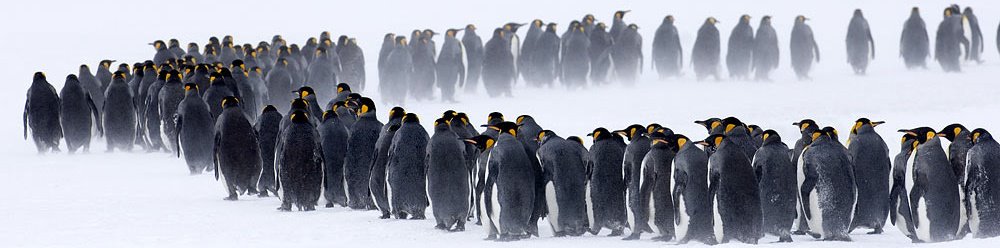
A pair of chinstrap penguins in Antarctica. New research suggests that, if carbon dioxide emissions continue on their current trajectory, Earth may return to a climate of tens of millions of years ago when the Antarctic ice sheet did not exist. (Credit: © UCAR, Photo by Andrew Watt)
Earth's Hot Past Could Be Prologue to Future Climate

ScienceDaily (Jan. 14, 2011) — The magnitude of climate change during Earth's deep past suggests that future temperatures may eventually rise far more than projected if society continues its pace of emitting greenhouse gases, a new analysis concludes.
The study, by National Center for Atmospheric Research (NCAR) scientist Jeffrey Kiehl, will appear as a "Perspectives" piece in this week's issue of the journal Science.
Building on recent research, the study examines the relationship between global temperatures and high levels of carbon dioxide in the atmosphere tens of millions of years ago. It warns that, if carbon dioxide emissions continue at their current rate through the end of this century, atmospheric concentrations of the greenhouse gas will reach levels that existed about 30 million to 100 million years ago, when global temperatures averaged about 29 degrees Fahrenheit (16 degrees Celsius) above pre-industrial levels.
Kiehl said that global temperatures may gradually rise over centuries or millennia in response to the carbon dioxide. The elevated levels of carbon dioxide may remain in the atmosphere for tens of thousands of years, according to recent computer model studies of geochemical processes that the study cites.
The study also indicates that the planet's climate system, over long periods of times, may be at least twice as sensitive to carbon dioxide than currently projected by computer models, which have generally focused on shorter-term warming trends. This is largely because even sophisticated computer models have not yet been able to incorporate critical processes, such as the loss of ice sheets, that take place over centuries or millennia and amplify the initial warming effects of carbon dioxide.
"If we don't start seriously working toward a reduction of carbon emissions, we are putting our planet on a trajectory that the human species has never experienced," says Kiehl, a climate scientist who specializes in studying global climate in Earth's geologic past. "We will have committed human civilization to living in a different world for multiple generations."
The Perspectives article pulls together several recent studies that look at various aspects of the climate system, while adding a mathematical approach by Kiehl to estimate average global temperatures in the distant past. Its analysis of the climate system's response to elevated levels of carbon dioxide is supported by previous studies that Kiehl cites. The work was funded by the National Science Foundation, NCAR's sponsor.

Learning from Earth's past

Kiehl focused on a fundamental question: when was the last time Earth's atmosphere contained as much carbon dioxide as it may by the end of this century?
If society continues on its current pace of increasing the burning of fossil fuels, atmospheric levels of carbon dioxide are expected to reach about 900 to 1,000 parts per million by the end of this century. That compares with current levels of about 390 parts per million, and pre-industrial levels of about 280 parts per million.
Since carbon dioxide is a greenhouse gas that traps heat in Earth's atmosphere, it is critical for regulating Earth's climate. Without carbon dioxide, the planet would freeze over. But as atmospheric levels of the gas rise, which has happened at times in the geologic past, global temperatures increase dramatically and additional greenhouse gases, such as water vapor and methane, enter the atmosphere through processes related to evaporation and thawing. This leads to further heating.
Kiehl drew on recently published research that, by analyzing molecular structures in fossilized organic materials, showed that carbon dioxide levels likely reached 900 to 1,000 parts per million about 35 million years ago.
At that time, temperatures worldwide were substantially warmer than at present, especially in polar regions -- even though the Sun's energy output was slightly weaker. The high levels of carbon dioxide in the ancient atmosphere kept the tropics at about 9-18 degrees F (5-10 degrees C) above present-day temperatures. The polar regions were some 27-36 degrees F (15-20 degrees C) above present-day temperatures.
Kiehl applied mathematical formulas to calculate that Earth's average annual temperature 30 to 40 million years ago was about 88 degrees F (31 degrees C) -- substantially higher than the pre-industrial average temperature of about 59 degrees F (15 degrees C).

Twice the heat?

The study also found that carbon dioxide may have at least twice the effect on global temperatures than currently projected by computer models of global climate.
The world's leading computer models generally project that a doubling of carbon dioxide in the atmosphere would have a heating impact in the range of 0.5 to 1.0 degree C watts per square meter. (The unit is a measure of the sensitivity of Earth's climate to changes in greenhouse gases.) However, the published data show that the comparable impact of carbon dioxide 35 million years ago amounted to about 2 degrees C watts per square meter.
Computer models successfully capture the short-term effects of increasing carbon dioxide in the atmosphere. But the record from Earth's geologic past also encompasses longer-term effects, which accounts for the discrepency in findings. The eventual melting of ice sheets, for example, leads to additional heating because exposed dark surfaces of land or water absorb more heat than ice sheets.
"This analysis shows that on longer time scales our planet may be much more sensitive to greenhouse gases than we thought," Kiehl says.
Climate scientists are currently adding more sophisticated depictions of ice sheets and other factors to computer models. As these improvements come on line, Kiehl believes that the computer models and the paleoclimate record will be in closer agreement, showing that the impacts of carbon dioxide on climate over time will likely be far more substantial than recent research has indicated.
Because carbon dioxide is being pumped into the atmosphere at a rate that has never been experienced, Kiehl could not estimate how long it would take for the planet to fully heat up. However, a rapid warm-up would make it especially difficult for societies and ecosystems to adapt, he says.
If emissions continue on their current trajectory, "the human species and global ecosystems will be placed in a climate state never before experienced in human history," the paper states.

Story Source:
The above story is reprinted (with editorial adaptations by ScienceDaily staff) from materials provided by National Center for Atmospheric Research/University Corporation for Atmospheric Research.

Journal Reference:
  1. Jeffrey Kiehl. Lessons from Earth's Past. Science, 2011; 331 (6014): 158-159 DOI: 10.1126/science.1199380

National Center for Atmospheric Research/University Corporation for Atmospheric Research. "Earth's hot past could be prologue to future climate." ScienceDaily 14 January 2011. 17 January 2011 <http://www.sciencedaily.com­ /releases/2011/01/110113141607.htm>.

Fossil Hunt in Antarctica

 
People on an island covered by snow.
Photo Credit: Patrick O'Connor
Paleontologists led by Ross MacPhee look for fossils on Snow Island in the South Shetland Islands off the Antarctic Peninsula. MacPhee is particularly interested in marsupial fossils that could fill out the picture of their dispersal through the Southern Hemisphere. 

Reverse course

Paleontologists seek evidence that marsupials arose in Antarctica

Ever see the logo for the Sherwin-Williams Company? It shows a bucket of paint tipped over above the planet. The paint covers the Northern Hemisphere, oozing and dripping south.
Ross MacPhee External Non-U.S. government site thinks it’s a perfect metaphor for the disrespect the Southern Hemisphere receives from some of his colleagues regarding the evolution and distribution of mammals tens of millions of years ago when Antarctica was part of a larger continent called Gondwana.
This austral summer he’ll make a fourth attempt to find mammalian fossils that at least prove some kinds of these land animals were present on the continent long before Antarctica finally separated from other land masses and started to go into a deep freeze 40 million years ago.
Before then, Antarctica was sandwiched between South America and Australia, all remnants of the former supercontinent Gondwana. MacPhee is particularly interested in the history of Australian marsupials, believing that their ancestors emerged in South America and traveled across Antarctica to Australia sometime in the neighborhood of 80 million years ago.
“It was relatively easy, not only for the small guys like the marsupials, but also bigger ones like some of the southern ungulates [hoofed animals] to get across the land bridge connecting Antarctica and South America and settle down until Antarctic winter came in permanently about 40 million years ago,” MacPhee said during an interview at the American Museum of Natural History, where he is a curator in the mammalogy department.
Fossilized Wood
Photo Credit: Patrick O'Connor
Fossilized wood found on James Ross Island.
The problem is that fossil record from Antarctica is spotty at best, especially considering most of the continent is entombed in ice. “That leaves you with a few little windows of seasonally bare ground on the Antarctic Peninsula and nearby islands,” MacPhee noted.
One of the better windows is on Seymour Island off the tip of the Antarctic Peninsula. Almost 30 years ago, U.S. scientists in the journal Science described the first fossil land mammal found in Antarctica, belonging to the extinct marsupial family Polydolopidae. The fossils were recovered from rocks about 45 million years old.
The find strengthened the theory that Australian marsupials originated from South American species that dispersed across Antarctica prior to about 65 million years ago, MacPhee said. Marsupials are mammals that are distinguished by the pouches many of them use to carry their young — the most well-known examples being kangaroos.
More recently, a study published last summer in the online journal PLoS Biology uses DNA data to suggest that Australian marsupials evolved from a common South American ancestor well before the end of the Cretaceous period 65 million years ago when the dinosaurs famously met their end.
Ross MacPhee
Photo Credit: AMNH
Ross MacPhee
MacPhee, “wildly” but enthusiastically speculating on what he might find during his upcoming expedition, said the possible discovery of marsupial fossils on Seymour or neighboring islands as primitive as those in South America could indicate that the divergence (or origin) of Australian marsupials actually began in Antarctica rather than South America proper.
“It would be damn interesting. It implies that Antarctica has been more than a superhighway for species to occasionally traverse,” he said. “It means that during times like the late Cretaceous, when it was much warmer than today, important episodes in mammal evolution might have happened there.”
Antarctica of 80 million years ago would hardly resemble the frozen wasteland of today. Some regions would have sported highly diverse vegetation, based on paleobotanical evidence. That means a temperate climate, which favors mammals.
“Since there was a great variety of plants, that implies there would have been a commensurately great variety of arthropods and insects, which means there would have been all kinds of available niches for mammals — small mammals, in particular — that eat insects,” MacPhee said.
Julia Clarke, as associate professor in the Department of Geological Sciences at the University of Texas at Austin, led a team five years ago that reported that close relatives of at least one order of modern birds co-existed with dinosaurs.
The new species, Vegavis iaai, was collected in 1992 by scientists from Argentina on Vega Island off the Antarctic Peninsula. Clarke and her U.S. and Argentine team re-examined the material more than a decade later.
It offered some of the best fossil evidence to date that linked modern bird divergence, the spread of today’s species, before the K-T boundary — when geologic time turned the page from the Cretaceous to the Tertiary period after the mass extinction of the dinosaurs.
MacPhee said such evidence about the Vega waterfowl helps turn the Sherwin-Williams model upside down. “It does suggest the southern end of the world is not as biogeographically irrelevant as it’s been previously — inadvertently perhaps — thought to be.”
Map of islands.
Photo Credit: Wikipedia Commons
Map of the South Shetland Islands.
Clarke will join MacPhee and several other paleontologists, including dinosaur fossil experts, on this latest expedition to the islands near the Antarctic Peninsula in February 2011.
“I’m really excited to have the opportunity after looking at all of the Antarctic material to go down there,” Clarke said. “I’ve never been to Antarctica, and I’m very excited to see what we’ll find.”
MacPhee hopes the fourth time is the charm. His first try in 2007 was largely frustrated by heavy snow on the ground that made finding the small fossils he would expect to find nearly impossible. The ancient marsupials would be about the size of modern shrews, up to 100 grams in weight — something that could easily fit in the palm of your hand. [See previous article: Bridge to the past.]
A freak storm in 2008 wrecked the team’s field camp, forcing an early end to their season. Last year, sea ice conditions prevented the research vessel carrying the scientists to access the islands except for two days. [See previous article: A big blow.]
Despite the setbacks, MacPhee is willing to commit another two months to his search for mammalian fossils.
Person brushing dirt from stone.
Photo Credit: N. Adam Smith
Julia Clarke
“I feel it’s important. People have to be willing to put up with some pain and suffering if they have any expectations of being successful,” he said philosophically. “Antarctica is not going to be kind. We already know that with regard to how hard it has been to collect mammalian or indeed any vertebrate fossils.”
The team hopes to begin its search on Vega Island, where Clarke’s avian fossils were found.
Other likely expedition sites include nearby Seymour and James Ross islands, where others have found fossils from younger geological periods. In fact, Argentinean scientists recently uncovered ancient turtle fossils on Seymour Island dating from roughly 45 million years ago that don’t belong to any species known to live in the region during that time period.
The scientists expect to spend long hours on their hands and knees, crawling along the ground hoping to spy interesting-looking bits.
“I’m somewhat sanguine, although you have to recognize the realities. That next rock that you needed to kick over to find that tooth that was going to explain all of this might be the very rock that you ignore,” he said.
“For my purposes it’s worth doing, because I think the Antarctic part of mammalian divergence and diversification story in the latter part of the Cretaceous is the part that we know least about. Virtually any evidence would suggest new possibilities.”

Source

Saturday, January 8, 2011

Indian, Australian joint team studying penguin evolution

Sydney, Jan 7 (IANS) A joint team of Indian and Australian scientists is studying molecular changes in Adelie, a penguin species commonly found along the entire Antarctic coast, triggered by global warming.
The experts are also looking at the larger issue of whether climate change drives evolution.

Australian team leader David Lambert is collaborating with Siva Swaminathan, who leads the Indian side, under the aegis of the Australia-India Strategic Research Fund (AISRF).

The AISRF was established in 2006 to facilitate and support science and technology research cooperation between the two countries.

'When global temperatures change (up or down), many animals do not biologically adapt to that change, but simply move to where things are warmer or cooler,' Lambert said.

'With global warming, Adelie penguins are not able to move to a cooler place since they already live in the coldest place on earth. So, they have no option but to adapt,' he said.

In yet another collaborative programme, Arnold Dekker from the Commonwealth Scientific and Industrial Research Organisation (CSIRO) led an Australian team at a recent workshop with Indian researchers to monitor ocean health through remote sensing.

Dekker said researchers use satellite-based observation of earth's coasts and oceans to monitor ocean colour, which arises from changes in algae, suspended and dissolved organic material.

'Ocean colour helps us understand the interactions between aquatic ecosystems, climatic factors and human impacts,' he said.

The experts at the workshop agreed that understanding these interactions can help in forming better policies for protecting coastal reefs and ecosystems from potentially harmful disturbances caused by human activity and environmental stresses.

Source