Tuesday, January 20, 2009

Images This Week--Virtual Tour of NZ Penguin Attractions

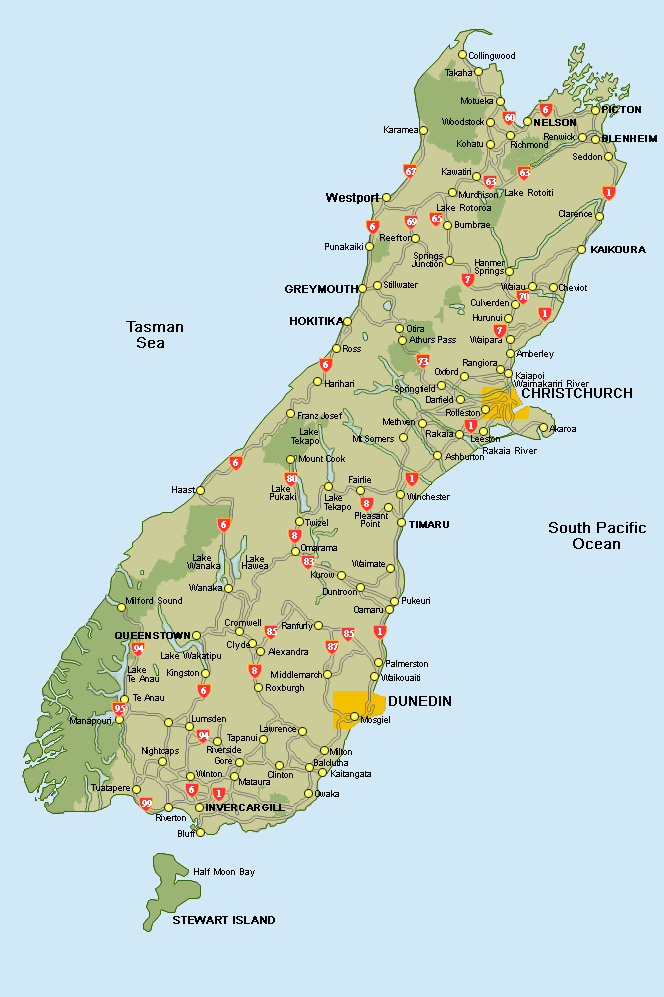
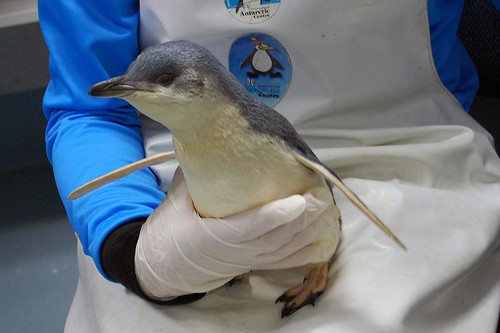
In Christchurch, New Zealand, there is a relatively new center open to visitors; it is the International Antarctic Center and it is touted as the gateway to Antarctica.

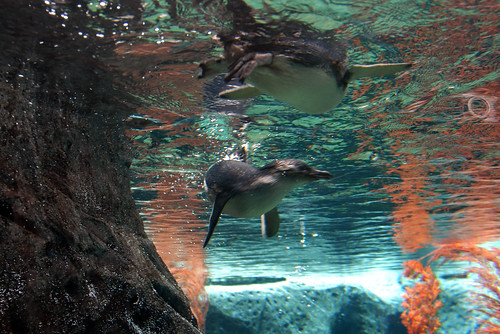
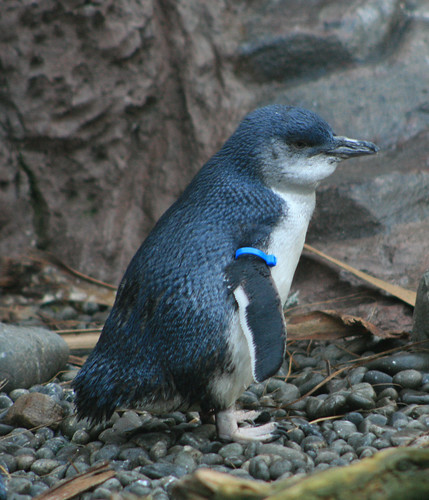
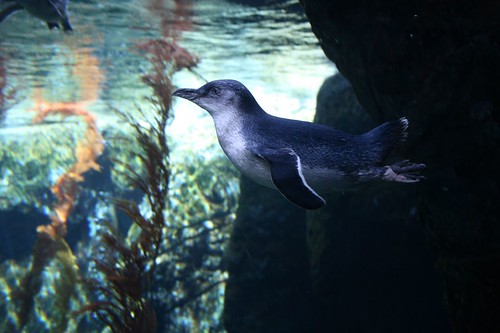
The Center is home to the New Zealand, United States and Italian Antarctic Programs and comprises administration offices, warehousing, a US & NZ clothing store, a post office and travel agency, the Antarctic Passenger Terminal and of course the Visitor Center, now known as 'The Antarctic Attraction'. The center operates a Hagglund Ride around the center's land. This is aimed mainly at children, however is an educational tool for all ages, to display the mobility of the Hagglund. The Hagglund is an Antarctic Vehicle that is still in operation. Among other attractions, there is an Antarctic snow storm room, an audiovisual, and little blue penguins at the NZ Penguin Encounter..

It is a well known tourist attraction, just a few minutes walk from the airport, with a cafe and bar.


The staff at the center also offers an educational program for groups and individuals on Antarctica and the Little Blue Penguin.


You can even watch the Little Penguins at feeding time, but check for that time as soon as you arrive, as the time may change from one day to the next.


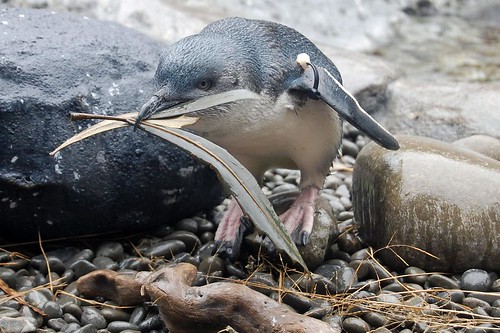
The Little Blue Penguin display is also home to rehabilitated birds who can no longer live in the wild. Yet, here they have the opportunity to live out their lives as normally as possible. Note the little guy carrying nest material. :)


When you buy a Penguin Backstage Pass ticket you will experience an additional and exclusive tour of our 'behind the scenes' areas in the NZ Penguin Encounter.


Limited to just 8 visitors per tour, the Penguin Backstage Pass takes you into the areas not accessible to visitors, hosted by one of our Antarctic Rangers. See how our quarantine area works, learn about penguin feeding and husbandry and take your penguin knowledge to the next level!

Bookings are essential for the daily tours at 11.00am, 2.00pm and 3.00pm. Tickets are just $20.00(Please note that entry ticket must be purchased first).


And don't take my word for it--look for yourself HERE


Many thanks to
http://on-walkabout.com/2009/01/14/walkabout-international-antarctic-centre/
http://en.wikipedia.org/wiki/International_Antarctic_Centre
http://www.iceberg.co.nz/
... for information and images,
and Flickr for the images

Monday, January 19, 2009

New Info on Hearing, Behavior Of Oldest Fossil Bird


Science News

High-tech Imaging Of Inner Ear Sheds Light On Hearing, Behavior Of Oldest Fossil Bird

ScienceDaily (Jan. 14, 2009) — The earliest known bird, the magpie-sized Archaeopteryx, had a similar hearing range to the modern emu, which suggests that the 145 million-year-old creature — despite its reptilian teeth and long tail — was more birdlike than reptilian, according to new research.

Using innovative modern technology, a team of paleontologists and biologists from London, Munich and Ohio have shown for the first time how the length of the inner ear of birds and reptiles can be used to accurately predict their hearing ability and even aspects of their behavior.

"In modern living reptiles and birds we found that the length of the bony canal containing the sensory tissue of the inner ear is strongly related to their hearing ability," said study co-author Paul Barrett, a palaeontologist at London's Natural History Museum. "We were then able to use these results to predict how extinct birds and reptiles may have heard and found that Archaeopteryx had an average hearing range of approximately 2000 Hz. This means it had similar hearing to modern emus, which have some of the most limited hearing ranges of modern birds."

Researchers previously have only been able to estimate how prehistoric animals heard by examining the skulls of damaged fossils and relating brain region size to hearing ability, based on comparisons to the animals' modern relatives. Computed tomography or CT imaging, however, allowed the team to accurately reconstruct the inner ear anatomy of various intact bird and reptile specimens. Fifty-nine species were studied, including turtles, crocodiles, snakes and birds.

"By examining the three dimensional CT scans we were able to see for the first time the real relationship between hearing ability and behavior in extinct reptiles and birds," said Stig Walsh, Natural History Museum palaeontologist and lead author on the study. "The size of the cochlea duct (the bony part of the inner ear housing the hearing organ) in living birds and reptiles accurately predicts the hearing ranges of these animals. This simple measurement can therefore provide a direct means for determining hearing capabilities, and possibly behavior, in their extinct relatives, including Archaeopteryx."

The study, published in the latest issue of the journal Proceedings of the Royal Society B, also adds more information about how bird-like Archaeopteryx was, said Angela Milner, also from the Natural History Museum. "Our previous research has shown that the part of the ear that controls balance was just like that of modern birds, and now we know that Archaeopteryx had bird-like hearing too," she said.

Other team members included Geoff Manley from the Technical University of Munich, who is a leading scientist in the study of hearing in modern animals, and Lawrence Witmer of Ohio University's College of Osteopathic Medicine in Athens, Ohio. Witmer has studied the structure of the brain and inner ear in dozens of species of dinosaurs and modern and extinct birds, including Archaeopteryx.

"This delicate little inner ear has only recently become a player for those of us trying to interpret the past, because it's buried deep within the skull," said Witmer, whose research is funded by the National Science Foundation. "Thanks to CT scanning, we can now get a clear picture of its structure. It's turned out to be a pretty useful organ for deciphering the lives of extinct animals. My previous research has shown that inner ear structure also can tell us about eye movements, head posture, agility, and the relative importance of hearing, and this new study now shows that this sensory Swiss-army knife can tell us about sociality, vocal complexity and maybe even habitat preference."

Animals with a long cochlear duct tended to have the best hearing and vocal ability. Modern living bird species are known to possess relatively longer cochlear ducts than living reptiles. A long cochlear duct is also an indicator of an individual's complex vocal communication, living in groups and even habitat choice. This is true for both mammals and birds.

"Species that form large social groups have more complicated vocal communication, which is understandably influenced by an individual's ability to hear. Species living in a closed environment where visual communication is ineffective often posses more complex vocal abilities, so now we can more accurately predict the habitat types that extinct animals lived in by examining their ability to hear and communicate," Barrett said.

The research received funding from the Natural Environment Research Council and the National Science Foundation.

Ohio University. "High-tech Imaging Of Inner Ear Sheds Light On Hearing, Behavior Of Oldest Fossil Bird." ScienceDaily 14 January 2009. 19 January 2009 .

Image of the Day


Penguins of the World via Picasa

Sunday, January 18, 2009

Image of the Day


Rockhopper Penguin, originally uploaded by DW0581 StuartW.

Northern rockhopper penguin adult at nest with two chicks

Eudyptes moseleyi --Will We Allow the Northern Rockhopper to Become Extinct?


Penguins are walking an increasingly rocky road

16-01-2009

A new study, published in BirdLife International’s journal, Bird Conservation International, has revealed that the Northern Rockhopper Penguin Eudyptes moseleyi – which is principally found on UK territories in the South Atlantic – has declined by 90% over the last 50 years [1].

Historical records estimate that millions of penguins used to occur on Tristan da Cunha and Gough Island, but, declines (of more than 90%) have dramatically reduced their numbers in the last half century.

"Historically, we know that penguins were exploited by people, and that wild dogs and pigs probably had an impact on their numbers. However, these factors cannot explain the staggering declines since the 1950s, when we have lost upwards of a million birds from Gough and Tristan. The declines at Gough since the 1950s are equivalent to losing 100 birds every day for the last 50 years", said Richard Cuthbert of the RSPB (BirdLife in the UK) and lead author of the paper. "With more than half the world’s penguins facing varying degrees of extinction, it is imperative that we establish the exact reason why the Northern Rockhopper Penguin is sliding towards oblivion. Understanding what’s driving the decline of this bird will help us understand more about other threatened species in the Southern Ocean."

Possible factors for the decline of the Northern Rockhopper Penguin include climate change, shifts in marine ecosystems and overfishing.

"We are meant to be world leaders in biodiversity conservation and we can't even decide who is responsible for the overseas territories" —Sarah Sanders, RSPB’s Overseas Territories Officer

There is concern that the British Government will not put any great effort or resources into wildlife conservation for the United Kingdom’s overseas territories. Meetings held so far between ministers from the Foreign and Commonwealth Office, the Department for Environment, Food and Rural Affairs, and the Department for International Development have failed to reach agreement.

"They are completely disinterested," said Sarah Sanders, the RSPB’s Overseas Territories Officer, said. "It's ridiculous and embarrassing. We are meant to be world leaders in biodiversity conservation and we can't even decide who is responsible for the overseas territories."

The Northern Rockhopper Penguin population on Gough is estimated at 32,000 to 65,000 pairs, with another 40,000 to 50,000 pairs on Tristan. These two strongholds account for more than 80% of the world population, the rest are found on two French-administered islands, St Paul and Amsterdam in the Indian Ocean, and are declining just as rapidly.

British overseas territories boast several species of bird found nowhere else in the world including four species classified as Critically Endangered, the highest threat category.

Tackling the interlinked threats of habitat degradation, invasive species and climate change in UK Overseas Territories is one of 10 Key Actions to prevent future avian extinctions that BirdLife has highlighted in a new publication, Critically Endangered Birds: a global audit

Bird Conservation International is the official journal of BirdLife International. It provides stimulating, up-to-date coverage of bird conservation topics important in today's world. For more information: BirdLife: Bird Conservation International.

[1] Population trends and conservation status of the Northern Rockhopper Penguin Eudyptes moseleyi at Tristan da Cunha and Gough Island. R. CUTHBERT, J. COOPER, M. BURLE, C.J. GLASS, J.P. GLASS, S. GLASS, T. GLASS, G.M. HILTON, E.S. SOMMER, R.M. WANLESS and P.G. RYAN. Bird Conservation International 2009, 19: 1-12

Credits: RSPB
~~~~~~~~~~~~~~~~~~~~~~~~~~~~~~~~~~~~~~~~~~~~~~~~~~~~~~~~~~~~~~~~


2008 IUCN Red List Category (as evaluated by BirdLife International - the official Red List Authority for birds for IUCN): Endangered


Justification This newly split species has been classified as Endangered owing to very rapid population decreases over the last three generations (30 years) throughout its range. Precise reasons for the decline are poorly known, but changes in sea temperature, competition and incidental capture in fisheries and introduced predators are all likely to be implicated.

Family/Sub-family Spheniscidae

Species name author Mathews & Iredale, 1921

Taxonomic source(s) Banks et al. (2006)

Taxonomic note Eudyptes chrysocome (Sibley and Monroe 1990, 1993) has been split into E. chrysocome and E. moseleyi following Jouventin et al. (2006) on the basis of clear morphological, vocal and genetic terms, and this treatment has been accepted here following a review by the BirdLife Taxonomic Working Group. However, although E. filholi has been proposed as a split from E. chrysocome by Banks et al. (2006), both the sample sizes and the degree of morphological difference are small and this view is not accepted here.

Population estimate


Population trend


Range estimate (breeding/resident)


Country endemic?

100,000-499,999


decreasing


5,000,000 km2


No

Range & population Eudyptes moseleyi has recently been split from Eudyptes chrysocome. It breeds on Gough Island and islands in Tristan da Cunha (St Helena to UK), and Amsterdam and St Paul Islands (French Southern Territories). The large population at Gough Island appears to have been stable between 1982 and 20008, although it suffered large declines prior to the 1980s. The majority of the population is in the Atlantic Ocean (c. 80%)12. Early records indicate that millions of penguins used to occur on both Tristan da Cunha and Gough Island12. The most recent population estimates indicate declines in excess of 96% for Gough and 98% for the main island of Tristan that have occurred over at least 45 and 130 years, respectively12. Numbers breeding at Inaccessible Island (Tristan de Cunha) also may have declined, albeit modestly, whereas numbers on Tristan appear stable over the last few decades12. Current population estimates are 32,000-65,000 breeding pairs at Gough, 18-27,000 at Inaccessible and 3,200-4,500 at Tristan12. Trends for Nightingale and Middle Islands (both Tristan de Cunha) are poorly known12. They were estimated to support 125,000 pairs in the 1970s, but recent observations suggest that the main colony on Nightingale has decreased in size12. Overall, declines at Gough, Tristan and Inaccessible indicate an annual decline rate of 2.7% and a three-generation decline of 56%12. In the Indian Ocean, the Amsterdam Island population decreased by 57% between 1971 and 1993 to 25,000 pairs, whereas on St Paul Island they increased to 9,000 pairs over the same period, following cessation of exploitation as crayfish bait11. Population trends during the last 10 years in the Indian Ocean are unknown.


Ecology: It breeds in colonies, from sea-level to cliff-tops, and sometimes inland. It feeds on krill and other crustaceans, squid, octopus and fish7.

Threats Past human exploitation and the impact of introduced predators are likely to be responsible for past declines, but these factors cannot explain the sharp decreases since the 1950s 12. Food supplies may be affected by squid fisheries, climate change and shifts in marine food webs1,3,9. Increasing disturbance and pollution results from ecotourism and fishing2. Driftnet fishing and rock-lobster fisheries (which previously used birds for bait) has caused significant mortality5,6. On Nightingale, egging continues, perhaps causing decreases4,6. On some islands, introduced predators may affect breeding success5, and predation and competition for space with Subantarctic Fur Seals Arctocephalus tropicalis may cause declines locally.

Conservation measures underway Regular monitoring is, or will be, undertaken on Tristan da Cunha, Gough, Amsterdam and St Paul Islands8,10. Several ecological and demographic studies have been undertaken2,3. Many islands with breeding colonies are reserves.

Conservation measures proposed Continue or start to monitor all populations to asses trends. Conduct studies to assist in interpreting population changes and assessing interactions with commercial fisheries5. Investigate the impact of the introduced house mouse Mus musculus on chick survival on Gough. Eradicate introduced predators where possible5. Investigate impact of egg harvest on Nightingale10.

References 1. Cunningham and Moors (1994). 2. Ellis et al. (1998). 3. Guinard et al. (1998). 4. Richardson (1984). 5. Ryan and Cooper (1991). 6. P. G. Ryan in litt. (1999). 7. Williams, T. D. (1995). 8. Cuthbert and Sommer (in press). 9. Hilton et al. (in prep.). 10. Cuthbert and Sommer (2004). 11. Jouventin et al. (2006). 12. R. Cuthbert in litt. (2007).

Text account compilers Phil Benstead (BirdLife International), Jonathan Ekstrom (BirdLife International), Simon Mahood (BirdLife International), Rachel McClellan (BirdLife International), Sue Shutes (BirdLife International), Alison Stattersfield (BirdLife International)

Contributors Richard Cuthbert (Royal Society for the Protection of Birds), Geoff Hilton (Royal Society for the Protection of Birds)

IUCN Red List evaluators Stuart Butchart (BirdLife International), Simon Mahood (BirdLife International)

Recommended citation BirdLife International (2008) Species factsheet: Eudyptes moseleyi. Downloaded from http://www.birdlife.org on 18/1/2009

This information is based upon, and updates, the information published in BirdLife International (2000) Threatened birds of the world. Barcelona and Cambridge, UK: Lynx Edicions and BirdLife International, and BirdLife International (2004) Threatened birds of the world 2004 CD-ROM. These sources provide the information for species accounts for the birds on the IUCN Red List.

To provide new information to update this factsheet or to correct any errors, please email BirdLife

To contribute to discussions on the evaluation of the IUCN Red List status of Globally Threatened Birds, please visit BirdLife's Globally Threatened Bird Forums

News and information courtesy of Birdlife International @

http://www.birdlife.org/news/news/2009/01/rockhopper_decline.html
http://www.birdlife.org/datazone/species/index.html?action=SpcHTMDetails.asp&sid=32304&m=0

Saturday, January 17, 2009

Image of the Day


Follow the leader, originally uploaded by christur8.

Penguins follow a lead bird, who often stops to see if everyone behind him/her is still following. I'm unsure as to this behavior on land, but penguins line up to plunge into the water in order to confuse a predator who may be lying in wait. By diving en masse into the water, there is enough confusion that the penguins can escape from a befuddled seal.

Following a lead bird is not symptomatic of penguins, alone. Watch geese fly in formation--they do so behind a lead bird. How that leader is designated is for researchers to determine. I just like to see penguins in a line headed for the beach. :)

Friday, January 16, 2009

Friday Videos--Falkland Islands


Image of the Day

Few cultures have had the opportunity to include the penguin within its sphere of awareness and especially a culture that respects the animal's place in the world order of creatures.

Here is a pot found within a museum in South America and it is unknown whether it is modeled after the Humboldt or the Galapagos Penguin, but it's nice to see that someone other than our current culture appreciates the value of these birds.

Thursday, January 15, 2009

Image of the Day


Outta the way little fella!, originally uploaded by Slow Loris.

A gang of king penguin bully-boys muscle their way past a little magellanic penguin. A gentoo penguin looks on from from the surf.

Although not an aggressive move, the kings are obviously determined to get out to sea and although seemingly rude, they only have one thing on their minds... food.

Wednesday, January 14, 2009

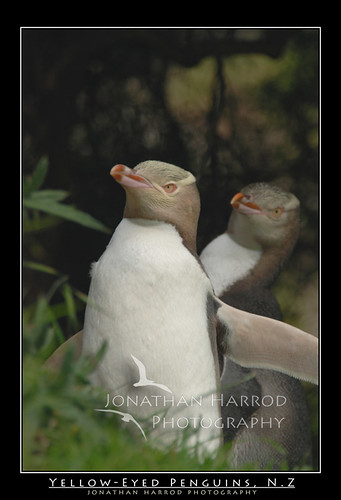
The Yellow-Eyed Penguin (Megadyptes antipodes)


Facts

Also known as: the 'Hoiho'
Kingdom Animalia
Phylum Chordata
Class Aves
Order Sphenisciformes
Family Spheniscidae
Genus Megadyptes (1)
Size Length: 65 – 68 cm (2)
Weight 5 – 8 kg (2)
Status

Classified as Endangered (EN) on the IUCN Red List 2007 (1).


Description

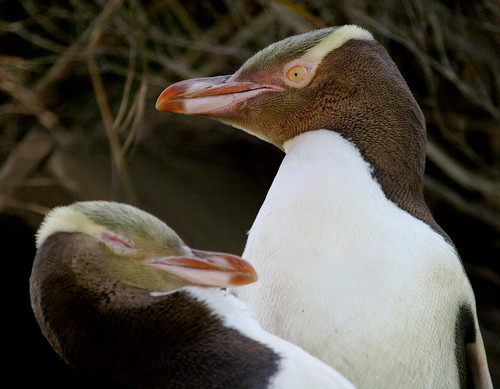
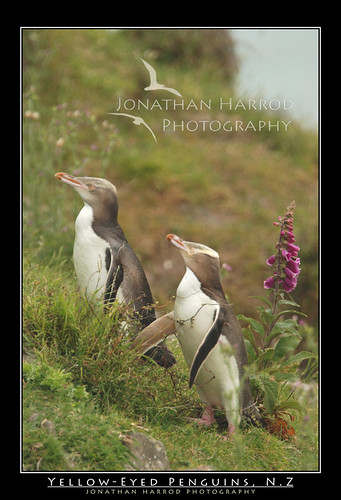
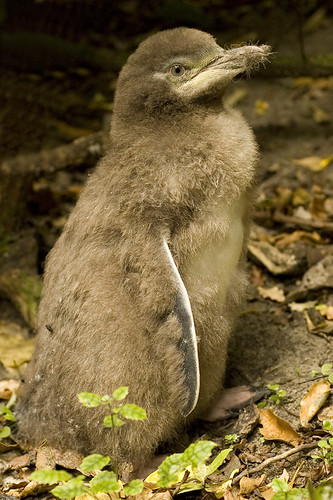
The yellow-eyed penguin is one of the most endangered of all penguin species (3). These birds are slate grey with a white breast. As their common name suggests they have yellow eyes, accentuated by the yellow band that runs from the eyes around the back of the head (4). Males and females are identical but juveniles lack the yellow eyes and bands of older birds (2). The Maori name for these birds is ‘Hoiho', which means ‘the noise shouter' in reference to their shrill call (5).

Range

Endemic to New Zealand, breeding takes place on the southeast coast of South Island and on Foveaus Strait, Stewart, Auckland and Campbell Islands (6).

Habitat

Yellow-eyed penguins breed in forest or scrubland, choosing to build nests against rocks or tree trunks, which provide some protection from the elements (2).

Biology

Yellow-eyed penguins are not particularly sociable, breeding in spaced-out territories in the forest rather than the close-knit colonies of other species (3). Pairs are monogamous and stay together for life. The breeding season is particularly long, beginning with courtship in August; the clutch of two eggs is laid in mid-September to mid-October on a nest constructed from sticks (2). Both parents help to incubate the eggs, which can take up to two months. For the next six weeks the adults will take it in turns to stay with the chick whilst the other forages for food (2).

Penguins moult once a year but during this time they need to remain on land while the feathers are replaced (3). The three-week moult takes place in February and March following the fledging of the chicks. Penguins need to accumulate considerable resources before this takes place, as they can loose up to four kilograms of body weight during the moult (2). Yellow-eyed penguins feed on a variety of fish including red cod, opal fish, sprat and silversides. They tend to forage within 15 kilometres (2) of the shore and can dive up to 160 metres (3).

Threats


The yellow-eyed penguin may be the rarest penguin in the world. The coastal forests of their habitat, particularly of mainland New Zealand, have been destroyed to make way for development and agriculture. Introduced sheep and cattle pose a threat as they can trample on penguin nests and overgraze the area, destroying further habitat (2). In 1986 and 1990 there were two major population crashes, the causes of which remain a mystery (6). The other major threat to the yellow-eyed penguin comes from introduced mammalian predators such as ferrets, cats, rats and dogs; juvenile penguins or adults during their moult phase are extremely vulnerable to predation and numbers have been decimated over the years (2).

Conservation

The New Zealand Department of Conservation Hoiho Recovery Plan is currently underway, which aims to promote the recovery of this species and to involve local people in their conservation (5). A number of schemes are already in place including the protection of certain key habitats and the removal of predators. The Yellow-eyed Penguin Trust has introduced a number of important conservation initiatives and research, including the banning of dogs from certain sensitive beaches (2). The Trust is careful to work extremely closely with local residents over these sensitive issues (2). Every effort is being made to secure the future of one of New Zealand's avian treasures.


Further Information


For more information on the yellow-eyed penguin see:

* Yellow-eyed Penguin Trust:
www.yellow-eyedpenguin.org.nz
* New Zealand Department on Conservation:
www.doc.govt.nz/templates/podcover.aspx?id=33022

References

1. IUCN Red List (February, 2008)
http://www.iucnredlist.org
2. Yellow-eyed Penguin Trust (August, 2003)
http://www.yellow-eyedpenguin.org.nz/
3. International Penguin Conservation Work Group (August, 2003)
http://www.penguins.cl/yellow-penguins.htm
4. New Zealand Penguins (February, 2008)
http://www.penguin.net.nz/species/yep/index.html
5. NZ Department of Conservation (August, 2003)
http://www.doc.govt.nz/templates/podcover.aspx?id=33022
6. BirdLife International (August, 2003)
http://www.birdlife.org/datazone/species/index.html?action=SpcHTMDetails.asp&sid=3859&m=0

Information courtesy of ARKive @
http://www.arkive.org/yellow-eyed-penguin/megadyptes-antipodes/info.html

Images via Flickr

Tuesday, January 13, 2009

Images of the Day

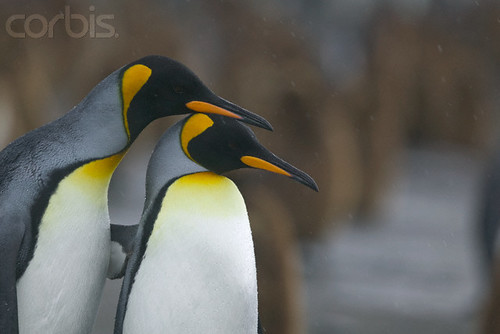
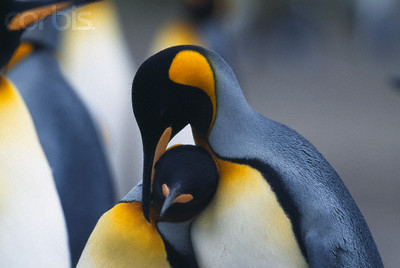
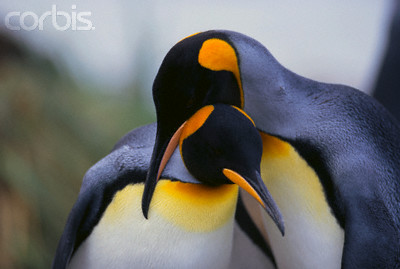
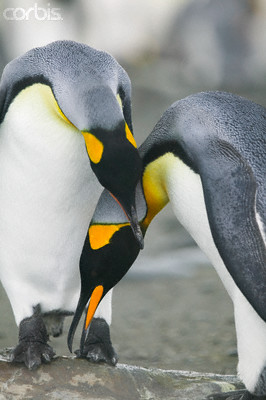
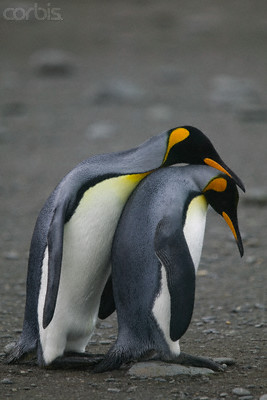
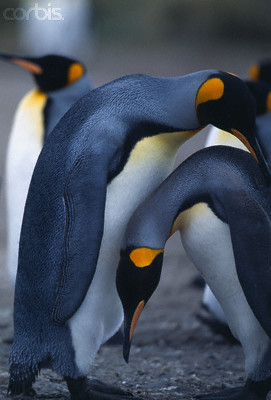
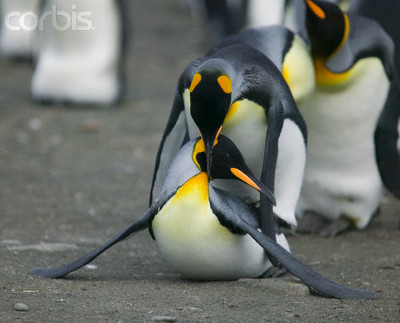
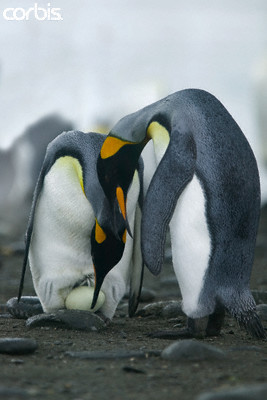
Courtship Behavior in King Penguins


Images by Corbis